
Last updated October 30, 2026
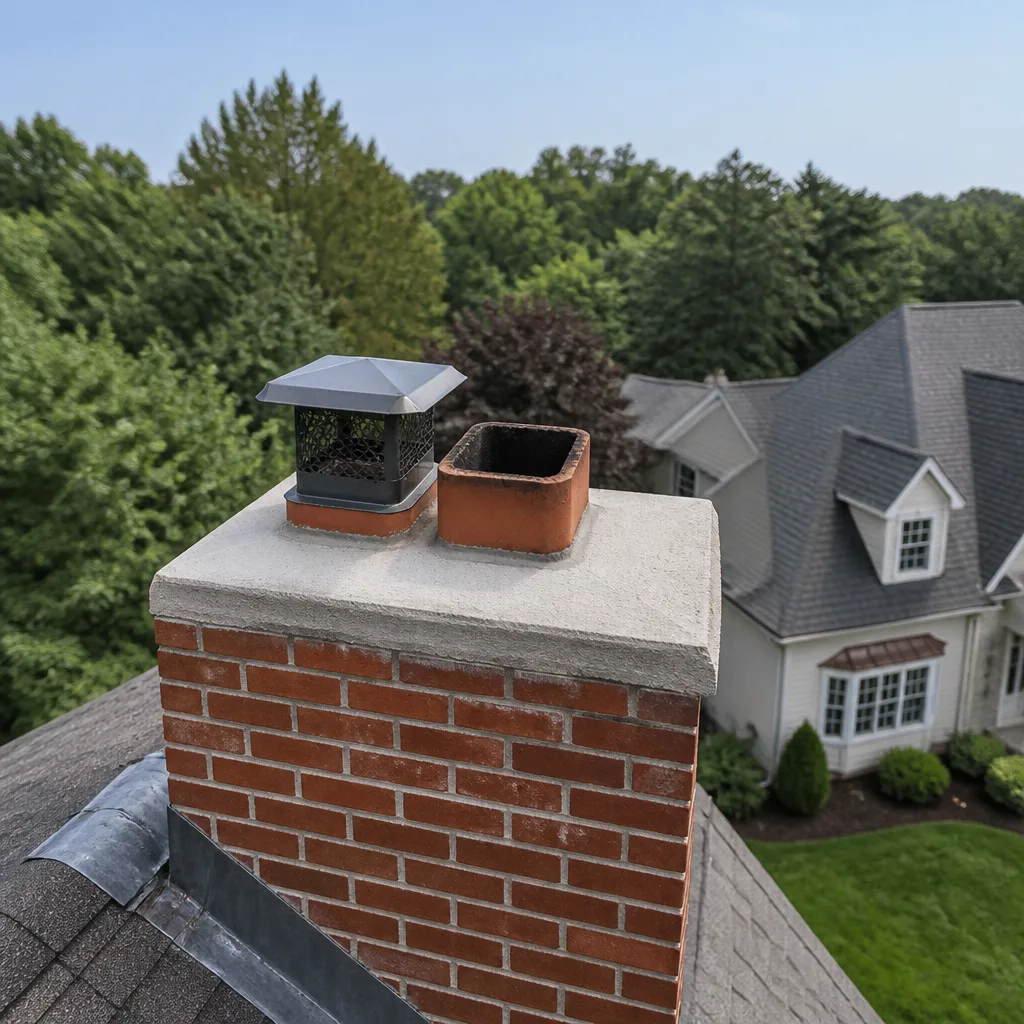 Sweep & inspection
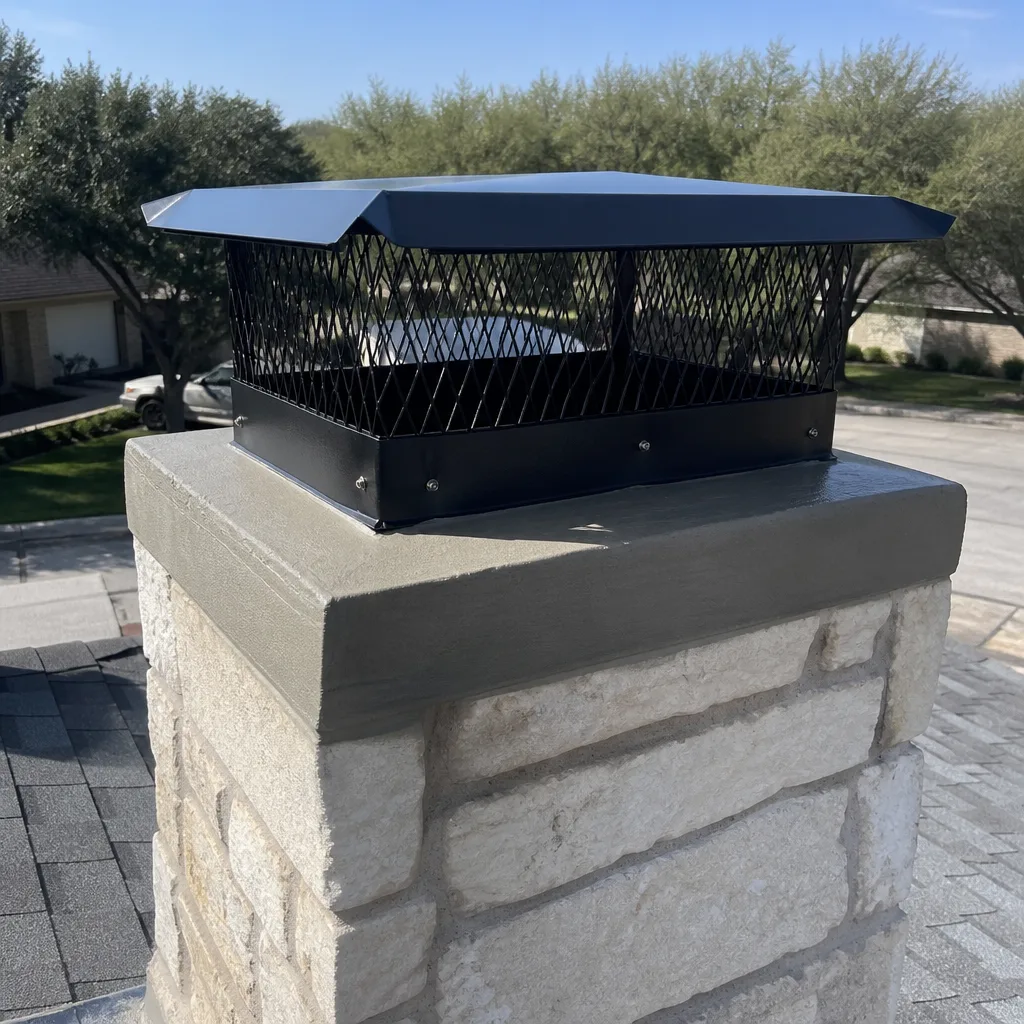
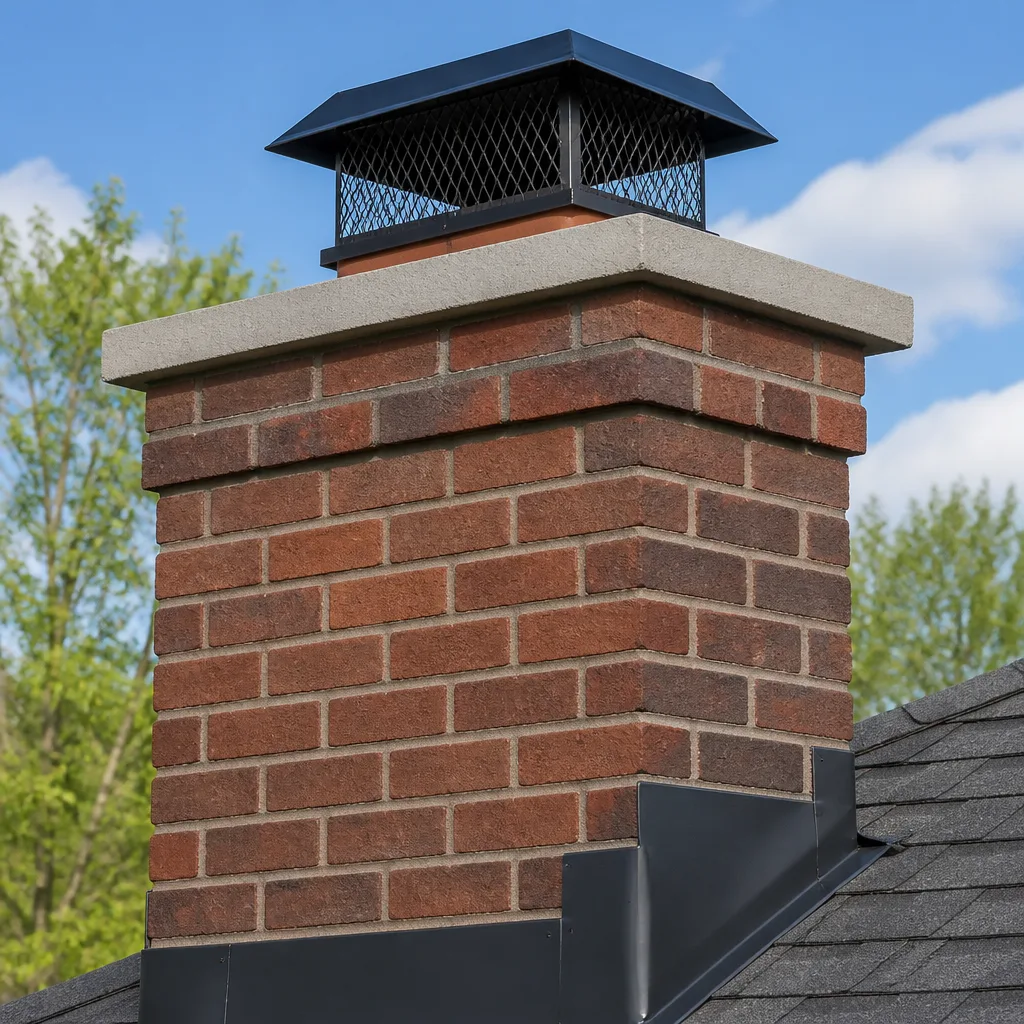 Caps & crowns
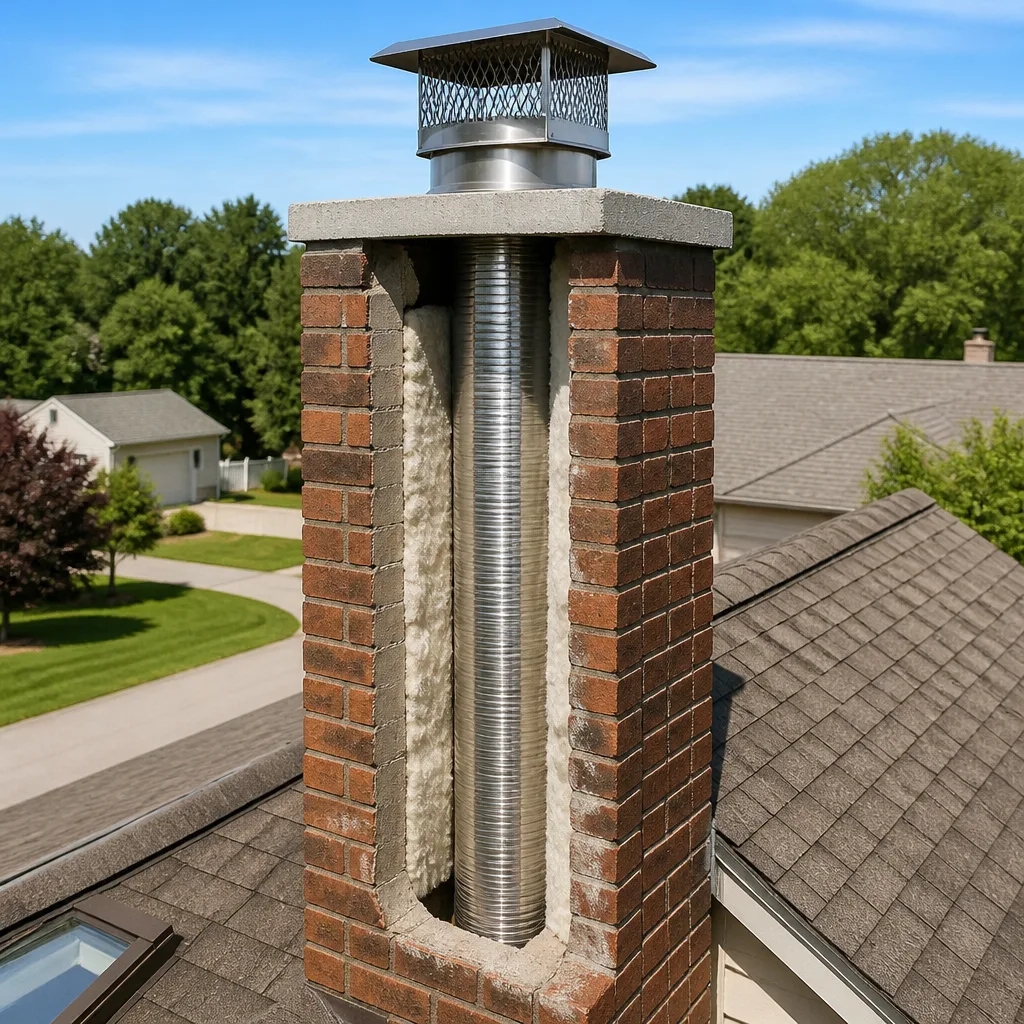 Flue relining
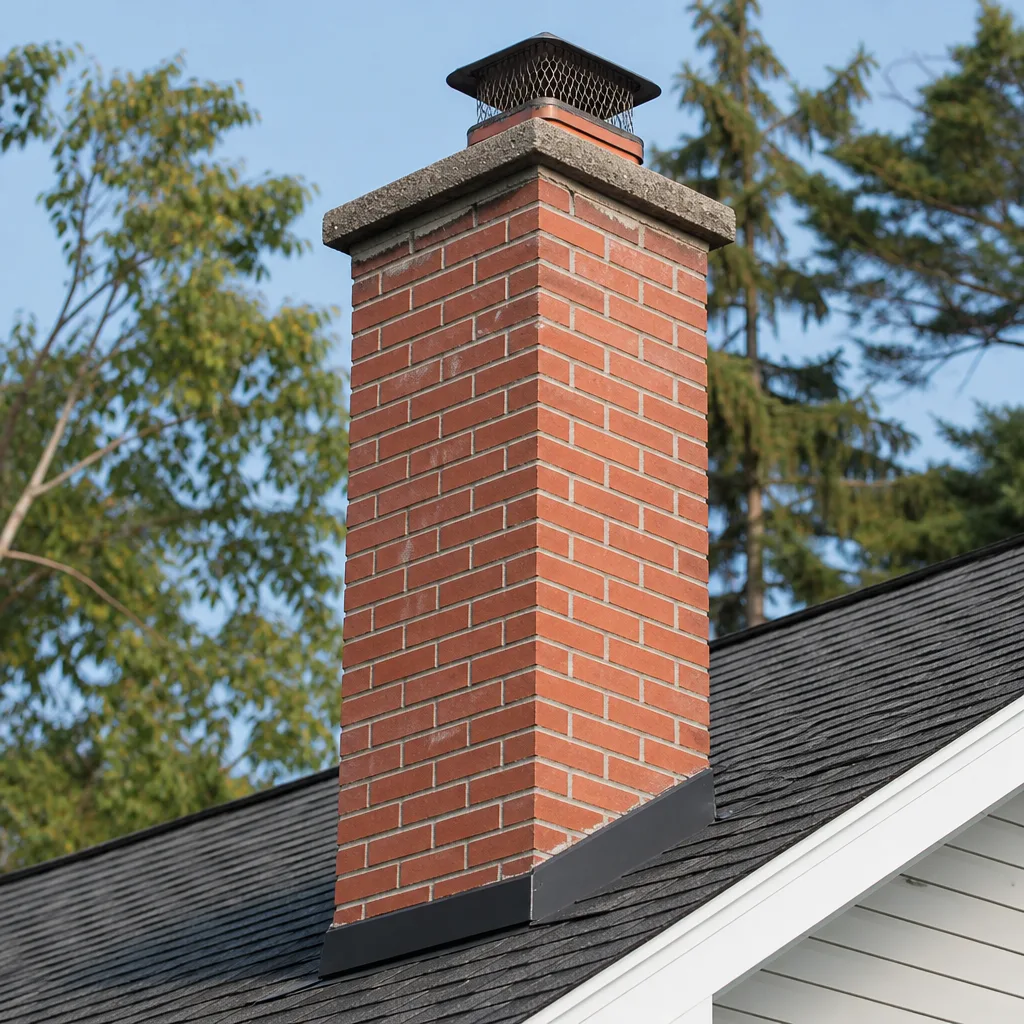 Masonry repair
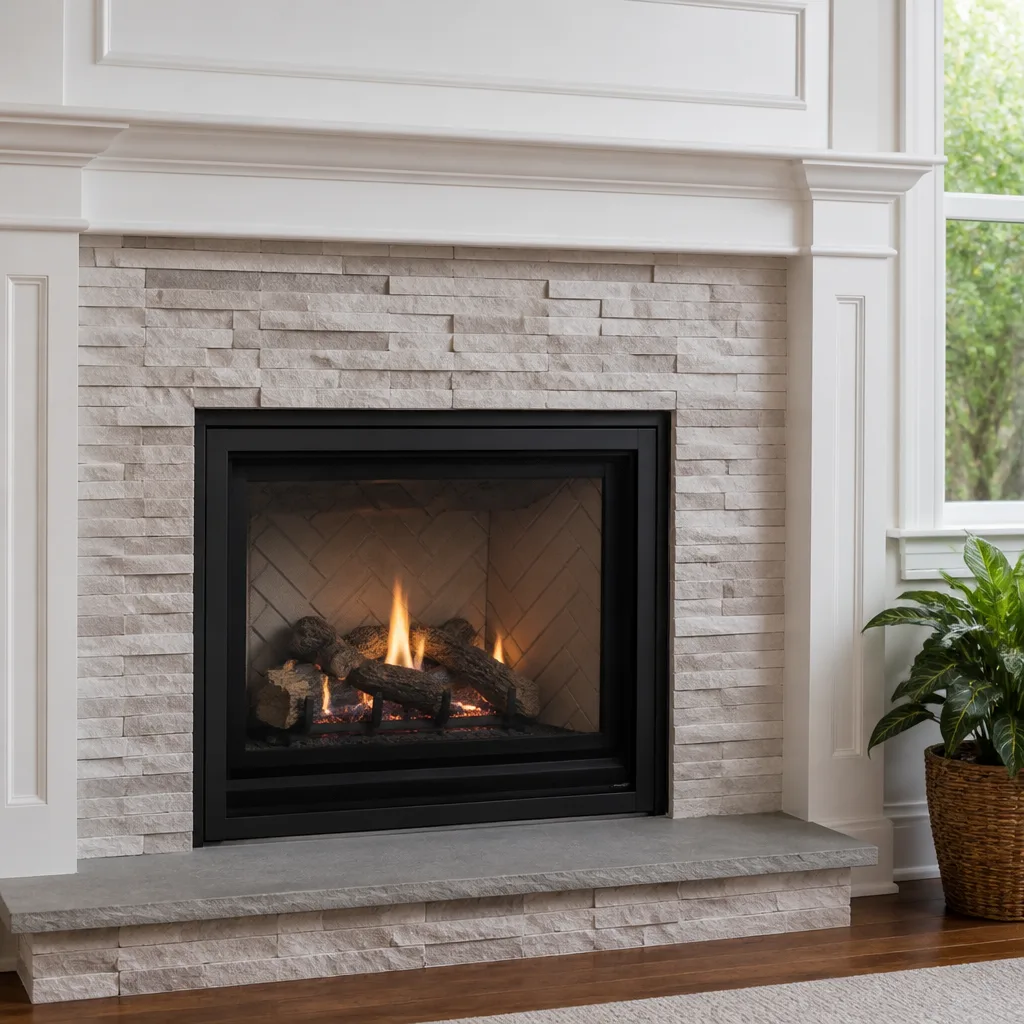 Gas fireplace service
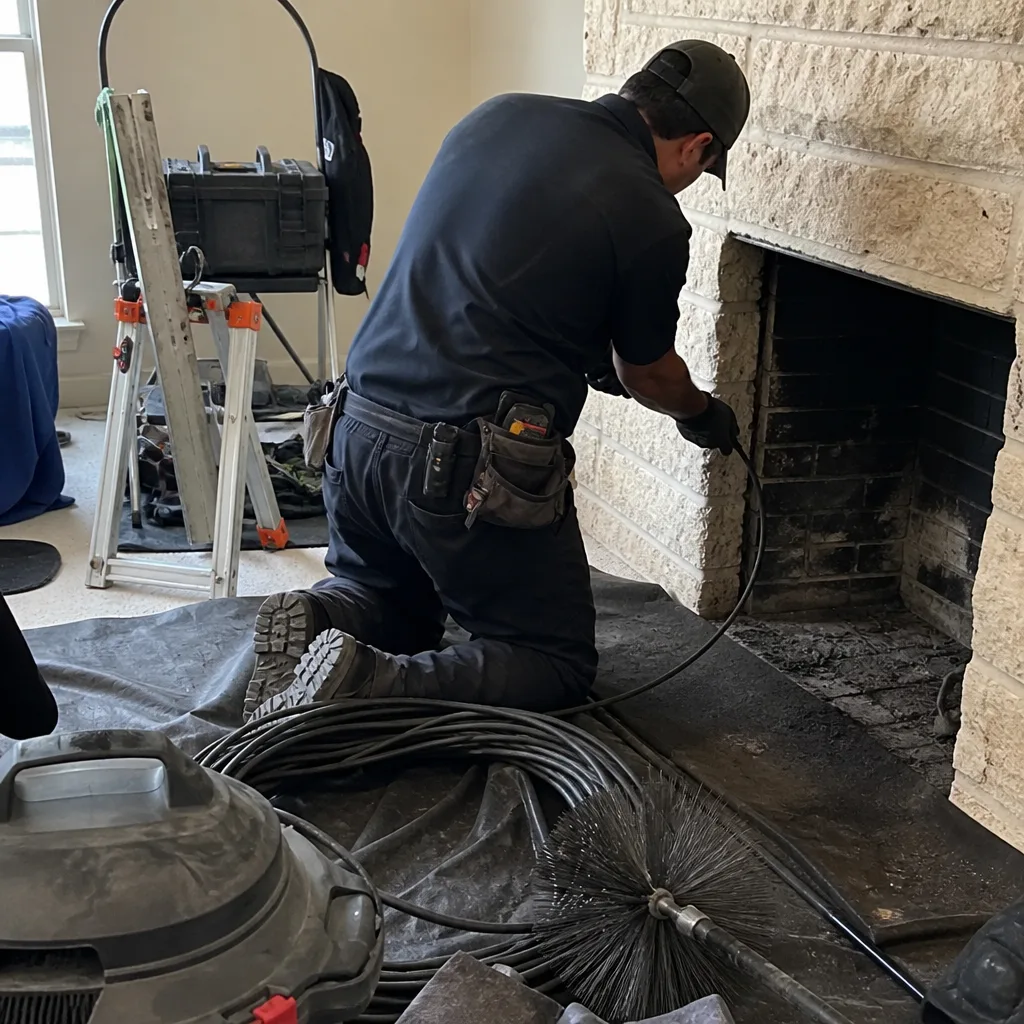
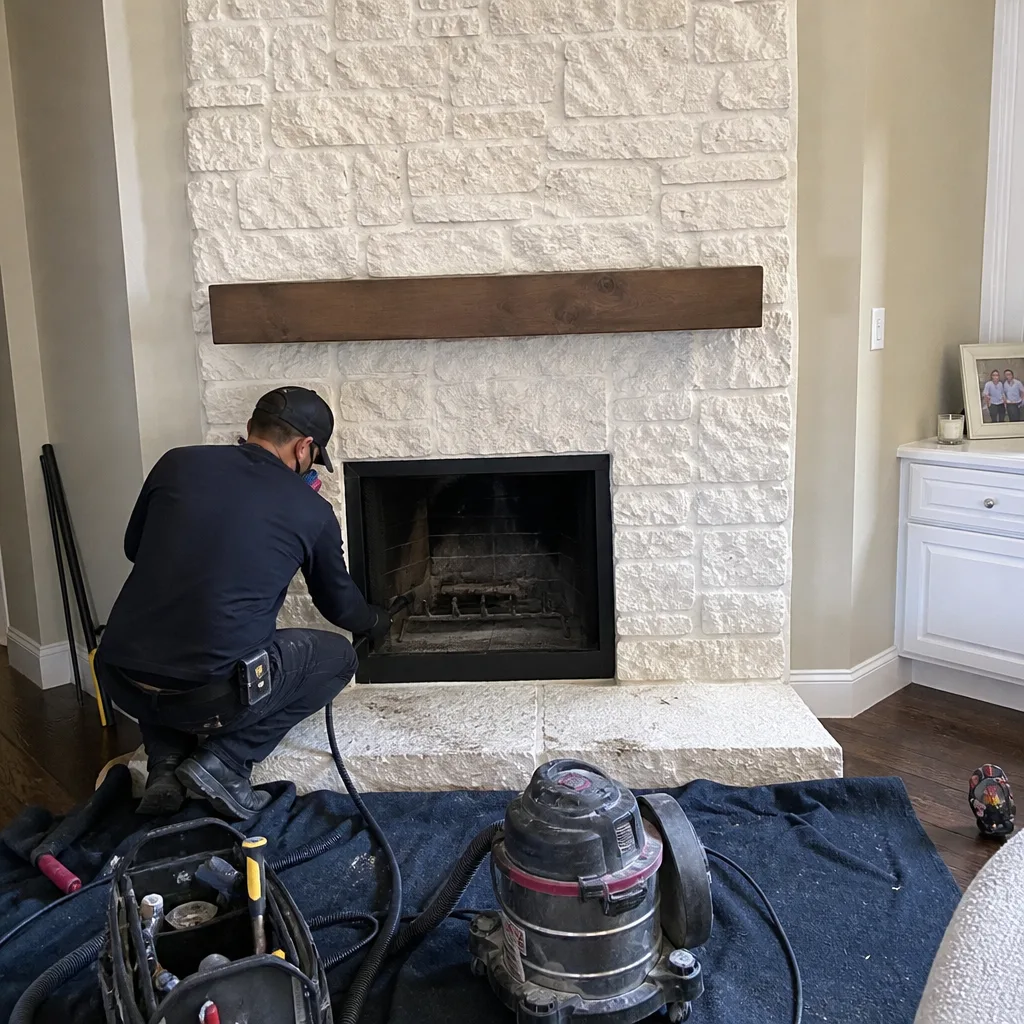
Level 1 sweep and inspection to the NFPA 211 annual standard - flue, crown, cap, and flashing checked and photographed
Chimney sweep logs do not sweep chimneys. They loosen some creosote - which then falls where a brush and vacuum still have to collect it.
Chimney Cleaning Permits, Codes & Inspections in TX: What You Need to Know
Here’s the uncomfortable truth most San Marcos homeowners discover too late: your chimney sweep can scrape creosote from your flue all day with zero oversight, but the moment that same flue needs a stainless steel liner, a new firebox, or even a chimney cap installed on a damaged crown, Texas building code treats it as a regulated repair. And if that repair happens without a permit, your insurance company has a legally defensible reason to deny a fire claim. This guide maps the exact line between “routine maintenance” and “permitted work” in Texas, how Hays County interprets that line, and what a compliant inspection actually proves.
Styles & brands we work with
Quick Answer
Routine chimney sweeping and basic cleaning in Texas do not require a permit. However, structural repairs, liner replacement or installation, firebox rebuilding, and chimney rebuilding generally do require a permit through your local building department – in San Marcos, that’s the City of San Marcos Building Inspection Division. A CSIA Level 2 inspection documents code compliance for insurance and real estate purposes, and it’s the single most valuable piece of paper a homeowner can hold after any chimney work. For a deeper look at what to watch for between inspections, see our Chimney Cleaning Warning Signs: A San Marcos Homeowner’s Reference Guide.
Table of Contents
- Where Texas Code Draws the Line: Cleaning vs. Permitted Repair
- How San Marcos and Hays County Apply IRC Chapter 10
- Liner Materials and Permit Triggers: What You Need to Know
- What a Compliant Chimney Inspection Report Actually Contains
- The Insurance Liability You Accept with Unlicensed Repair Work
- CSIA Level 1 vs. Level 2 vs. Level 3: Which One You Need
- Texas Climate, Chimney Deterioration, and Code Compliance
- Common Mistakes to Avoid
- When to Call a Professional
- Frequently Asked Questions
- The Bottom Line
Where Texas Code Draws the Line: Cleaning vs. Permitted Repair
Texas follows the International Residential Code for one- and two-family dwellings, with amendments at the local level. Chapter 10 of the IRC covers chimneys and fireplaces. The relevant distinction for homeowners isn’t between “cleaning” and “repair” as laypeople understand those words. It’s between work that alters the flue system and work that doesn’t.
A routine sweep, even a deep one with rotary rods and chemical treatment, is considered maintenance. It changes nothing about the structure. You’re removing accumulated creosote and soot from an existing, functioning system. No permit. No inspection. No paper trail needed beyond your receipt.
Work that triggers permit requirements includes:
- Replacing or installing a chimney liner, whether flexible stainless, rigid stainless, or cast-in-place
- Rebuilding a firebox with new refractory mortar or firebrick
- Repointing masonry joints beyond cosmetic touch-up (structural repointing)
- Tearing down and rebuilding any portion of the chimney above the roofline
- Installing a new chimney where one didn’t exist
- Changing the flue size or connecting a new appliance to an existing flue
- Converting a wood-burning fireplace to gas and altering the venting pathway
In our experience, the confusion usually centers on liners. A homeowner will call us in San Marcos for a sweep, we’ll find a failed clay tile liner or a flue that was never lined to code, and the first question is almost always, “Is that even legal to use right now?” The honest answer is sometimes no. And fixing it properly means pulling a permit. We’ve had customers push back, wondering why the “chimney guy” wants to involve the city. The answer is simple: we’d rather the work be documented and compliant than leave a family unprotected. Our Chimney Sweep Troubleshooting: Common Problems and How to Fix Them explains how we diagnose these issues before they become permit-triggering repairs.
How San Marcos and Hays County Apply IRC Chapter 10
The City of San Marcos adopted the IRC with local amendments, and its Building Inspection Division handles residential chimney permits. Hays County, for unincorporated areas, has its own permit process through the County. If you live inside San Marcos city limits, you go through the city’s Development Services department. If you’re in Kyle, Buda, Wimberley, or unincorporated Hays County, you’re dealing with the county or that municipality’s building office.
What San Marcos looks for in a chimney permit application is straightforward:
- Scope of work description – be specific about what’s being repaired or replaced
- Manufacturer specifications – for liners, this means UL listing documentation
- Clearances to combustibles – drawings or measurements showing the flue meets IRC clearance requirements
- Flue sizing calculations – for new appliance connections or liner resizing
Many homeowners assume a chimney permit is a formality. It isn’t. The city’s inspectors verify that the installed liner matches the listed product, that clearances are maintained, and that the termination height and cap meet code. In San Marcos, where many homes in the older neighborhoods near Texas State University date back to the 1950s and 1960s, we regularly see chimneys that were built before modern liner requirements existed. Those aren’t grandfathered in forever. The moment you do substantial work on one, the city can require you to bring the whole system up to current code.
That’s a conversation we have with homeowners in the Blanco Gardens and Hughson Heights neighborhoods more often than you’d think. A simple repair turns into a compliance project. It’s not bureaucracy for its own sake. It’s the difference between a chimney that works and a chimney that burns your house down.
Liner Materials and Permit Triggers: What You Need to Know
Not all chimney liners are created equal, and not all of them trigger the same permit requirements. Here’s a breakdown of common residential liner materials in Texas and where they fall on the permit spectrum:
- Clay tile liners (original construction): No permit for cleaning, but replacement or repair beyond simple flue tile replacement typically requires a permit.
- Flexible stainless steel (e.g., DuraFlex): Installing or replacing always requires a permit. These are UL-listed systems with specific installation requirements the city wants documented.
- Rigid stainless steel: Same as flexible – a permit is triggered. Rigid liners are used when flue size reduction is not desired or when a specific appliance requires them.
- Cast-in-place liners: Permit required. These involve pouring a refractory cement mixture around an inflatable form, and the structural implications mean the city will absolutely want to inspect.
- Aluminum liners (gas appliances only): Installing a new aluminum liner for a gas insert typically requires a permit, though the requirements are simpler than for solid fuel applications.
We work with DuraFlex liner systems for most relining projects because they’re the industry standard for a reason. They’re UL-listed, they handle wood and gas applications, and their installation documentation satisfies what San Marcos building inspectors are looking for. When we install one, we provide the homeowner with the UL listing number, the manufacturer’s installation instructions, and a written confirmation that the installation met the required clearances. That’s the paper trail your insurance company wants to see.
One nuance many homeowners miss: resurfacing is different from relining. A product like HeatShield is a professional liner resurfacing system that can restore an aging masonry flue without full removal. In many jurisdictions, resurfacing is considered a repair, not a new installation – which changes the permit picture. Before you assume a damaged flue means a full teardown and a thick permit file, ask whether resurfacing is an option. It often is, and it’s a repair method most generalist crews can’t even perform.
What a Compliant Chimney Inspection Report Actually Contains
After any chimney repair in Texas, you should walk away with documentation. A compliant inspection report isn’t a one-page checklist with a few boxes ticked. For a full overview of what to track, see our Chimney Sweep Maintenance Checklist for San Marcos Homeowners. It’s a record of what was found, what was repaired, and how the repair meets code. Here’s what a thorough report includes:
- Property information: Address, date of inspection, homeowner name, and the inspector’s name and certification.
- System description: Appliance type, fuel type, flue size, liner material, chimney height, and construction type.
- Findings: Photographs and written descriptions of every deficiency, including creosote accumulation, spalling brick, water intrusion, liner gaps, and clearance issues.
- Repair recommendations: Specific, prioritized recommendations with reference to the applicable code section.
- Level of inspection completed: CSIA Level 1, Level 2, or Level 3, clearly stated.
- Signature and certification: A certified chimney professional’s signature with their CSIA or equivalent credential number.
For most homeowners in San Marcos, a Level 2 inspection is the sweet spot. It includes everything in a Level 1 visual check plus video scanning of the flue interior – the only way to actually see liner damage that’s invisible from the firebox or the roof. If you’re buying or selling a home in Hays County, or if you’ve had a chimney fire, a Level 2 is what your lender and insurance company will ask for. We’ve had realtors send clients to us specifically because the seller’s “clean bill of health” turned out to be a Level 1 report that missed a compromised flue wall.
A well-documented Level 2 report satisfies most insurance and real estate disclosure requirements. Keep it with your closing documents. It’s not just a piece of paper. It’s proof that the chimney system was inspected to a professional standard at a specific point in time.
The Insurance Liability You Accept with Unlicensed Repair Work
Here’s the scenario we alluded to at the top: a contractor relines your chimney, you pay cash, and no permit is pulled. A year later, there’s a chimney fire and your insurance company investigates. They find no permit history. They ask who did the work. You can’t produce a license number, a permit, or an inspection report. The denial letter says the installation was performed by an unlicensed contractor without required permits, and your policy contains an exclusion for work performed without proper authorization.
That’s not hypothetical. We’ve seen the aftermath. And the contractor? Not answering the phone.
Texas doesn’t have a state-level chimney contractor license, which makes this even murkier. What Texas does have is a requirement that structural work be performed by licensed contractors and inspected by local building departments. There’s also the Texas Department of Licensing and Regulation requirement for certain contractor classifications. Some chimney work falls under general building permits, and in San Marcos, the city’s contractor registration and bonding rules apply. A homeowner who hires someone without verifying the contractor is registered and insured is taking on personal liability for any damage that results.
Cleaning is different. A sweep who understands combustion systems and works carefully isn’t doing anything that requires a permit. But that same sweep who offers to “fix” a cracked crown by slapping mortar over it without addressing the underlying structural issue has just crossed into unpermitted repair work. And you, the homeowner, are the one who owns the problem.
This is why Chimney Repair in San Marcos and sweeping should be handled by the same company that knows where the line is. We don’t cross it without telling you what’s happening and what the city requires.
CSIA Level 1 vs. Level 2 vs. Level 3: Which One You Need
The Chimney Safety Institute of America defines three inspection levels, and knowing the difference saves San Marcos homeowners money and hassle. Here’s the practical breakdown:
- Level 1: A visual check of readily accessible areas. Appropriate when you’ve used the chimney consistently and nothing has changed. This is what you get with a standard sweep. No video, no attic or crawlspace check, no special equipment.
- Level 2: Adds video scanning of the flue interior. Required when you’re buying or selling a home, after a chimney fire, after a building fire, after an earthquake or severe weather event, or when you’re changing the appliance or fuel type. This is the inspection that catches hidden liner damage.
- Level 3: Involves opening up walls, ceilings, or the chimney structure itself. Necessary when a Level 2 finds something that can’t be assessed from inside the flue. Rare for routine maintenance, but sometimes unavoidable after serious structural settling or hidden fire damage.
- Assuming a sweep includes a full inspection. A standard cleaning is not a Level 2 inspection. If you haven’t asked for one, you haven’t received one. Ask explicitly.
- Hiring for price on repair work. The cheapest quote on a liner replacement usually means unpermitted work, unlisted materials, or both. In San Marcos, a DuraFlex liner properly installed and permitted costs what it costs for a reason.
- Believing a fresh coat of mortar fixes a structural problem. Cosmetic repointing can hide deeper spalling and liner damage. If someone tells you a cracked chimney crown is “just cosmetic,” get a second opinion.
- Converting to gas without verifying the flue size. Gas appliances need properly sized flues to vent carbon monoxide safely. Connecting a new gas insert to an old, oversized flue is a code violation with fatal consequences.
- Skipping the permit to “keep costs down.” The permit fee is a fraction of the cost of denied claims, forced retrofits, or a chimney fire. It also creates a public record of the work.
- Ignoring dryer vents. Your dryer vent is a combustion product pathway. A clogged dryer vent is a fire hazard that chimney-trained specialists can address. Dryer Vent Cleaning in San Marcos is not an add-on service – it’s a fire-safety service.
- Discarding inspection reports. Your Level 2 inspection report is insurance documentation. Keep it as long as you own the home.
If you’ve lived in your home for more than a year and you’ve never had a Level 2 inspection, we’d recommend starting there – especially in San Marcos, where summer heat and winter freeze-thaw cycles work on masonry joints year-round. The cost of a Level 2 is measured in hundreds of dollars. The cost of missing a cracked flue tile that’s been venting heat into your wall cavity is measured in hundreds of thousands.
Texas Climate, Chimney Deterioration, and Code Compliance
Central Texas is hard on chimneys. Our summers hit triple digits, and January nights dip below freezing. That thermal cycling expands and contracts masonry at different rates than the flue liner inside it. Over decades, this movement separates clay tile joints, cracks mortar, and creates pathways for heat transfer into the surrounding structure. Add Hill Country limestone’s tendency to absorb water, and you have a recipe for slow, invisible deterioration.
What this means for code compliance is practical: a chimney that passed inspection twenty years ago may not meet today’s standards. In San Marcos neighborhoods with original 1960s and 1970s construction – we see this constantly in the area around Cheatham Street and along the San Marcos River – chimneys are reaching the end of their original service life. The flues weren’t built to today’s liner standards because those standards didn’t exist. The mortar wasn’t mixed for forty years of Hill Country weather.
The code doesn’t care that the chimney was “fine when I bought the house.” If substantial work is done, the current standard applies. That’s not an Oakgrove rule or a City of San Marcos power grab. It’s the IRC’s position, and it’s the position of every insurance underwriter in Texas.
When we assess a chimney in San Marcos, we’re looking at the system as the code sees it: is there a UL-listed liner of the correct size for the appliance, are clearances maintained throughout the entire flue path, is the termination height correct for the roof’s pitch and surrounding obstructions, and is the chimney cap doing its job. Often, the answer to one of those questions is no. And that’s when the permit conversation starts.
Common Mistakes to Avoid
When to Call a Professional
Call a chimney professional if you’ve had a chimney fire, are buying or selling a home, notice water in the firebox, smell smoke inside the house after a fire is out, see visible masonry cracks, or can’t remember the last time the flue was inspected. Call if your dryer takes multiple cycles to dry clothes or the vent flap outside doesn’t open during a cycle. And call if you’ve just been told by a handyman that your chimney “needs a lot of work” – get a professional opinion before spending a dollar. Oakgrove Chimney Sweep offers free estimates in San Marcos – call (866) 472-2513.
Frequently Asked Questions
No. Routine chimney sweeping and cleaning are considered maintenance and do not require a permit anywhere in Texas, including San Marcos and Hays County. The permit requirement kicks in only when structural repair, liner installation, or firebox rebuilding is performed.
A standard chimney sweep in San Marcos typically costs between $150 and $300 for an open fireplace, with gas fireplace and insert cleaning running slightly higher. A Level 2 inspection with video scanning typically costs between $200 and $400. The exact price depends on the appliance type, flue condition, and whether cleaning reveals repair needs. Call (866) 472-2513 for a free estimate.
The CSIA recommends a sweep whenever creosote accumulation reaches 1/8 inch, which for most wood-burning fireplaces means annual cleaning. Gas fireplaces can typically go two to three years between cleanings. In San Marcos, where we see long burning seasons and occasional hard freezes, annual inspection and cleaning for wood-burning systems is the sensible default. You can find more guides & resources on keeping your system safe year-round.
Not always. A video inspection will show whether the existing liner is cracked, spalled, or separated at the joints. In some cases, a product like HeatShield can resurface the existing liner without full replacement. We don’t recommend liner replacement without camera evidence we can show you during the inspection. Call (866) 472-2513 to schedule a Level 2 inspection for an honest assessment.
If the work is done without a permit, you risk insurance claim denial if the chimney later causes a fire, difficulty selling the home when the unpermitted work shows up in title review, and liability if someone is injured due to faulty installation. The City of San Marcos can also require retroactive permitting, which often costs more than doing it right the first time.
Yes. Lint accumulates inside the entire vent run, not just the visible portion behind the dryer. A dryer that “works fine” is often working harder than it should, which shortens its life and increases fire risk. Dryer Vent Cleaning in San Marcos is a fire-safety service we take as seriously as chimney sweeping – call (866) 472-2513 to schedule.
The Bottom Line
Chimney cleaning in Texas is permit-free. Chimney repair – liners, fireboxes, crowns, and structural work – is not. In San Marcos, the City of San Marcos Building Inspection Division enforces IRC Chapter 10, and proper permits create the paper trail that protects your insurance claims and your resale value. A CSIA Level 2 inspection is the documentation you need, and it’s the single most useful service a San Marcos homeowner can book before buying, selling, or after any chimney event. We repair what we find, we pull the permits the work requires, and we document everything for your records. If you need a sweep, a repair, or a dryer vent cleaning in San Marcos, contact Oakgrove Chimney Sweep at (866) 472-2513 for a free estimate. Written by the team at Oakgrove Chimney Sweep, serving San Marcos since 2017.
See the difference
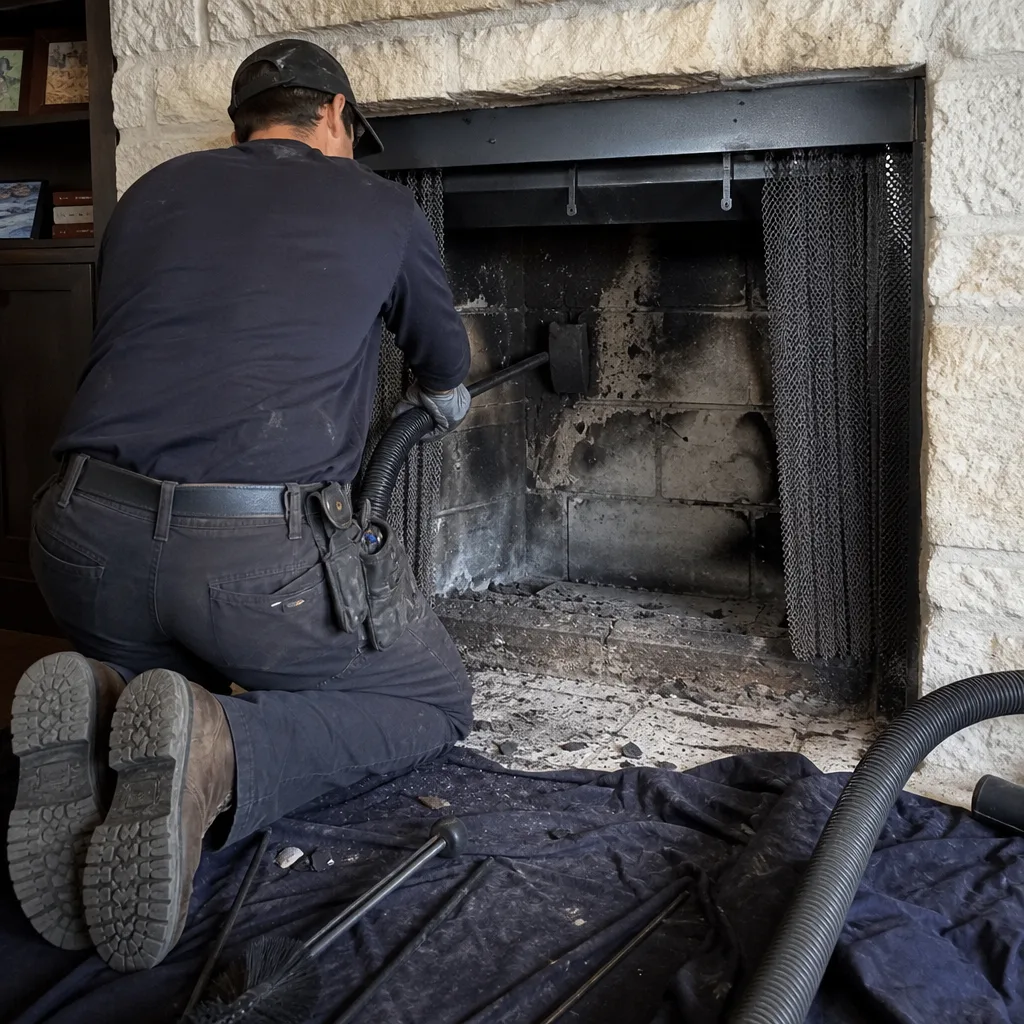 Before
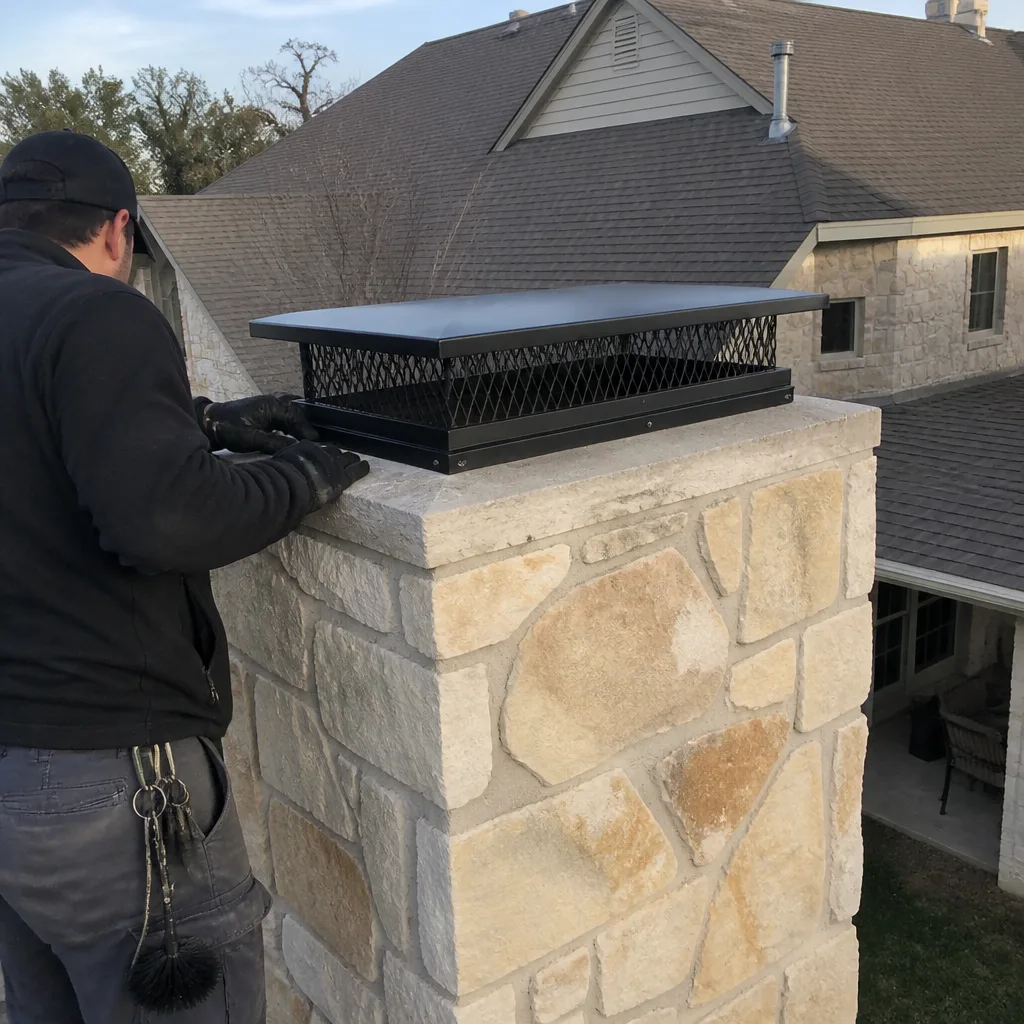 After
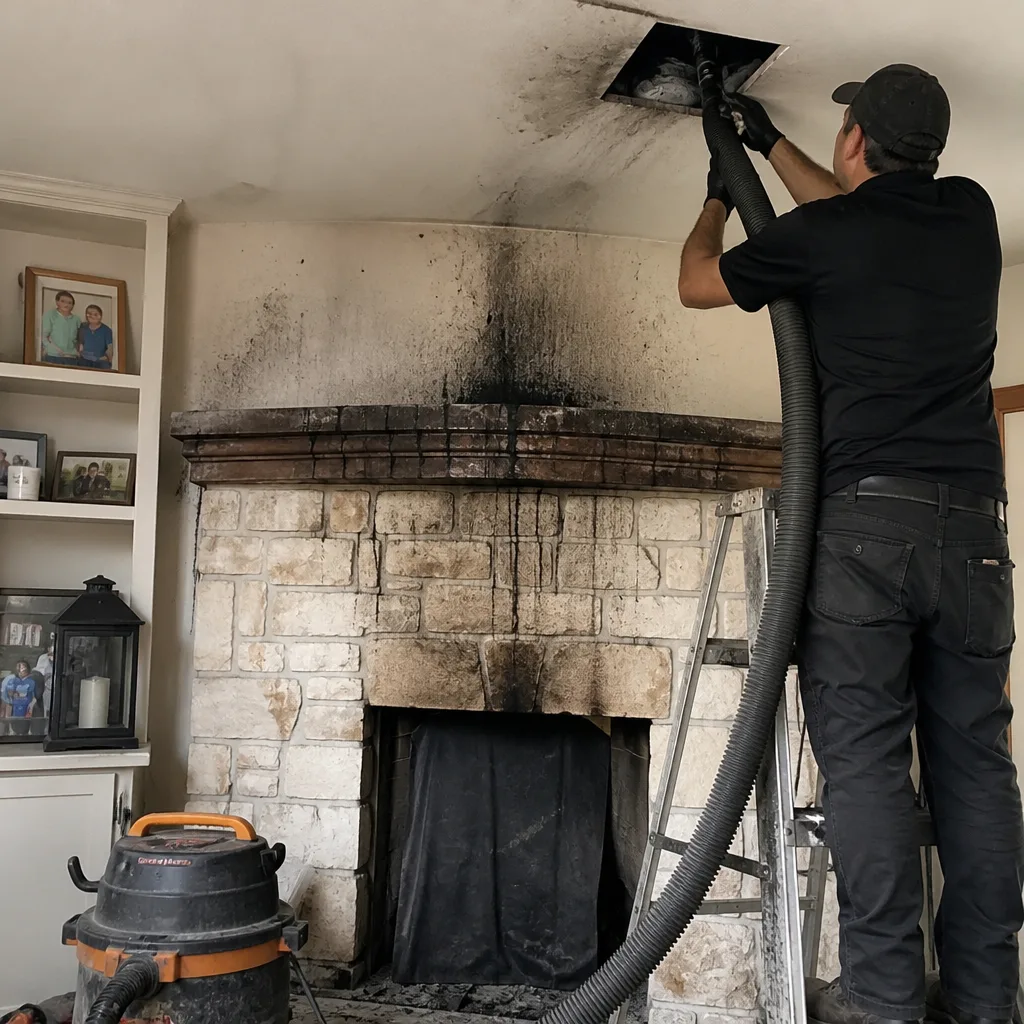 Before
 After
 Before
 After