
Last updated October 30, 2026
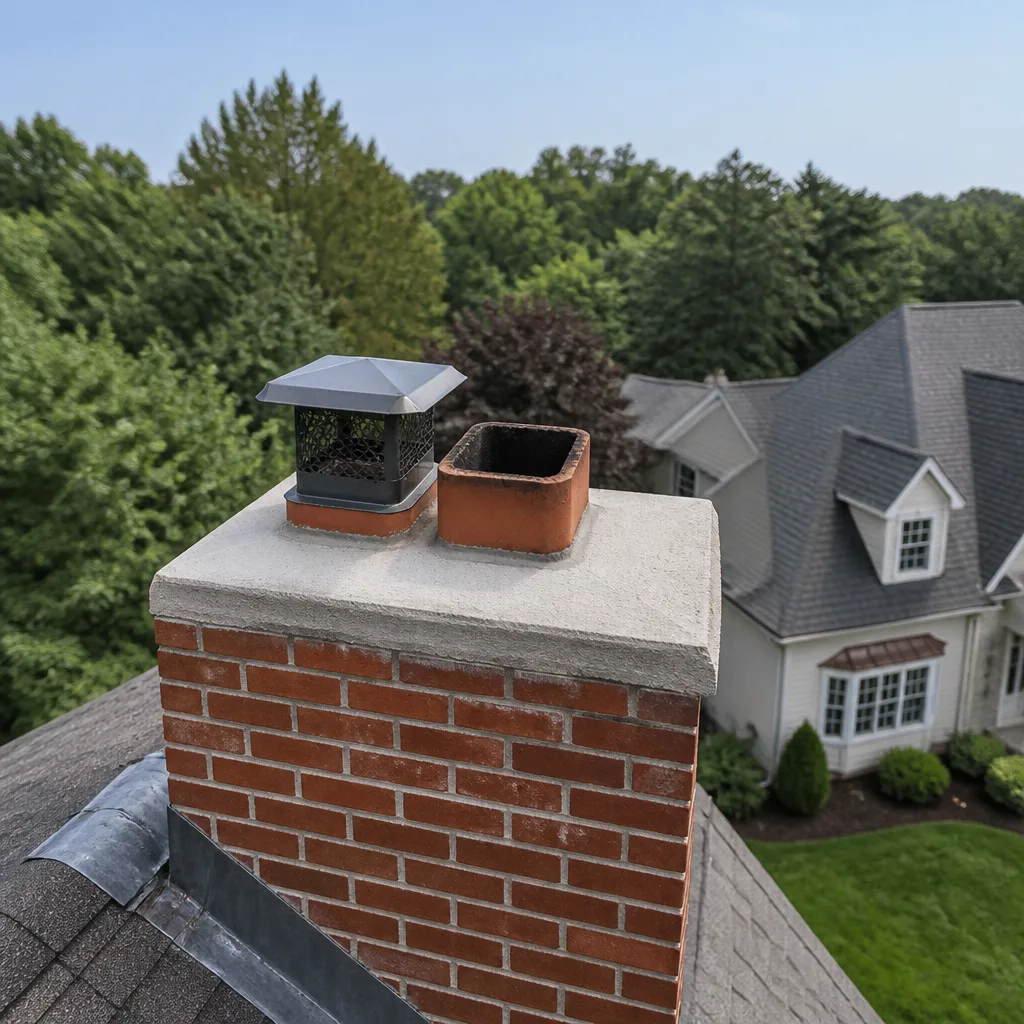 Sweep & inspection
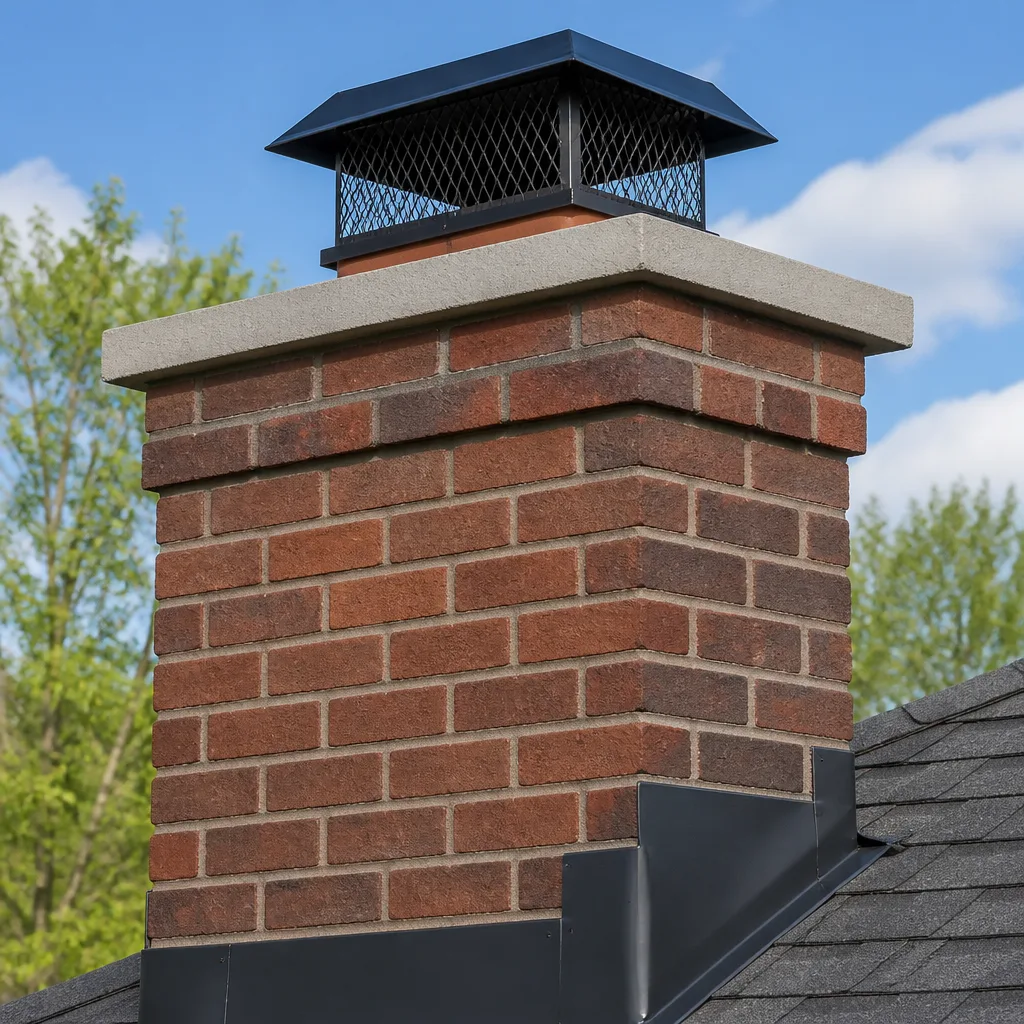 Caps & crowns
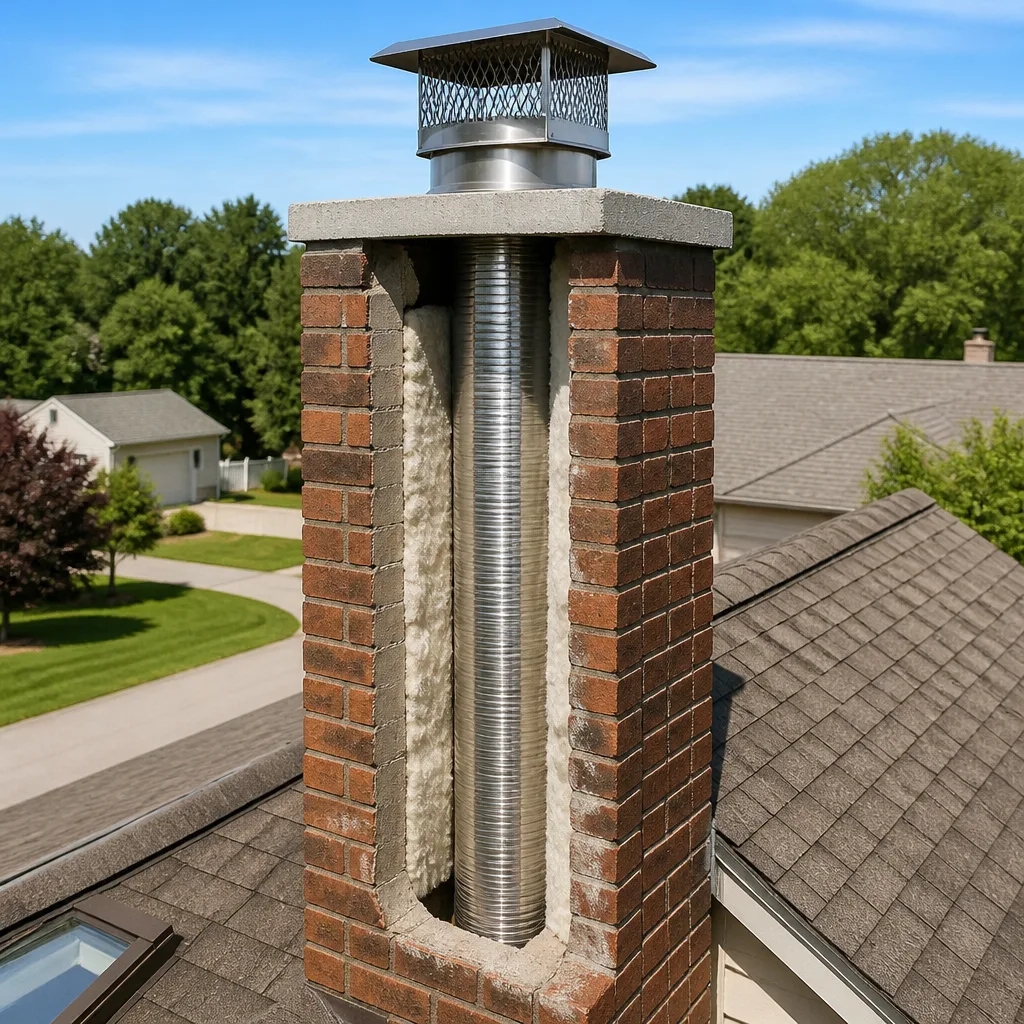 Flue relining
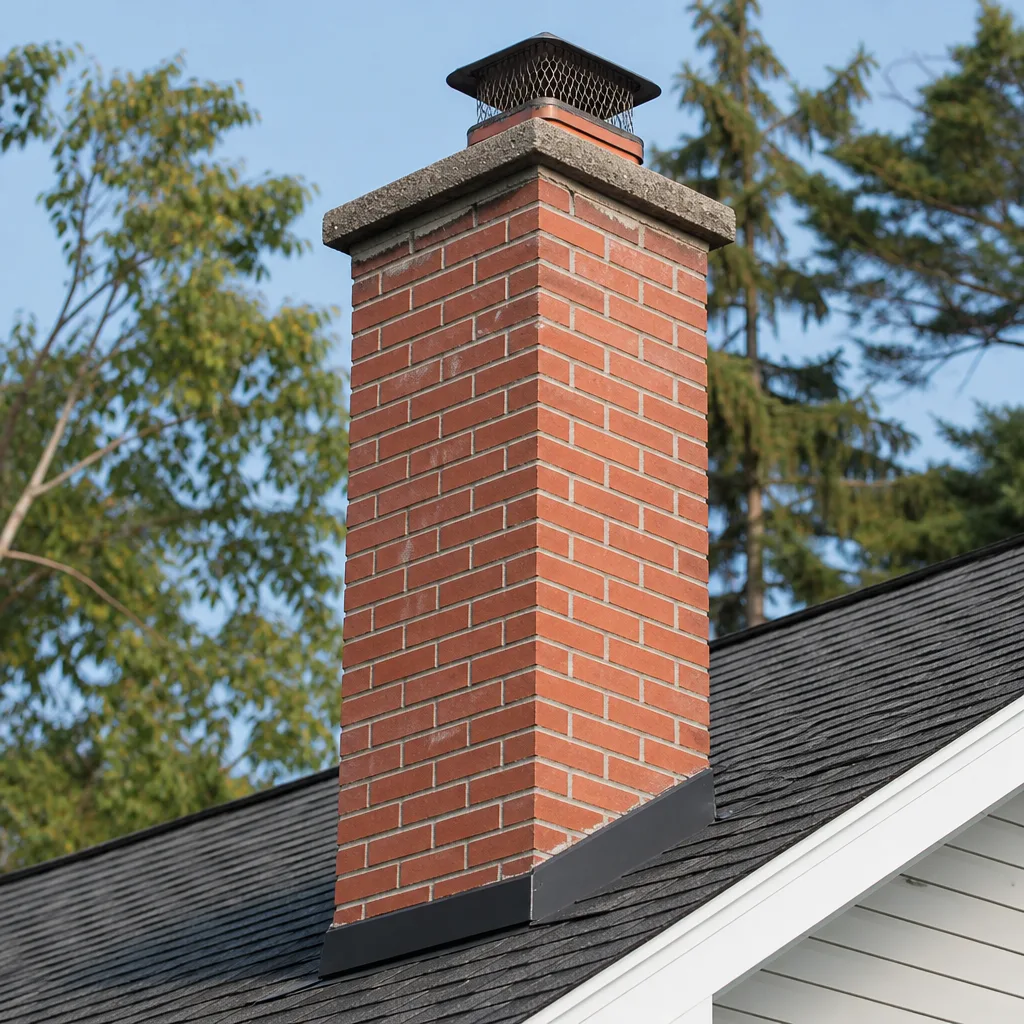 Masonry repair
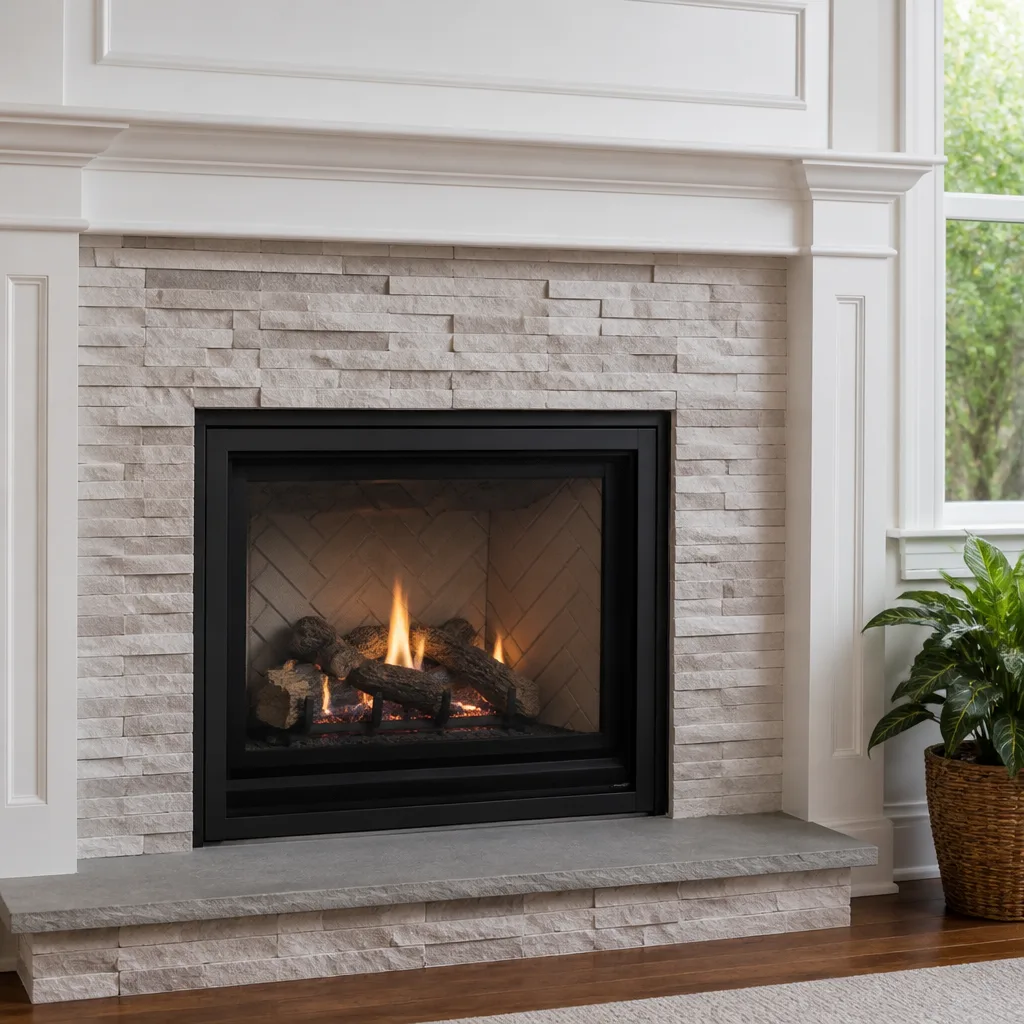 Gas fireplace service
Level 1 sweep and inspection to the NFPA 211 annual standard - flue, crown, cap, and flashing checked and photographed
Chimney sweep logs do not sweep chimneys. They loosen some creosote - which then falls where a brush and vacuum still have to collect it.
Chimney Sweep Maintenance Checklist for San Marcos Homeowners
The biggest maintenance mistake San Marcos homeowners make isn’t skipping the annual sweep. It’s having no idea what to check in the eleven months between professional visits. A chimney doesn’t fail on a schedule. It fails when Hill Country humidity works its way into tiny mortar cracks, when a spring hailstorm dents a cap, when a family of chimney swifts builds a nest in June and nobody notices until the first cold snap in November. This Chimney Sweep Troubleshooting: Common Problems and How to Fix Them guide gives you a month-by-month framework built around observable triggers, not arbitrary calendar dates. You’ll learn what to look for from the ground, what to document, and when a phone call to a chimney specialist in San Marcos is the difference between a $200 sweep and a $4,000 rebuild.
Styles & brands we work with
Quick Answer
A chimney maintenance checklist for San Marcos homeowners should include monthly visual inspections of brick, mortar, and cap from the ground, a post-storm check after hail or high-wind events, a damper function test before the first fire, and documentation of any changes you notice between professional sweeps. The annual professional sweep remains essential, but what you observe and record during the other eleven months determines whether small issues get caught early or become structural problems.
Table of Contents
- Why San Marcos Chimneys Deteriorate Differently
- Monthly Visual Checks You Can Do From the Ground
- Post-Storm Inspection Protocol for Hail and High Wind
- Damper Function Tests Before the First Fire
- Signs Your Liner Is Deteriorating Between Sweeps
- Documenting Chimney Condition: Building a Baseline
- What You Can Safely Ignore (And What You Can’t)
- Common Mistakes to Avoid
- When to Call a Professional
- Frequently Asked Questions
- The Bottom Line
Why San Marcos Chimneys Deteriorate Differently
San Marcos sits in a unique climate corridor. We’re far enough from the coast to avoid the constant salt and humidity of Houston, but we’re close enough to the Gulf to get moisture patterns that inland Texas doesn’t see. Add the limestone-heavy soil of the Hill Country and the freeze-thaw cycles we get on those rare January nights when temperatures dip below 32 degrees, and you have a recipe for masonry stress that a chimney in Dallas or Lubbock simply doesn’t experience.
What does that mean in practical terms? Three things. First, efflorescence, the white chalky powder that appears on brick, shows up faster here because our humidity keeps moisture moving through masonry. Second, cap screens and metal components corrode faster in San Marcos than in drier parts of Texas, not because of rain volume but because of persistent moisture exposure. Third, the clay-heavy soils in parts of Hays County shift with rainfall patterns, which can cause subtle foundation and hearth movement that transmits stress up the chimney structure.
If you’ve just bought a home in San Marcos, particularly in an older neighborhood near the university or in the historic districts, your chimney may be 30, 40, or 50 years old. Homes in Blanco Vista, La Cima, and other newer developments have younger chimneys, but newer doesn’t mean problem-free. We’ve seen 8-year-old chimneys in San Marcos with significantly eroded mortar joints because the original build used low-quality mortar or the cap was set improperly. Age matters less than exposure and materials.
Monthly Visual Checks You Can Do From the Ground
You don’t need to climb on your roof to perform meaningful chimney maintenance checks. In fact, we’d rather you didn’t. Most of what you need to observe is visible from ground level with a pair of binoculars or a good camera zoom. Here’s a monthly routine that takes five minutes and catches most developing problems.
- Efflorescence check: Look at the bottom third of your chimney, especially near the roofline. Efflorescence looks like white, chalky powder or streaks on the brick face. It means water is moving through the masonry, and in San Marcos’s humidity, it appears faster than in drier climates. A small patch that appears after a rainy week and then fades is worth noting. A patch that persists or grows month over month means water is being drawn through the brick on a regular basis, and you should have it evaluated.
- Spalling detection: Spalling is when the brick face flakes, chips, or pops off, leaving a rough, pitted surface or visible brick shards at the base of the chimney. Look for areas near the roofline where the brick surface looks uneven or chipped. Spalling in San Marcos is often driven by the same humidity cycle that causes efflorescence. Water gets in, temperatures shift, and the brick face loses its outer layer. Left unchecked, spalled brick loses structural strength.
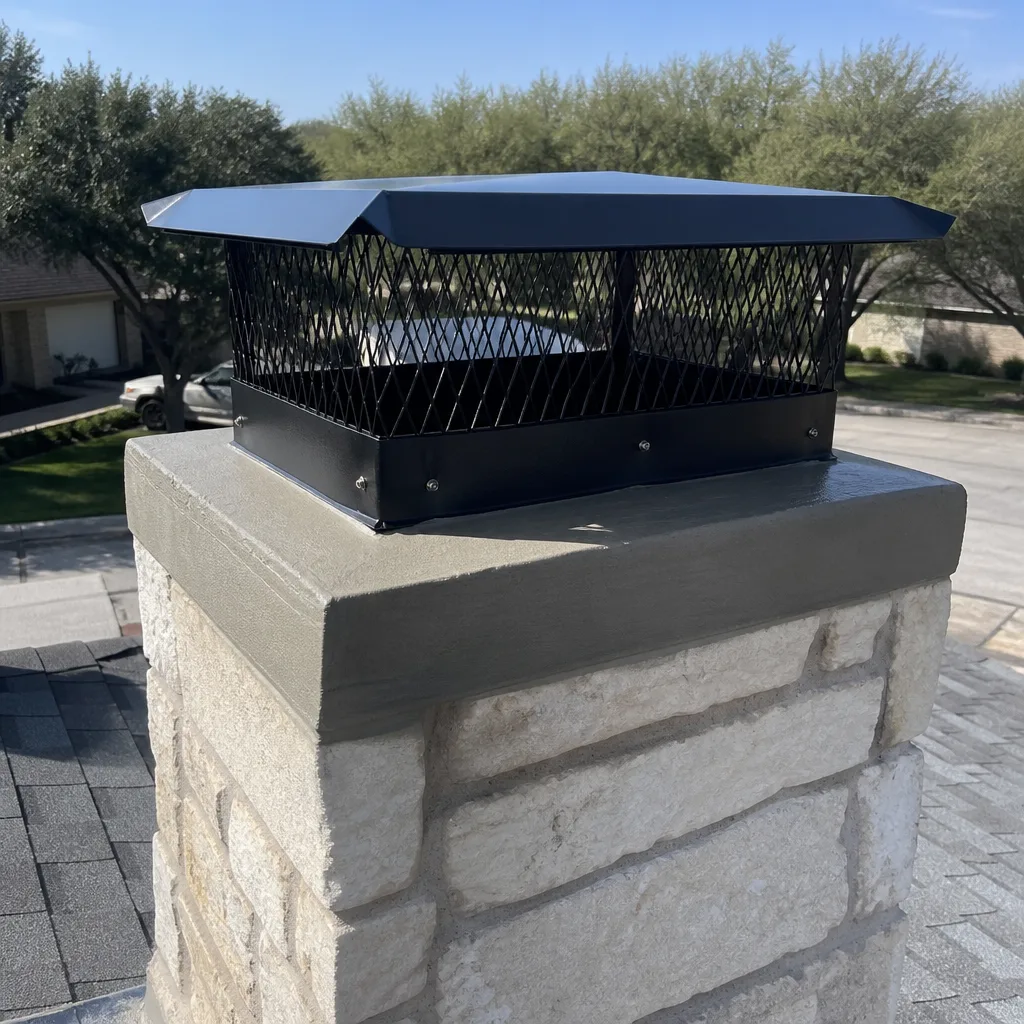
- Cap screen and crown inspection: Train your binoculars on the metal cap at the top of your chimney. Look for rust, bent screens, or missing mesh. In San Marcos, cap screen corrosion happens from persistent humidity more than from visible rain. A rusted screen won’t fail overnight, but once the mesh develops holes, birds and squirrels can enter the flue, and then you have a nest situation that can block your vent entirely.
- Brick alignment check: Stand directly in front of your chimney from the street or yard and look at the vertical lines. Are any bricks visibly out of alignment? Does the chimney lean even slightly away from the house? Hairline vertical cracks near the corners are worth documenting. In Hill Country soil, minimal foundation movement shows up in the chimney first.
- Flashing and roofline junction: Look at where the chimney meets the roof. Do you see gaps, lifted flashing, or what looks like staining around the base? Flashing failures are one of the most common leaks in San Marcos homes, and water that runs down the outside of the flue is the silent killer of interior masonry.
Do this once a month, and write down what you see. A note that says “small efflorescence patch on west face, bottom third” from March becomes valuable baseline data when you compare it to what you see in July. Documentation turns a passing glance into an actual maintenance record.
Post-Storm Inspection Protocol for Hail and High Wind
San Marcos is no stranger to spring hailstorms and the high-wind events that roll through the I-35 corridor. After any storm with hail one inch or larger, or winds exceeding 50 miles per hour, we recommend a specific roof-level check. We’ll say this plainly: you don’t need to go on the roof for this. You need a careful visual from the ground and, if the storm was severe, a professional chimney inspection in San Marcos.
Here’s what to do after a significant storm:
- Hail check on the cap: Hail can dent, crack, or dislodge a chimney cap. From the ground, look for any change in cap position, new gaps between the cap and crown, or visible dents when sunlight catches the metal. A dented cap that’s still in place is often still functional, but a cap that’s been shifted can create a gap that allows rain into the flue.
- Screen and mesh inspection: High winds can pull cap screens loose or fold them over the flue opening. A folded screen that rests against the flue opening creates a partial draft obstruction, which can push smoke back into the house when the chimney is in use. Document any screen movement.
- Crown crack survey: The concrete crown at the top of the chimney is the first line of defense against water. Hail can crack a crown, especially if it’s an older one that’s already showing hairline fractures. From the ground, look for darkened areas or new cracks radiating from the flue opening outward. Crown cracks allow water into the chimney chase, and in the San Marcos humidity cycle, that moisture stays longer than it would elsewhere.
- Flashing and shingle debrief: Walk around the house and look at the roofline. Are shingles missing or lifted around the chimney base? Is flashing visibly separated from the roofline? A shingle that’s been lifted by wind can let water run directly toward the chimney chase.
- Brick or mortar debris: Check the ground at the base of the chimney for small pieces of brick, mortar, or cap material that may have been knocked loose. Debris on the ground after a storm is a signal that something above the roofline took impact.
After a major hail event, many San Marcos homeowners file insurance claims for roof damage. Here’s what most people miss: chimney damage from the same storm is often covered under the same claim, but only if it’s documented. If you notice cap dents, crown cracks, or displaced flashing, have a chimney specialist assess it before the adjuster finishes the claim. We’ve seen too many homeowners pay out of pocket for chimney repairs that should have been included in their storm claim, simply because the chimney wasn’t evaluated in time. Our Chimney Repair in San Marcos service documents damage with photos and written reports you can submit to your insurer.
Damper Function Tests Before the First Fire
Every October, before that first fire of the season, test your damper. It’s a two-minute check that catches three common problems: a seized damper plate, a broken damper cable, and a damper that doesn’t seal fully when closed. The damper is a safety component as much as it is a convenience component. A damper that stays open when the chimney isn’t in use lets conditioned air escape through the house, but a damper that’s stuck closed when the chimney is in use can fill your living room with smoke in minutes.
Here’s the safe way for a homeowner to test a traditional throat damper:
- Cold chimney, no fire: Make sure the fireplace is completely cold. No embers, no residual heat. You’re testing under conditions that represent the chimney before first use.
- Check the control mechanism: If you have a handle or control lever in the firebox, gently move it through its full range. It should move freely without forcing. A seized damper often means rust on the hinge assembly, which is common in San Marcos’s humid summers.
- Look for full open and full close: Using a flashlight, look up into the firebox at the damper plate. When open, the plate should be fully out of the flue path, not hanging partially across. When closed, it should seat flush against the frame. Slivers of light around the edges when closed mean the plate isn’t sealing, and you’re losing as much as $200 to $300 a year in conditioned air escaping through an open damper gap.
- Listen for smooth operation: Does the damper squeak, grind, or catch? These are early warning signs of hinge wear. A damper that operates stiffly will eventually stop moving entirely, usually on the day you really want a fire.
- Note any odors: While your face is near the firebox, note any unusual smells. A properly functioning chimney is relatively odor-neutral when not in use. A persistent campfire smell in the house during our humid San Marcos summers often means creosote is retained in the flue and releasing odors as humidity rises.
If your home has a top-sealing damper (the kind mounted at the top of the flue), you won’t see the plate from inside the firebox. Your check is simpler: operate the control mechanism and feel for smooth spring tension. A top-sealing damper that no longer closes fully is the same problem as a throat damper, just at a different sealed location. If your damper has any issue during the pre-season test, this is a repair we commonly handle during a Chimney Sweep in San Marcos visit. Damper inspection and adjustment are standard parts of our sweep process.
Signs Your Liner Is Deteriorating Between Sweeps
A flue liner doesn’t fail suddenly. It deteriorates over years, and the warning signs are detectable between professional visits if you know what to look for. In San Marcos, gas fireplace liners and unlined wood-burning flues are both commonly seen in older homes, and each presents its own deterioration pattern. Your flue is a combustion system, not just a masonry tube, and it degrades on a schedule set by heat, moisture, and chemistry.
Here are the signs we see most often in San Marcos homes:
Odor patterns that change with humidity: A healthy chimney doesn’t smell. If you notice a persistent smoky or burnt odor from your fireplace in the summer months, particularly after a humid night, that’s often creosote or mineral deposits in the flue reacting to moisture. This is more than an inconvenience. It’s a signal that material is building up on your flue walls, and the earlier you address it, the less extensive the cleaning or repair needs to be.
Draft changes in specific weather: Has the fireplace always drawn well but now struggles on windy days? Or does it draw fine in cold weather but back-puffs when temperatures are moderate? These changes indicate the flue dimensions or smoothness have changed. Clay tile liners that develop cracks create turbulence, which disrupts the smooth airflow your chimney depends on. A small crack changes draft characteristics, and draft changes are your early warning.
White staining on exterior brick near the flue: That same efflorescence we mentioned earlier can point to liner trouble, not just masonry moisture. When flue gases leak through cracks in the liner, they condense on the inside of the chimney chase, and those deposits eventually work their way through to the brick exterior as staining. If the efflorescence is concentrated in a vertical band near the flue line rather than across the whole chimney face, liner leakage is a strong possibility.
Flakes or chunks in the firebox: After a fire, when everything is cold, look carefully at the floor of the firebox. Do you see small pieces of clay tile or brick? Do you see what looks like sand or grit that wasn’t there before? Clay flue tiles that are spalling shed material that falls back down into the firebox. This is a concrete sign of liner deterioration, not routine ash.
When we restore aging flues, we use HeatShield, a liner resurfacing system specifically engineered to restore structural integrity to damaged masonry flues. It’s a professional-grade repair that most general contractors can’t even order, much less install correctly. The earlier you catch liner deterioration, the more likely you can resurface rather than reline or rebuild. If you’re noticing any of these signs, our Chimney Sweep in San Marcos service includes a camera inspection so you can see exactly what we see inside your flue.
Documenting Chimney Condition: Building a Baseline
Here’s the single most useful thing a San Marcos homeowner can do between sweeps: create a documentation baseline. Most chimney problems don’t look like problems from one month to the next. They look like problems when you compare a photo from last October to a photo from this October. A baseline lets you, and us, catch deterioration at the earliest possible stage.
What to document
- Photographs from fixed positions: Stand in the same spot in your yard or street and photograph your chimney once a quarter. Same angle, same distance, same time of day. These comparison photos reveal brick movement, mortar erosion, and efflorescence changes that you can’t track by memory.
- Efflorescence notes: When you do your monthly check, write down whether efflorescence is present, where, and whether it seems more or less prominent than last month. A simple note like “west face efflorescence larger than March” is genuinely useful to us.
- Interior fire notes: After each fire, take 30 seconds to note the date, outside temperature, how well the fire drew, whether any smoke entered the room, and any unusual smells. Over a season, this log shows draft trends that point to liner changes.
- Damper status: Record where your damper is set when the fireplace is not in use. If you set it to closed in April and find it open in May, you have a mechanical problem, not a mystery.
- Storm observations: After any hail or wind event, write down the date, what you observed, and any photos you took. This record matters for insurance and for us.
When you call a Chimney Sweep, this documentation gives us a starting point that most homeowners can’t provide. Instead of us looking at your chimney as a snapshot on one day in November, we see the trend line of the previous year. We know where the efflorescence started, how fast it grew, and whether the cap was damaged before the March hailstorm or after. That’s the difference between a reactive repair and a proactive maintenance plan.
What You Can Safely Ignore (And What You Can’t)
We’d be giving you incomplete advice if we didn’t tell you that some things homeowners worry about are genuinely not problems. The key to smart chimney maintenance is knowing the difference between cosmetic variation and structural deterioration.
Safely ignorable
- Uniform dark staining on the crown: Dark gray or black staining on the concrete crown is usually cosmetic. It’s minerals and carbon from flue condensation, not structural damage. If the crown isn’t cracked and isn’t crumbling, the staining doesn’t matter.
- Light rust on the cap body: A thin, even coat of surface rust on a galvanized cap is normal over time in our climate. It can look worse than it is. If the rust hasn’t eaten through the metal and the screen is intact, the cap still has years of life.
- Efflorescence that appears once and disappears: If you see a small white patch after a rainy week and it fades within a few days and doesn’t return, that’s normal moisture movement. Document it and move on. It’s the recurring, growing efflorescence that signals a problem.
Never ignorable
- Any visible crack in the crown: Cracks in the crown don’t heal. They widen, and once water enters the crown crack, it freezes and expands on cold nights and accelerates the damage.
- Brick shards on the ground: At the base of your chimney, or on the roof near the chimney, small pieces of brick or mortar mean the structure is losing material. That’s never normal.
- A leaning chimney: Even a slight lean, a half inch or less at the top, is a structural issue. Chimneys don’t lean due to age alone. It’s a foundation or structural problem, and it will get worse.
- Smoke smell when the chimney isn’t in use: Persistent odor, especially in humid weather, is a sign of creosote buildup or liner damage, and it will not resolve on its own.
- Animal sounds from the chimney: Squirrels scratching, bird chirps, or buzzing insects from the flue area mean something has gotten through the cap screen or around the crown, and you need that addressed before the next time you attempt a fire.
Common Mistakes to Avoid
- Assuming “no visible problem” means “healthy chimney”: The vast majority of chimney problems start where you can’t see them: inside the flue, behind the brick, within the mortar joints. A camera inspection reveals what ground-level checks can’t. We’ll say it again: your flue is a combustion system, and visual access is extremely limited without professional equipment.
- Burning pine without understanding the creosote consequence: Pine is abundant in Texas, but it produces significantly more creosote than oak or other hardwoods. If you burn pine regularly in San Marcos, you need more frequent cleaning than the annual recommendation, not less.
- Ignoring the dryer vent because “the dryer works fine”: Lint-clogged dryer vents cause approximately 2,900 home fires per year in the U.S., and the dryer will often continue to work normally even as the vent becomes dangerously restricted. A slower dry time is the warning sign most people miss. Dryer vent maintenance is fire-safety work, not appliance upkeep. We think it deserves the same seriousness as chimney maintenance, which is why our Dryer Vent Cleaning in San Marcos service is a core part of what we do, not an add-on.
- Sealing off an unused fireplace without proper venting: Some homeowners who never use their fireplace decide to seal it off to stop drafts. Done incorrectly, this traps moisture in the flue and accelerates masonry deterioration. A properly sealed chimney still needs to breathe.
- Skipping the post-storm check because the roof looks fine: Your roof shingles may have survived the hail, but your chimney cap and crown took the same impact. Chimney components are exposed metal and concrete at the highest point of your house. They’re the most impact-vulnerable parts of your home.
- Postponing repairs because “we rarely use the fireplace”: An unused chimney still deteriorates. In fact, some deterioration patterns accelerate in unused chimneys because moisture has more time to sit undisturbed. The decision to repair isn’t about how often you burn; it’s about keeping your masonry shell and flue system structurally sound.
- Using store-bought cleaning logs as a substitute for professional sweeping: Creosote sweeping logs are a supplement, not a service. They can’t access the full flue surface, can’t remove hardened stage-three creosote, and can’t evaluate the structural condition of your liner. If you’re using these and calling it maintenance, you’re getting the worst of both worlds: a false sense of safety without the diagnostic information that actually protects you.
When to Call a Professional
Some chimney maintenance you can handle from the ground, and some genuinely requires a trained specialist. Call us if you see any of the following: a visible crown crack, brick spalling that’s progressing, a damper that won’t operate, animal sounds from the flue, or a smoke smell that persists when the chimney isn’t in use. Also call us after any major hail event, even if you don’t see damage, because the most expensive storm damage is the kind you can’t see from ground level. If it’s been more than 12 months since your last sweep, even if you’ve done everything on this checklist, schedule one. Your flue is a combustion system, and combustion systems need professional evaluation. Oakgrove Chimney Sweep offers free estimates in San Marcos. Call (866) 472-2513 and we’ll tell you honestly whether you need service or can wait another year.
Frequently Asked Questions
A wood-burning chimney in San Marcos should be swept annually at minimum, and more often if you burn pine frequently, burn more than twice a week during the cooler months, or notice any odor, draft, or performance changes between sweeps. Gas fireplaces can often go longer between cleanings, but still need periodic inspection because gas venting can develop blockages from debris, bird nests, or corrosion. If you’ve skipped a year or aren’t sure when your chimney was last serviced, schedule a professional inspection and sweep before your first fire of the season.
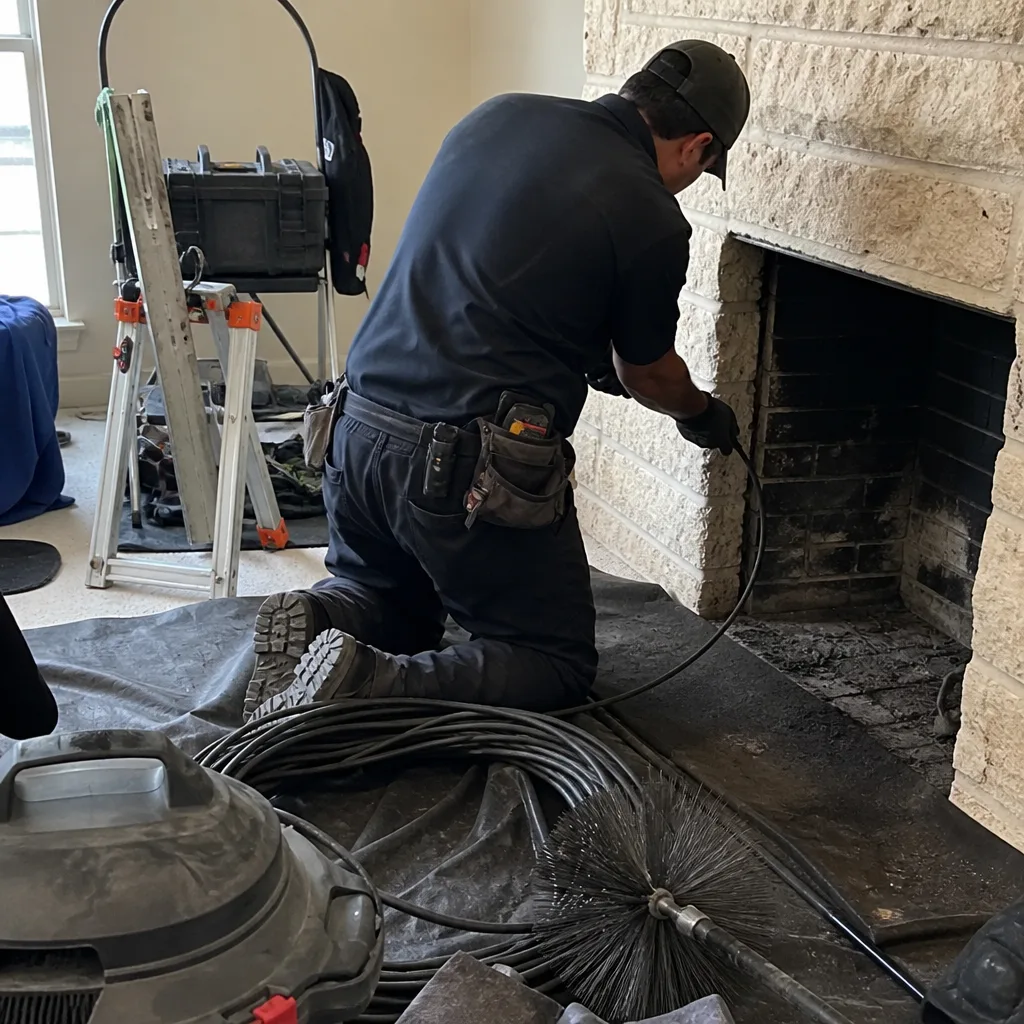
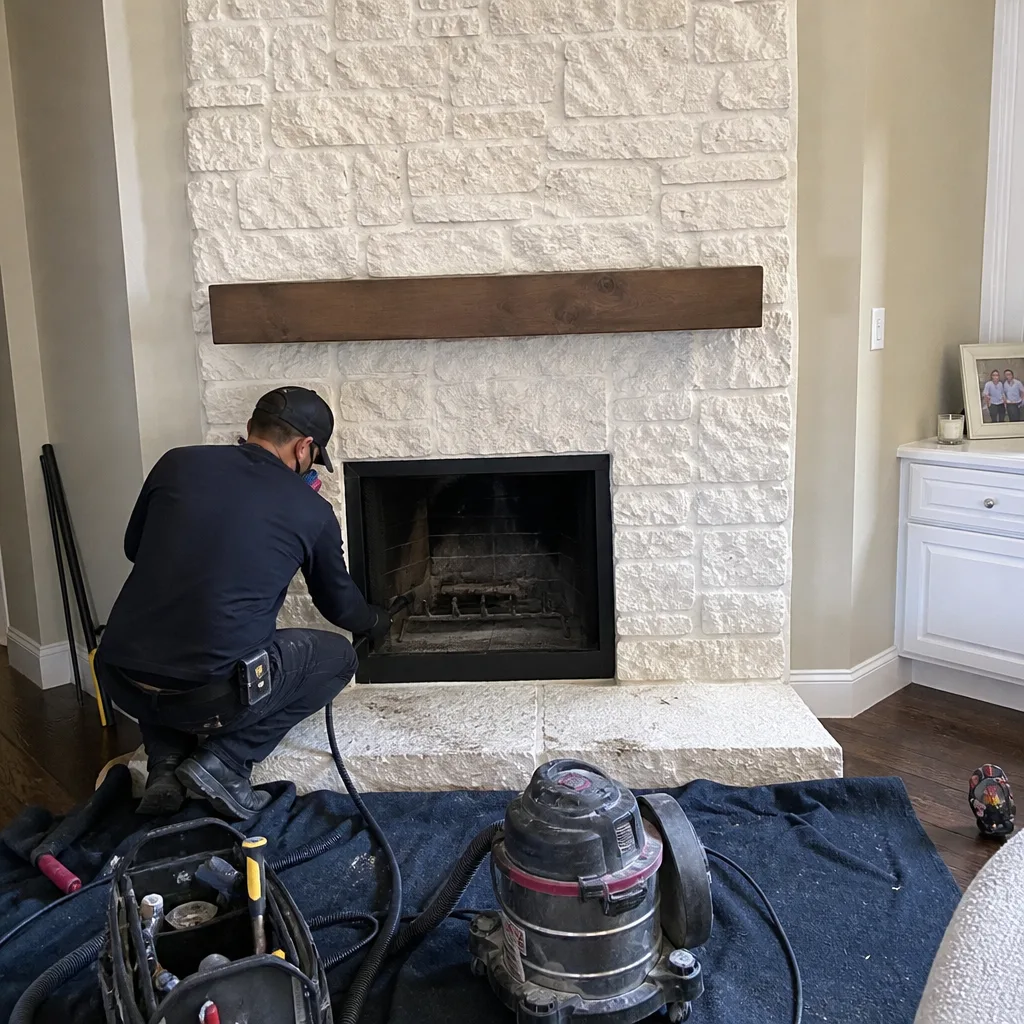
A professional chimney sweep includes removal of creosote and soot from the flue walls, smoke chamber, and firebox, plus a visual inspection of the cap, crown, flashing, damper, and accessible flue surfaces. For Choosing the Right Chimney Cleaning Brand: A Buyer’s Guide for San Marcos, see our detailed comparison. At Oakgrove Chimney Sweep, we include camera inspection of the flue interior as part of the service, which lets us show you exactly what the inside of your chimney looks like and whether any repair is needed. That’s the diagnostic difference between a sweep that just cleans and a sweep that actually tells you whether your chimney is safe to burn. A standard sweep catches problems that would otherwise go unnoticed until they become structural failures or fire hazards.
A standard chimney sweep in San Marcos typically ranges from $180 to $350, depending on the chimney type, the amount of buildup, and whether the flue has been cleaned recently. Additional costs apply if repairs are needed, if the chimney has an obstruction like a bird nest, or if this is a first-time cleaning on a chimney that hasn’t been serviced in years. We give you a flat price before we start, not after, and our free estimates mean you’ll never be surprised mid-job. Call (866) 472-2513 for an exact quote on your San Marcos chimney.
Not always, and you should never accept a liner-replacement recommendation unless you’ve seen the evidence with your own eyes. That means a camera inspection showing cracked tiles, gaps between the flue sections, or deteriorated mortar joints. Oakgrove Chimney Sweep won’t recommend any liner work without showing you the camera footage, and we’ll tell you honestly if a less expensive solution, like HeatShield resurfacing, is a viable alternative to a full reline. Many San Marcos homeowners are told they need a $4,000 relining when a $1,500 resurfacing would address the actual problem. We’d rather show you the truth than sell you the bigger job.
Between professional visits, check your chimney monthly from the ground for four things: white efflorescence streaks or patches on the brick, chipping or flaking brick (spalling) near the roofline, rust or damage on the chimney cap and screen, and any visible cracks in the crown or flashing. After storms with hail or high winds, add a post-storm check for cap dents, displaced screens, and new cracks. Before your first fire of the season, test your damper and note any unusual smells. If you see any of these, document them and call Oakgrove Chimney Sweep at (866) 472-2513 for an evaluation.
You can physically run a brush from the roof or through the firebox, but we don’t recommend it for a few reasons. First, DIY chimney cleaning is genuinely dangerous if there’s any roof access involved. Working from a roof, especially a two-story Texas roofline, is the most common way homeowners injure themselves during chimney maintenance. Second, store-bought brush kits can’t remove hardened creosote, can’t assess liner condition, and can’t show you whether your chimney is structurally safe. The value of a professional sweep isn’t the brushing; it’s the trained evaluation that happens alongside it. We use professional-grade equipment and camera inspection to actually see the condition of your flue, which a brush from a big-box store can’t do.
The Bottom Line
Chimney maintenance in San Marcos isn’t an annual event. It’s an ongoing attention habit. The homeowners who avoid the most expensive repairs are the ones who look at their chimney every month, document what they see, act on changes, and build a relationship with a chimney specialist who knows this climate and this housing stock. Your chimney doesn’t send you a maintenance reminder, doesn’t flag a developing crack, and doesn’t tell you when the liner is starting to fail. It just sits there, exposed to Hill Country humidity and Texas storms, and the only thing standing between it and structural failure is your willingness to look, document, and call when something changes. Do the monthly checks. Test your damper in October. Document everything. And when you need a professional evaluation, call Oakgrove Chimney Sweep at (866) 472-2513. For more guides & resources, visit our blog. We’ll show you what we find, tell you honestly what needs attention and what can wait, and give you a flat price before any work begins.
Written by the team at Oakgrove Chimney Sweep, serving San Marcos since 2017.
See the difference
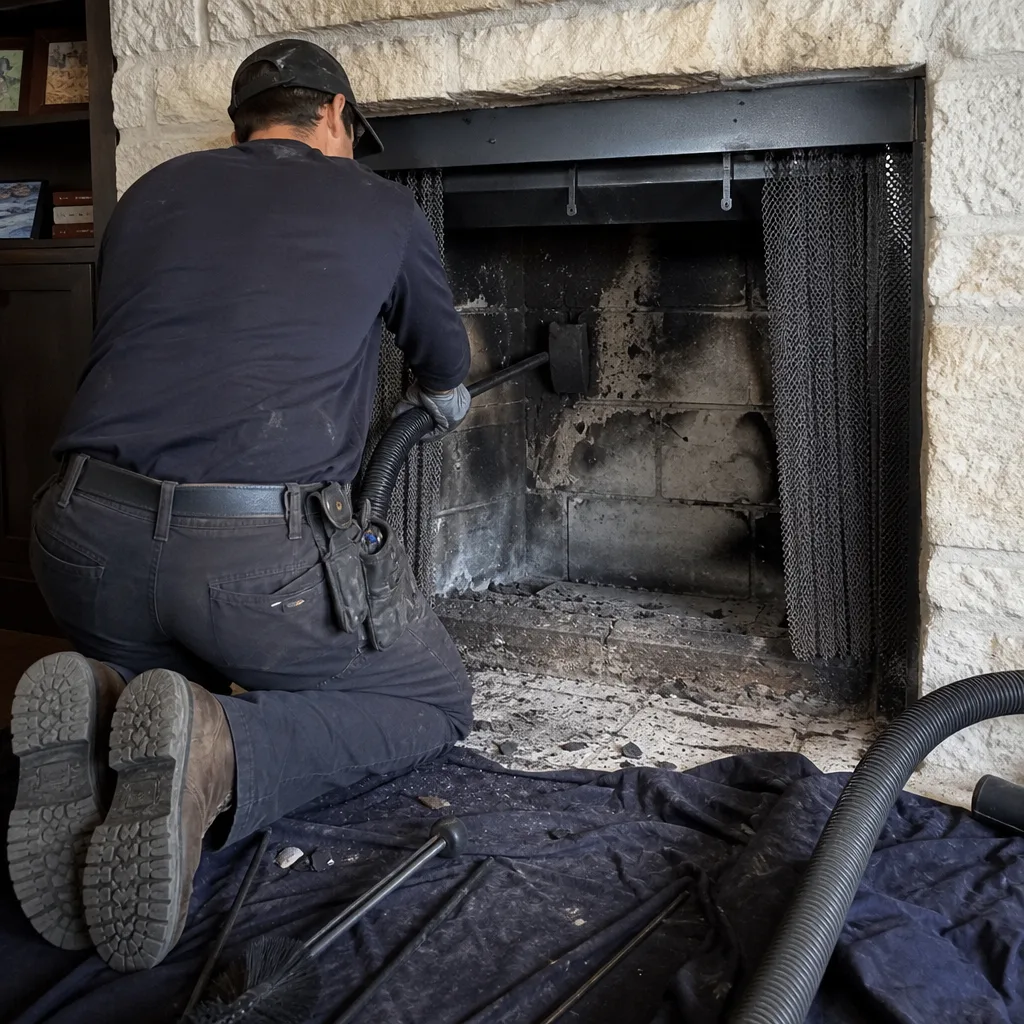 Before
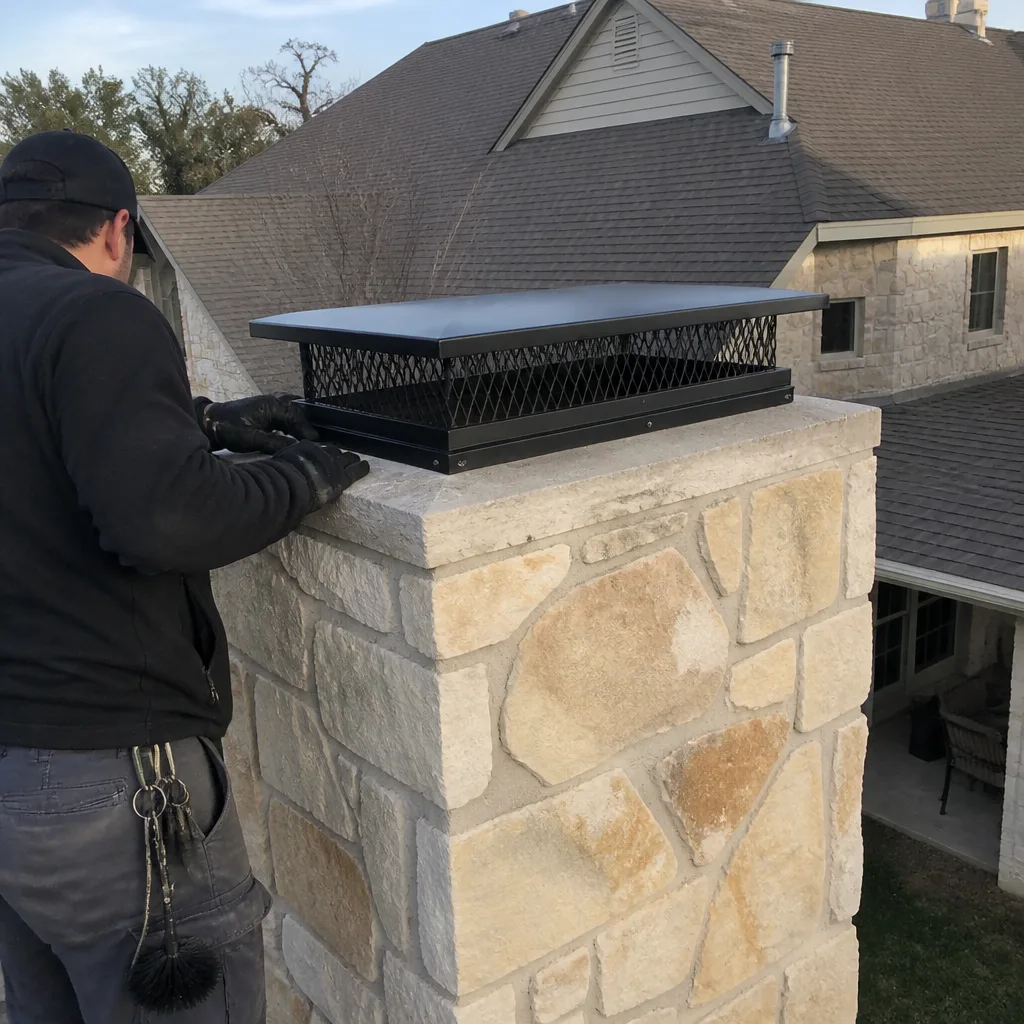 After
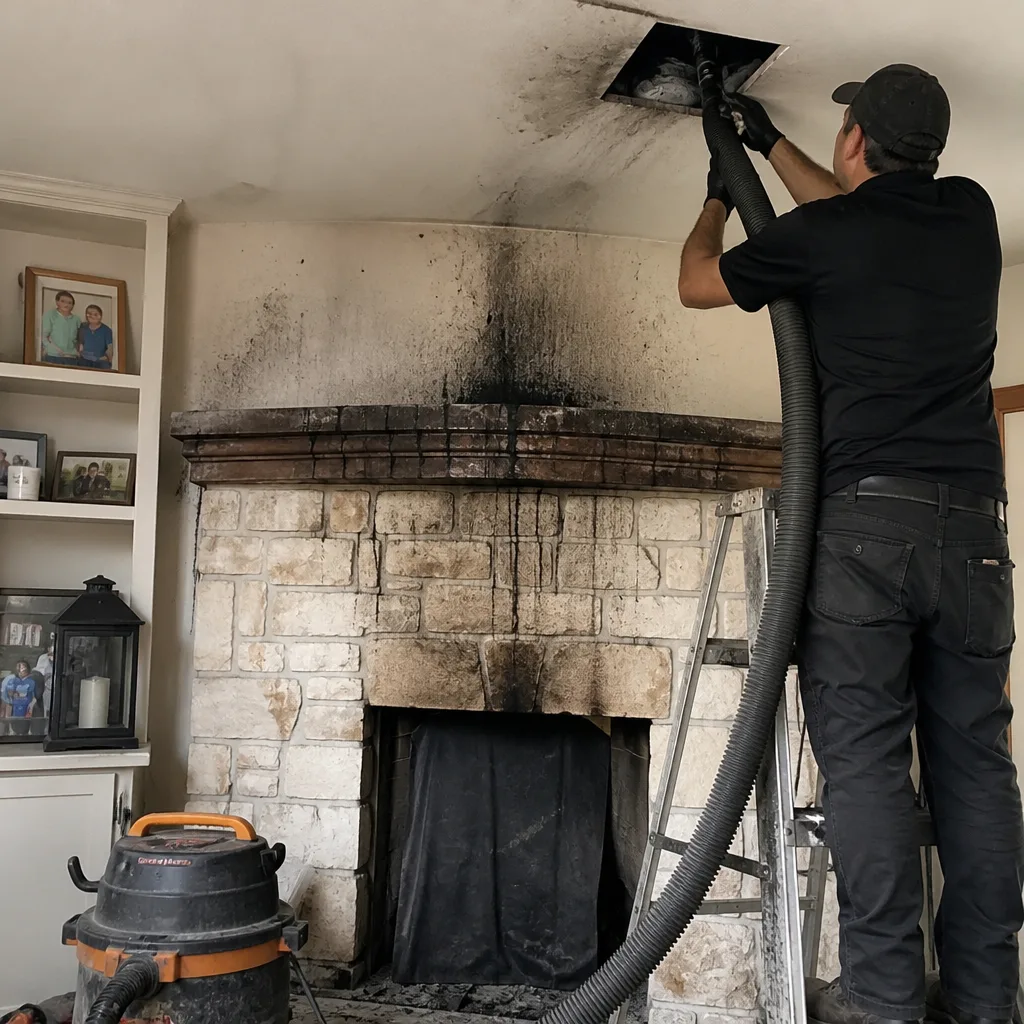 Before
 After
 Before
 After