
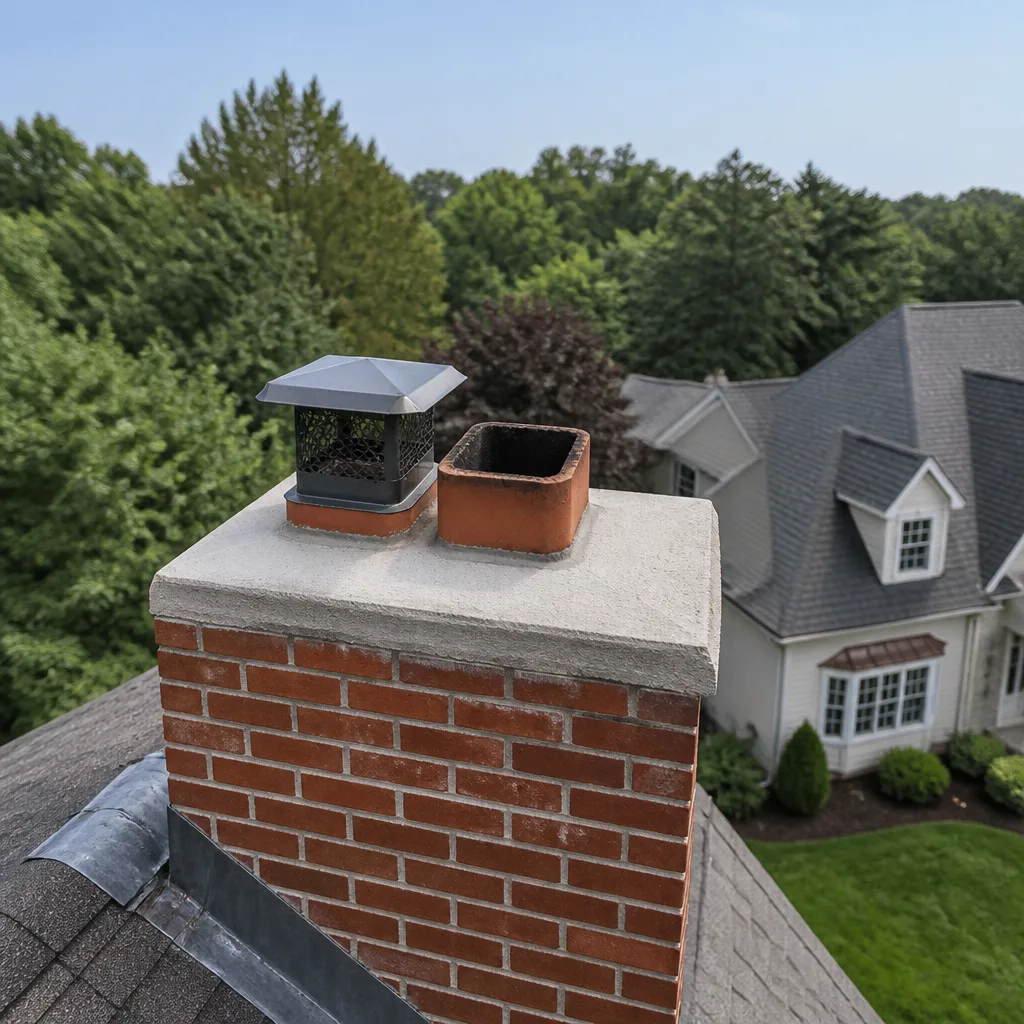
 Sweep & inspection
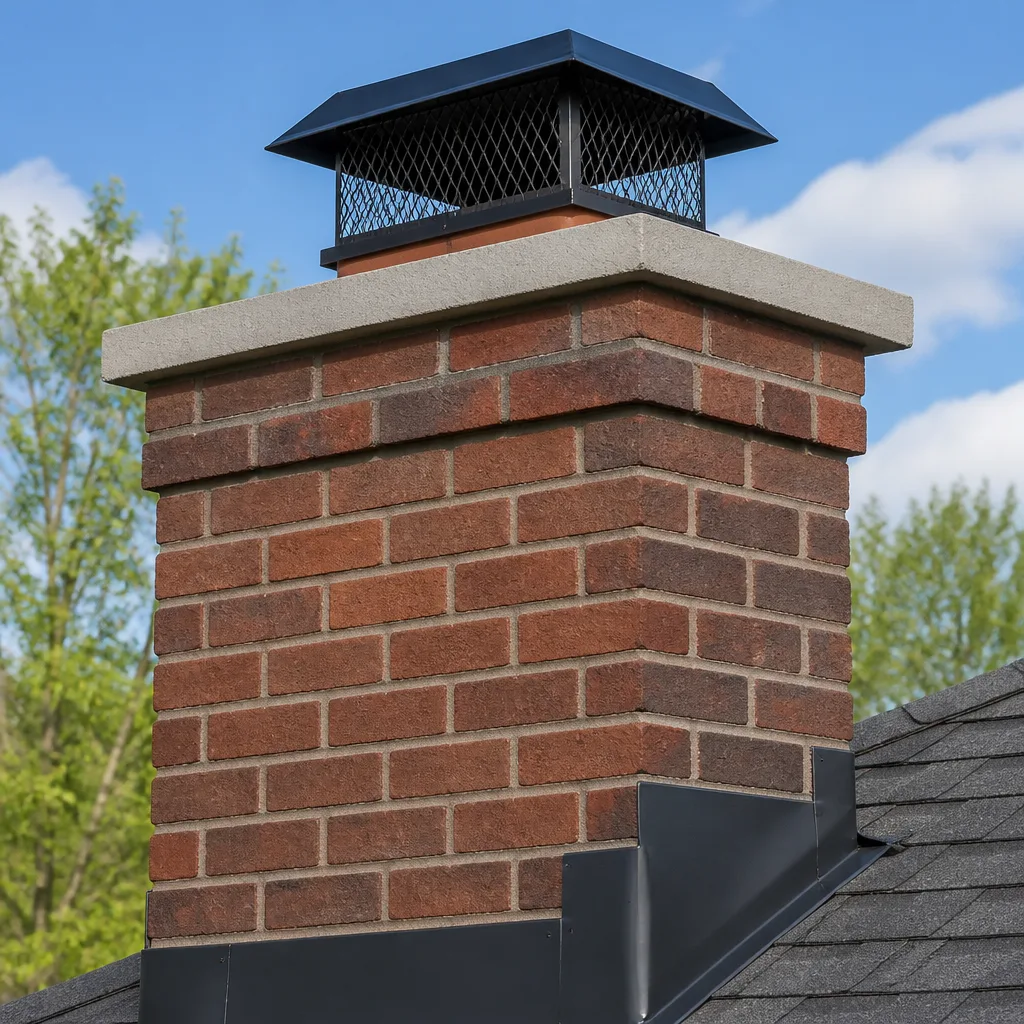 Caps & crowns
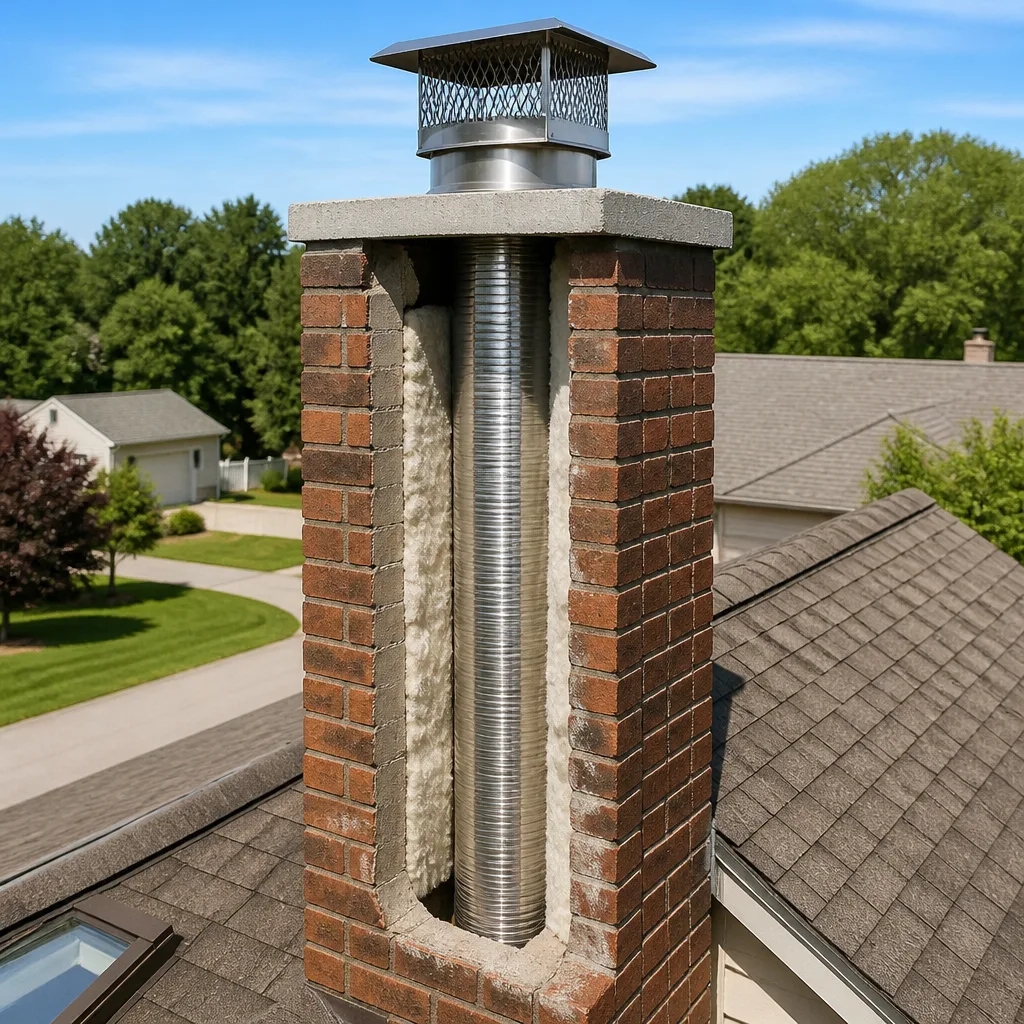 Flue relining
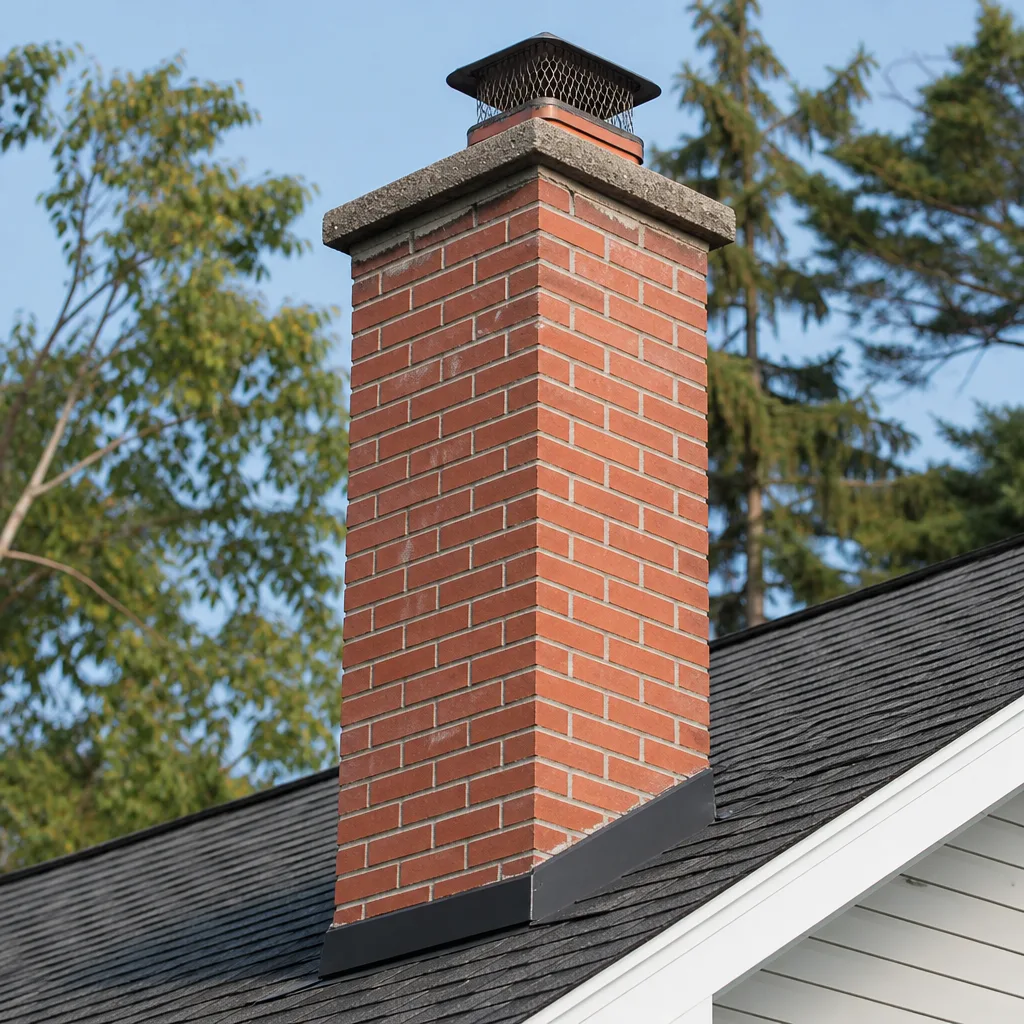 Masonry repair
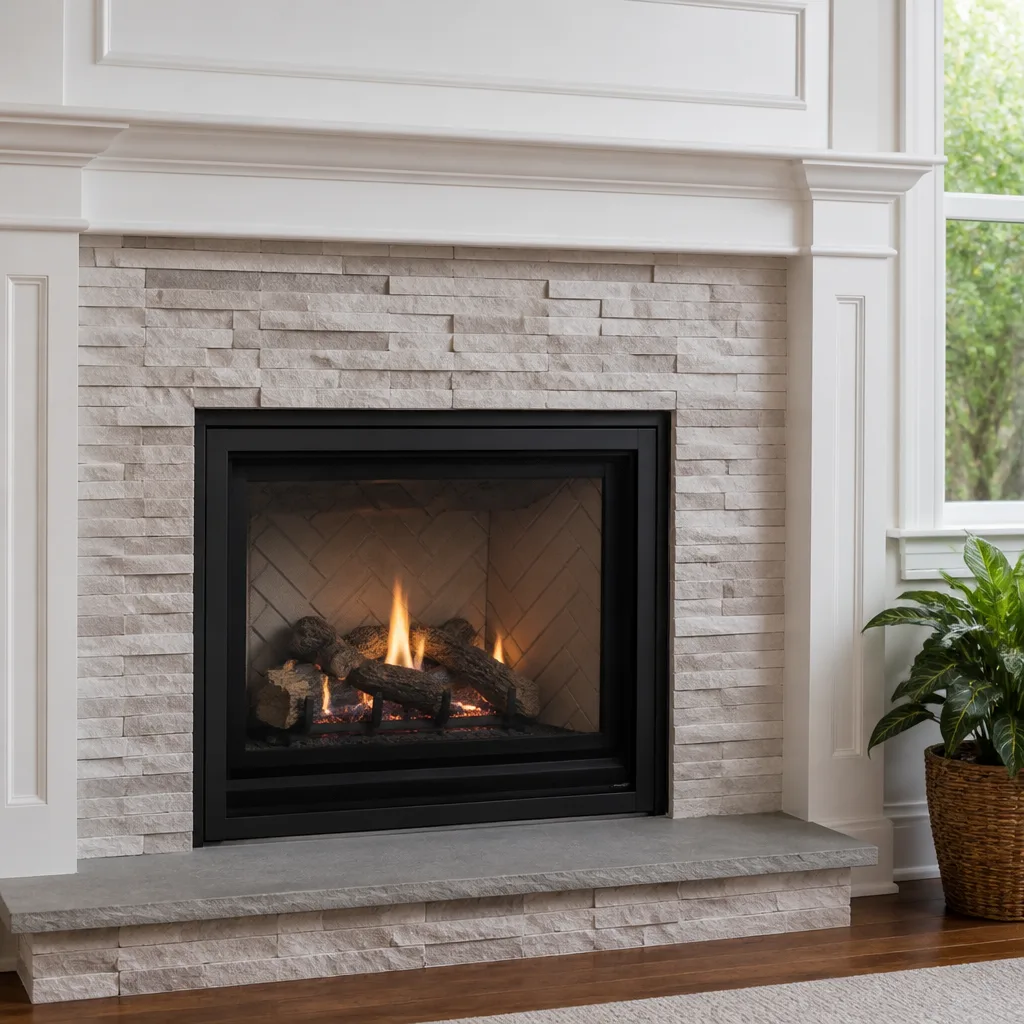 Gas fireplace service
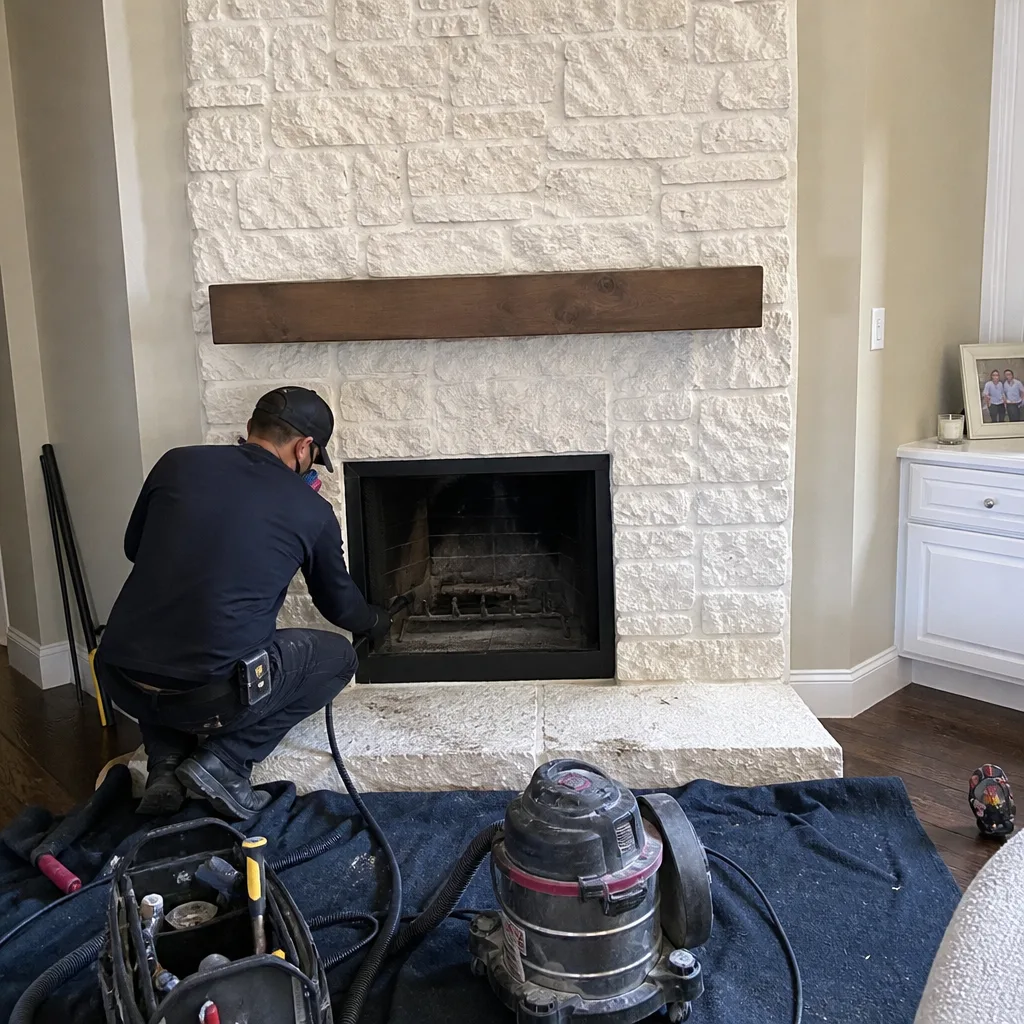
Level 1 sweep and inspection to the NFPA 211 annual standard - flue, crown, cap, and flashing checked and photographed
Chimney sweep logs do not sweep chimneys. They loosen some creosote - which then falls where a brush and vacuum still have to collect it.
Why San Marcos Homeowners Choose HeatShield Chimney Cleaning
We provide HeatShield repair in San Marcos, TX, with independent chimney cleaning, inspection, and service specializing in the cast-in-place refractory liners that many local homes have had since the 1990s. Our crew knows how these liners age in Central Texas: the thermal shock from hot fires on cold mornings, the humidity that accelerates creosote breakdown, and the limestone-rubble masonry in older river neighborhoods that shifts and stresses the liner. We’re not a HeatShield dealer or authorized warranty center, but we service, patch, and reline these systems regularly, which means we can tell you honestly whether your liner needs a repair or a full replacement.
If you’ve got white staining on your chimney brick or a smoke smell that won’t clear, call us at (866) 472-2513. Glen Whitaker runs every San Marcos job himself, and he’s been diagnosing flue problems in this region for the better part of eighteen years.
Why Trust Oakgrove Chimney Sweep for Your HeatShield Chimney Cleaning?
HeatShield is a poured refractory system, not a metal liner, and cleaning it wrong does real damage. A stiff wire brush that’s fine for clay tile will gouge the surface of a cast-in-place liner. Chemical creosote removers that work on stainless can etch refractory surfaces. You need a sweep who knows the difference, and that’s where we come in.
Our team has relined and restored dozens of HeatShield systems along the I-35 corridor, from Buda north to Kyle HeatShield service and San Marcos. We’ve seen how the cast-in-place material behaves when homeowners burn unseasoned live oak, when a damper gets left open through a humid August, and when a crown cracks and lets rainwater wick down behind the liner. None of that shows up on a generic cleaning checklist. It shows up on a camera inspection, which is why we run a Level 2 camera pass on every HeatShield flue before we touch it with a brush.
Glen grew up in Anderson Mill and learned the diagnostic side of the trade through Austin Community College’s construction and skilled trades program. He’s been cleaning and inspecting chimneys in this part of Texas for going on eighteen years, and he runs every job out of his own truck. The guy who shakes your hand at the door is the same one who’s going to be on your roof looking at the crown. That matters when the difference between a $200 patch and a $4,000 reline is a hairline crack that only shows up on a camera at the right angle.
We use genuine HeatShield refractory mixes and Thermo-Mix mortar for repairs, and we know which areas of a San Marcos flue are most likely to fail first. A quick aside on our philosophy: a clean flue isn’t a luxury, it’s just what a working fireplace requires. We treat every HeatShield liner like a combustion system, because that’s exactly what it is.
Styles & brands we work with
Common HeatShield Chimney Cleaning Problems We Fix in San Marcos
HeatShield cast-in-place liners are durable, but they have predictable failure points in this climate. These are the five issues we see most often in San Marcos homes—and in nearby areas like HeatShield service in Uhland:
- Surface spalling at the damper frame. The HeatShield Cast-in-Place Relining System heats and cools with every fire. Where the liner meets the metal damper frame, the refractory material expands at a different rate than the steel, and after enough cycles it starts to flake and crack. A homeowner sees small pieces of gray material in the firebox and assumes it’s mortar from the bricks. It’s actually liner material, and it’s worth a camera look.
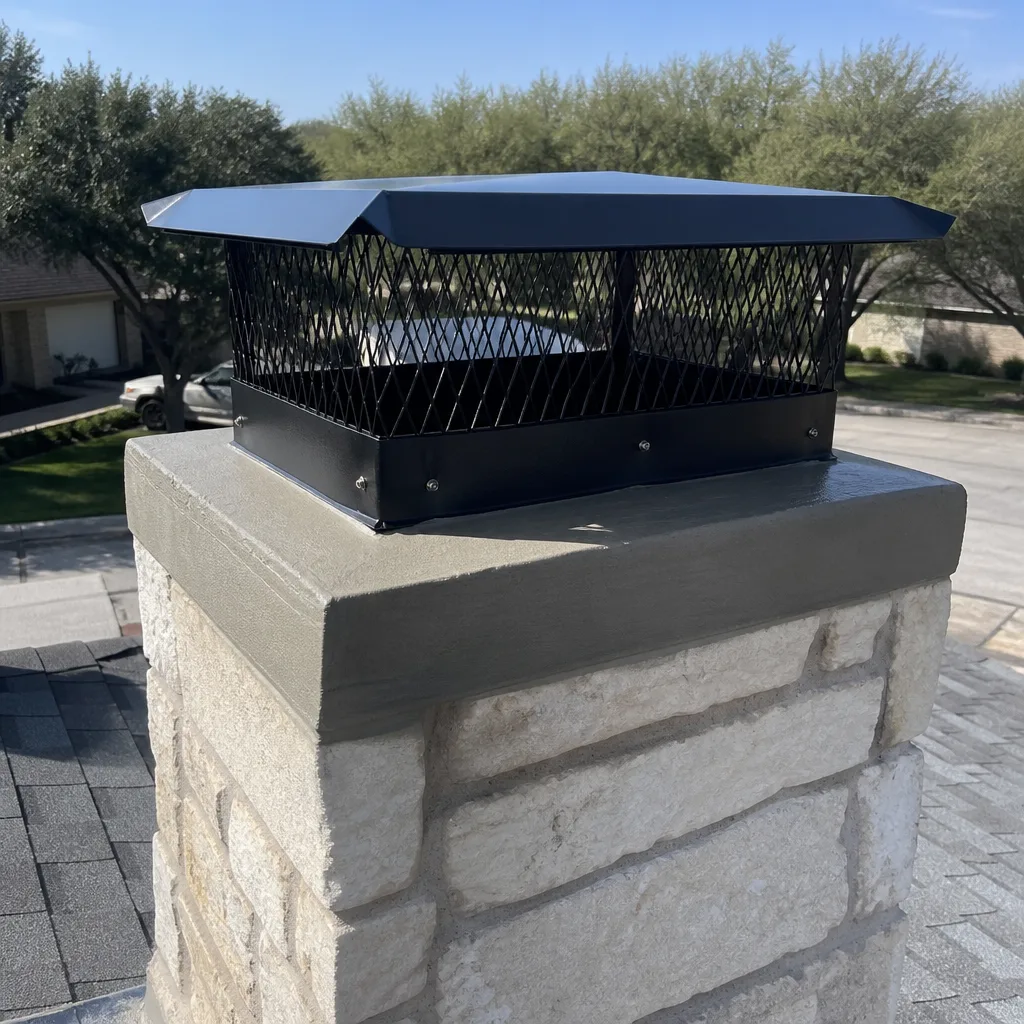
- Liner-to-crown joint separation. This is the one that fools people. The crown looks fine from the ground, but at the joint where the HeatShield liner emerges at the top of the flue, a gap opens up over time. Rainwater gets behind the refractory, rusts the damper out slowly, and shows up as efflorescence, that white chalky staining, on the exterior brick. We’ve repaired this exact failure in Sunset Oaks and Willow Creek homes built in the 1990s.
- Creosote glazing masking hairline cracks at the smoke chamber transition. The smoke chamber is the funnel between the firebox and the flue, and it’s usually the dirtiest part of any wood-burning system. When creosote glazes over in that transition area, it hides hairline fractures in the HeatShield liner that would otherwise be visible on a camera. We remove the glaze first, then inspect. You can’t properly evaluate a HeatShield liner without that step.
- Efflorescence on exterior brick above the flue line. White, chalky mineral deposits on the outside face of the chimney above the roofline usually mean moisture is trapped somewhere in the system. With a HeatShield liner, it’s often a failed crown coating or a separated joint rather than a liner breach, but you can’t know without opening the flue up and looking. Left alone, that trapped moisture works its way into the surrounding masonry in older homes near the courthouse square, where the original brick and limestone rubble don’t handle freeze-thaw cycles well.
- Premature wear at the flue collar on prefab chase systems. Many San Marcos homes built between the mid-1980s and the early 2000s have factory-built fireplaces with chase-style flues, and some of those chases were retrofitted with HeatShield liners. The flue collar, the transition point where the liner passes through the chase top, is a common leak point. A San Marcos homeowner with a 1990s HeatShield cast-in-place liner called us after noticing white staining on the exterior brick and a faint smoke smell in the living room. Our tech ran a Level 2 camera inspection and found a 6-inch separation at the liner-to-crown joint, with creosote already glazed along the smoke chamber. We removed the glazed creosote, re-poured the joint with HeatShield Thermo-Mix, and applied a crown coating. The smell was gone by the next cold snap.
HeatShield Parts & Our Repair-vs-Replace Approach
When a HeatShield liner is damaged, the first question is always the same: patch it or pull it. We approach every HeatShield liner with a repair-first mindset, but we don’t patch things that shouldn’t be patched.
For early-stage spalling, surface cracking, or a separated crown joint, we use genuine HeatShield refractory mixes and Thermo-Mix mortar. These materials bond to the existing cast-in-place liner, and when the repair is done right, the patched area is as strong as the original pour. For damage beyond what a patch can handle, specifically a liner that has lost more than 25 percent of its thickness or shows through-wall cracks, we recommend a full reline. At that point we’ll talk through options including a new HeatShield pour or, in some cases, a stainless liner from DuraFlex, which we also install. The decision comes down to the condition of the surrounding masonry, the height of the flue, and what the homeowner actually burns in the fireplace.
We stock HeatShield refractory mixes and Thermo-Mix on our truck, along with DuraFlex stainless components, so most repairs don’t require a second trip. If you’re seeing flaking material in the firebox or staining on the chimney face, call (866) 472-2513 and we’ll put a camera in the flue and tell you exactly what you’re looking at.
Our HeatShield Service Process – Step by Step
- 1
Level 2 camera inspection first. We don’t clean a HeatShield liner blind. Before any brush touches the refractory surface, we run a camera the full length of the flue to map the liner condition, check the crown joint, and look for hidden separation behind the creosote. This is also when we check the firebox and smoke chamber for heat damage or structural issues.
- 2
Diagnosis and honest assessment. We sit down with you and show you the camera footage. If the liner can be patched with HeatShield Thermo-Mix, we’ll say so. If it needs a full reline, you’ll see why with your own eyes, not just take our word for it.
- 3
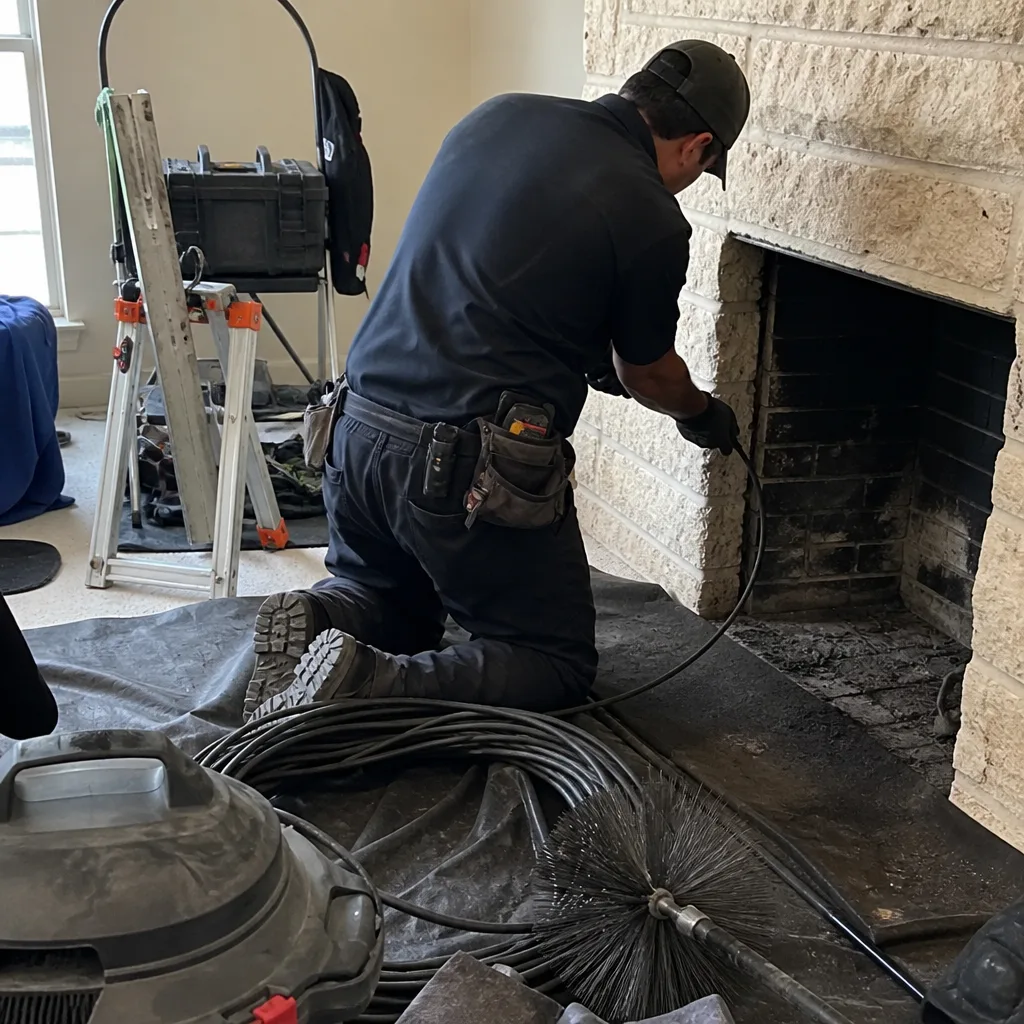
Creosote removal matched to the liner. For HeatShield liners we use brush and rotary methods appropriate for cast-in-place refractory, never anything aggressive enough to score the surface. Glazed creosote in the smoke chamber transition gets removed before final inspection, because you can’t evaluate what you can’t see.
- 4
Repair or reline. If we’re patching, it’s a same-visit job most of the time. If we’re relining, we’ll schedule the pour for a clear-weather window and have the system back in service as soon as it’s cured.
- 5
Verification and documentation. We do a post-repair camera pass, document the work with photos, and walk you through what was done. For San Marcos homes with rental turnover near Texas State, this documentation also gives landlords a record of flue condition for the next tenant.
See the difference
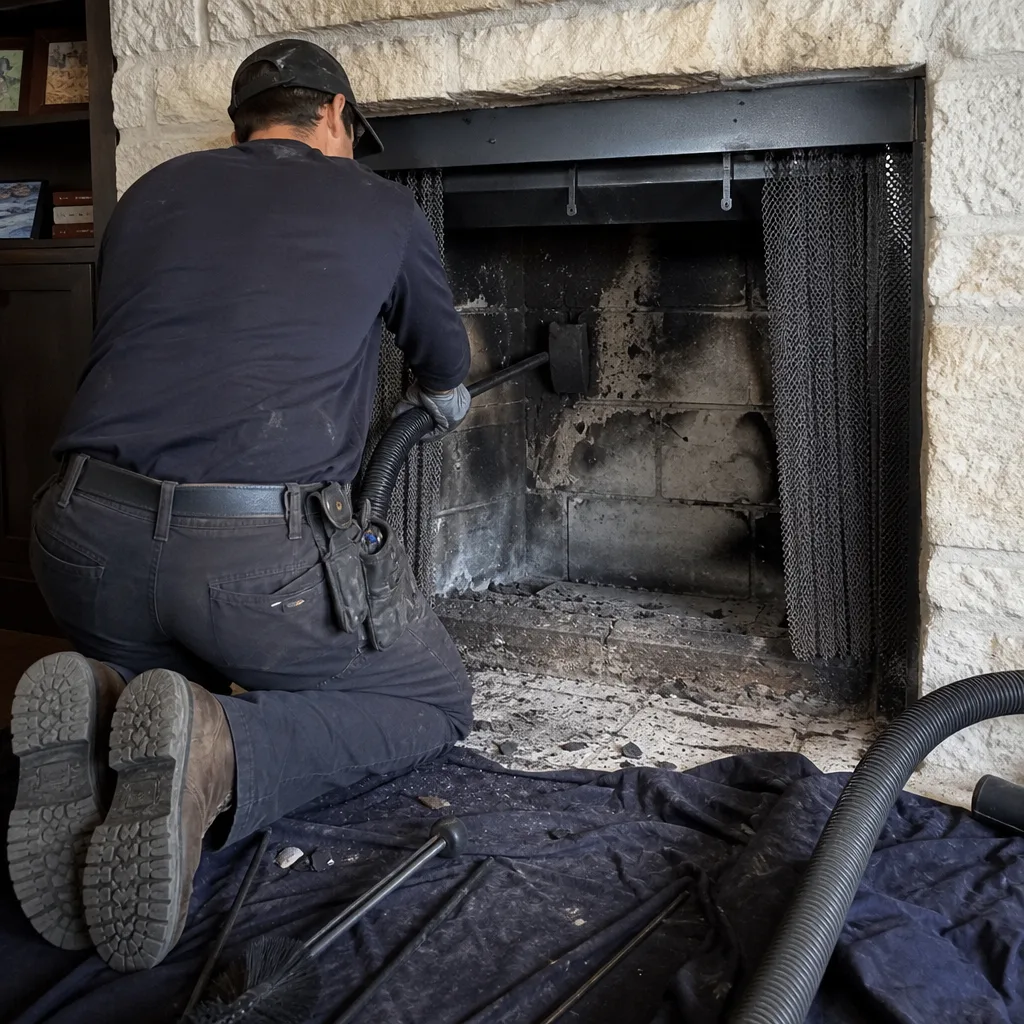 Before
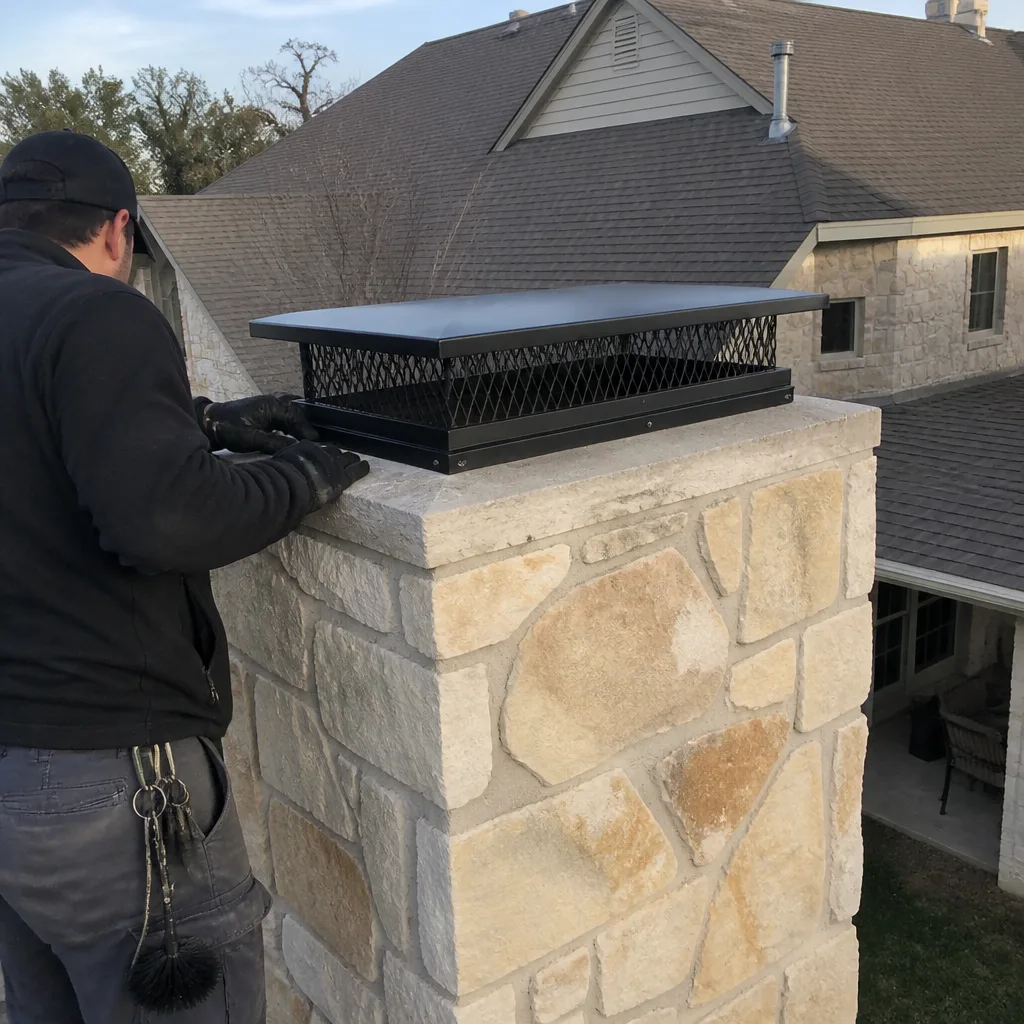 After
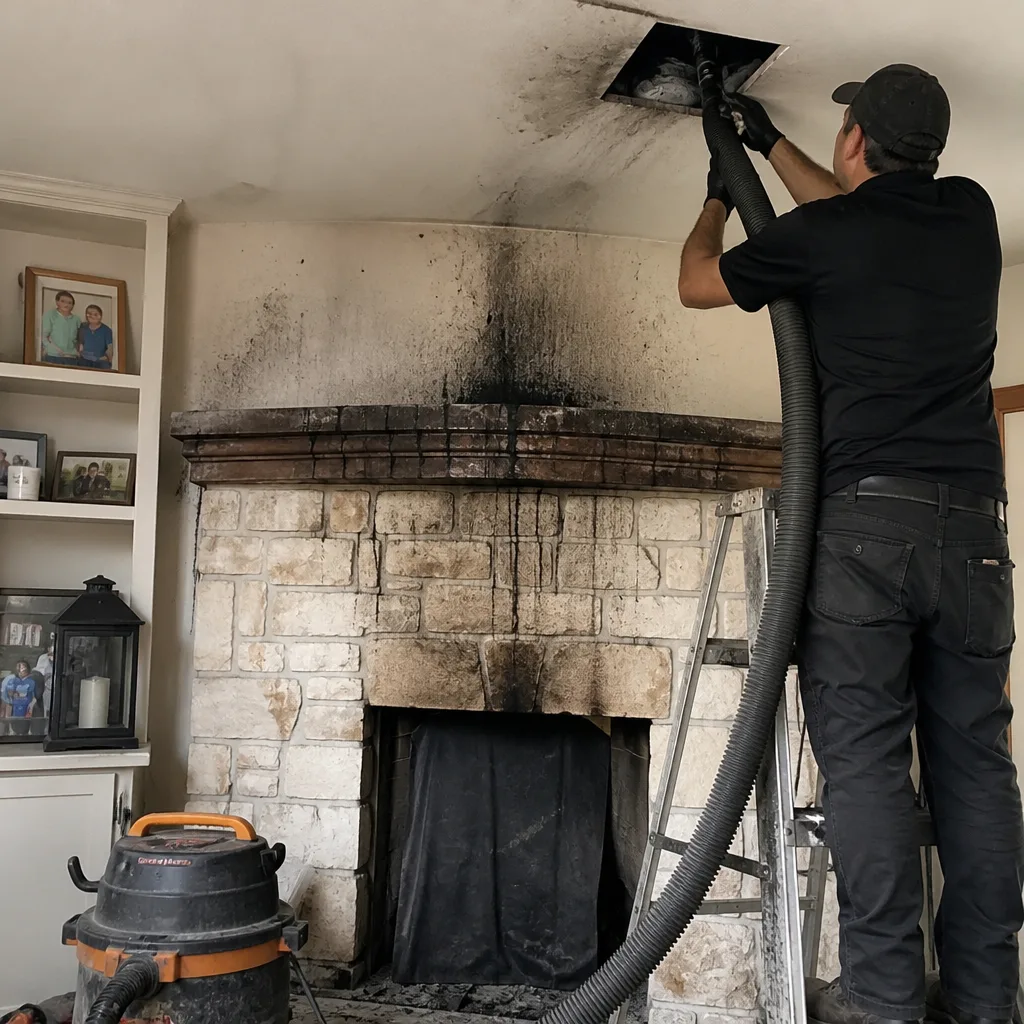 Before
 After
 Before
 After
HeatShield Products We Service & Install in San Marcos
Our crew works on the full HeatShield product range. That includes the HeatShield Cast-in-Place Relining System, the poured refractory liner that’s common in late-20th-century San Marcos chimneys, the HeatShield Resurfacing System used to restore existing clay tile flues, and the HeatShield HeatGuard Insulated Liner for systems that need an extra thermal barrier. We also carry HeatShield Thermo-Mix refractory mortar for joint repairs and patching.
We keep genuine HeatShield materials and refractory mixes stocked on the truck, so a crown-joint repair or a smoke-chamber patch doesn’t typically require a follow-up visit. For full relines, we schedule the work around Central Texas weather, since the poured liner needs appropriate curing conditions.
We Also Service These Brands
HeatShield is one system in our toolkit, not the whole toolkit. We also install and service DuraFlex stainless liner systems when a metal reline is the better call, and we stock Gelco chimney caps and covers for crown protection. If you don’t know what’s in your flue, that’s fine. We’ll identify it on the camera and work from there.
FAQs – HeatShield Chimney Cleaning Service in San Marcos
No, we’re an independent HeatShield service provider. We’re not affiliated with or authorized by the manufacturer, which means we have no incentive to push a replacement when a repair will do. We stock genuine HeatShield refractory materials and use them when appropriate, but our assessment is always based on what’s best for your chimney, not on any dealer relationship.
For repairs on HeatShield liners we use genuine HeatShield Thermo-Mix and refractory materials, since those are specifically formulated to bond with the existing cast-in-place liner. When the existing liner is beyond repair, we turn to quality aftermarket stainless systems like DuraFlex, which we’ve installed across San Marcos and trust in this climate. Call (866) 472-2513 and we’ll tell you which path fits your chimney after we see it on camera.
White chalky staining, called efflorescence, is a moisture problem, not a cleaning problem. It usually means water has found its way into the masonry or behind the liner, and the minerals are being drawn out through the brick as that water evaporates. With HeatShield systems, the most common cause we see in San Marcos is a separated liner-to-crown joint that lets rainwater wick down behind the refractory. It’s usually repairable with a joint re-pour and a crown coating, but get it looked at before the moisture damage spreads to the damper assembly and surrounding masonry.
We camera the flue and look at three things: the depth of any cracks, the thickness of the remaining refractory material, and whether there are through-wall separations. Early-stage spalling and surface cracks are patching candidates. Once a liner has lost more than a quarter of its thickness or shows cracks that go all the way through the material, patching won’t hold, and we recommend a full reline. We’ll show you the camera footage so you can see exactly what we’re looking at. Call (866) 472-2513 to schedule an inspection.
The Level 2 inspection covers the entire flue system, including the full length of the HeatShield liner, the crown and joint, the smoke chamber, and the firebox. We camera the liner top to bottom and document what we find. In San Marcos, where humidity can accelerate creosote breakdown and rust on prefab flue components, a full flue inspection catches problems that a firebox-only check would miss.
We use brush and rotary methods designed for smooth refractory surfaces, never steel-bristle brushes rated for clay tile or anything that would score the cast-in-place material. For glazed creosote, which is common in the smoke chamber transition of wood-burning systems in San Marcos, we remove the glaze carefully and then inspect the liner surface underneath. The cleaning method matters because a damaged refractory surface becomes a moisture trap and a future failure point.
Yes, a HeatShield cast-in-place liner can work with a wood-burning insert, but the sizing and clearances need to be evaluated carefully. Inserts change the temperature profile of the flue, and an undersized or poorly connected liner is a fire hazard. We’ll measure the flue, check the insert’s requirements, and recommend the right configuration. If you’re planning an insert install or already have one and want the flue checked, call (866) 472-2513 for an estimate.
A standard HeatShield chimney cleaning and Level 2 camera inspection in San Marcos typically runs between $220 and $380, depending on flue height, creosote condition, and access. Repairs like a crown joint re-pour or a smoke chamber patch run additional, and a full reline is a bigger project priced by the foot. We give flat-price quotes after the camera inspection, so the number we quote is the number you pay. Call (866) 472-2513 for an exact quote, estimates are free.
We can’t speak for the manufacturer’s warranty terms, and we won’t pretend to. What we can tell you is that we use genuine HeatShield repair materials where applicable and follow proper installation and curing practices. If you have warranty concerns, we’ll walk you through what we’re doing and document the work with photos so you have a clear record for any claim.
A cleaning and camera inspection usually takes 1.5 to 2.5 hours. A crown joint repair or small patch can often be done the same visit. Full relines are scheduled separately and depend on curing weather. We’ll give you a clear timeline after we’ve seen the flue on camera.
Book Your HeatShield Service in San Marcos, TX
If your San Marcos—or nearby HeatShield repair in Wimberley—chimney has a HeatShield liner that’s showing stains, flaking, or smoke smells, don’t wait until the next cold snap makes it obvious. Call (866) 472-2513 and we’ll put a camera in your flue and give you an honest read on the liner. Free estimates, flat-price quotes, and the work done by a San Marcos chimney specialist who’s been at this for eighteen years.
Written by Glen Whitaker, Owner at Oakgrove Chimney Sweep, serving San Marcos and the I-35 corridor since 2007.