Last updated October 30, 2026
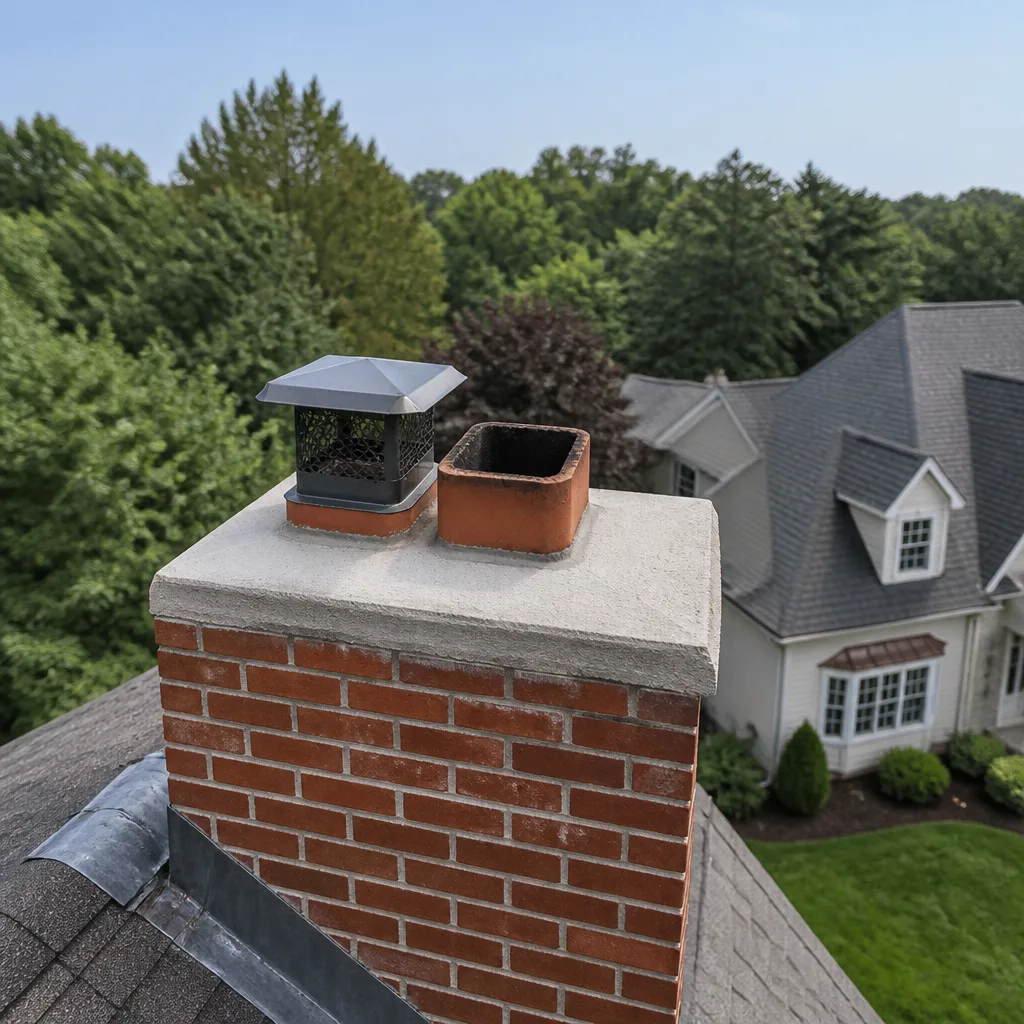 Sweep & inspection
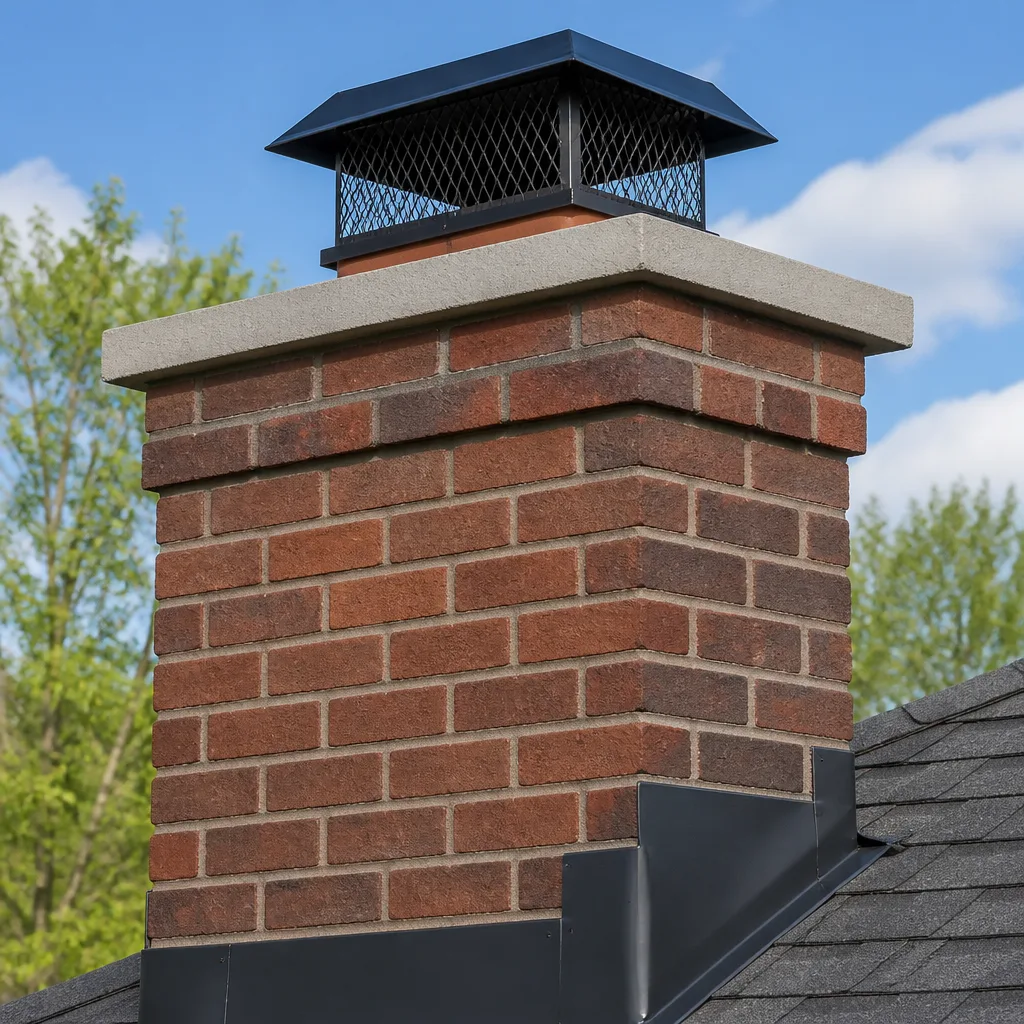 Caps & crowns
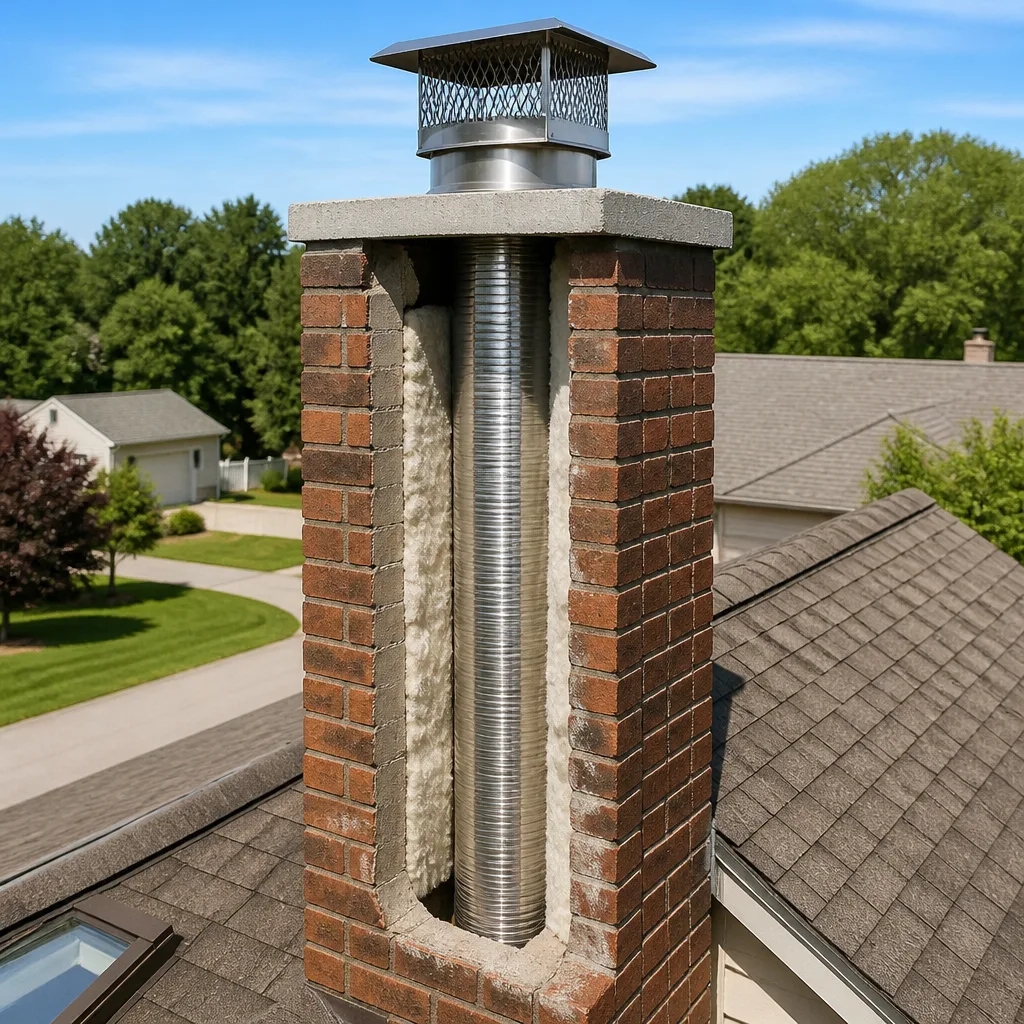 Flue relining
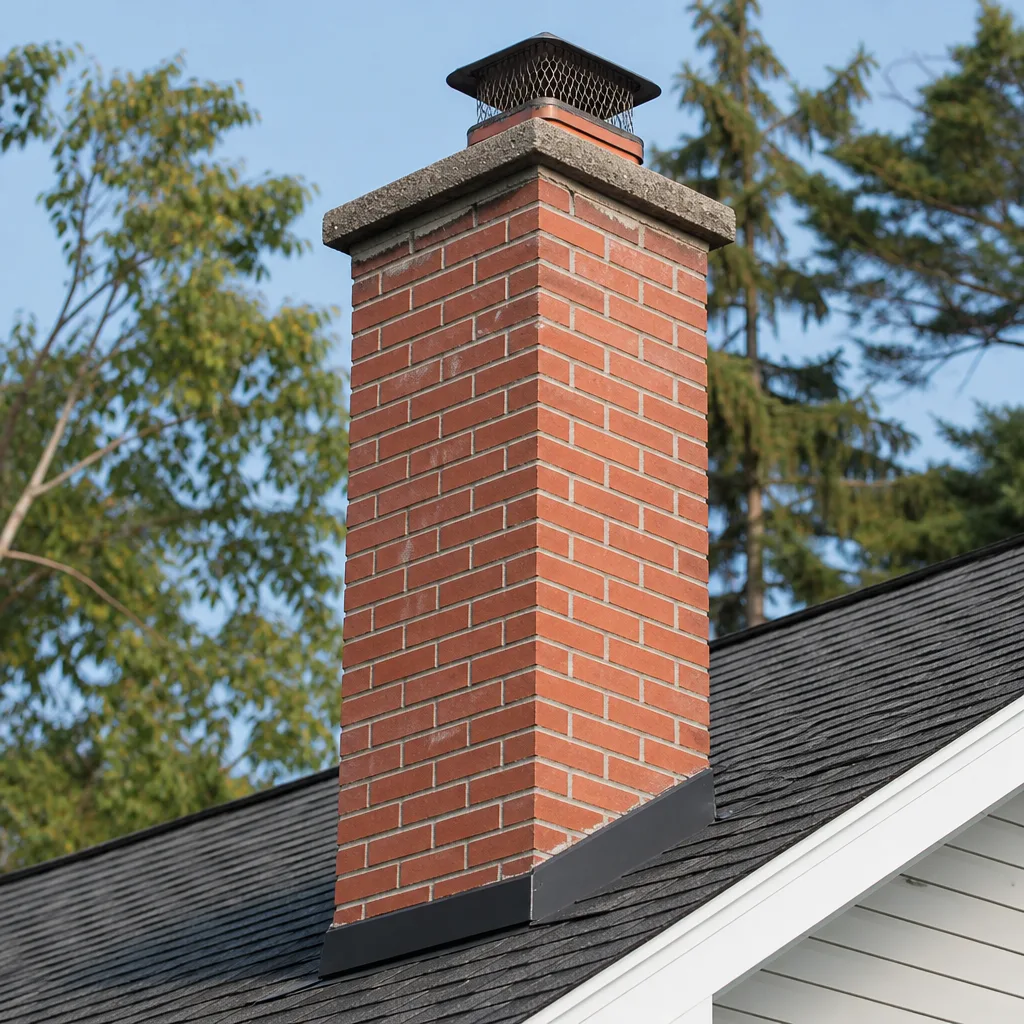 Masonry repair
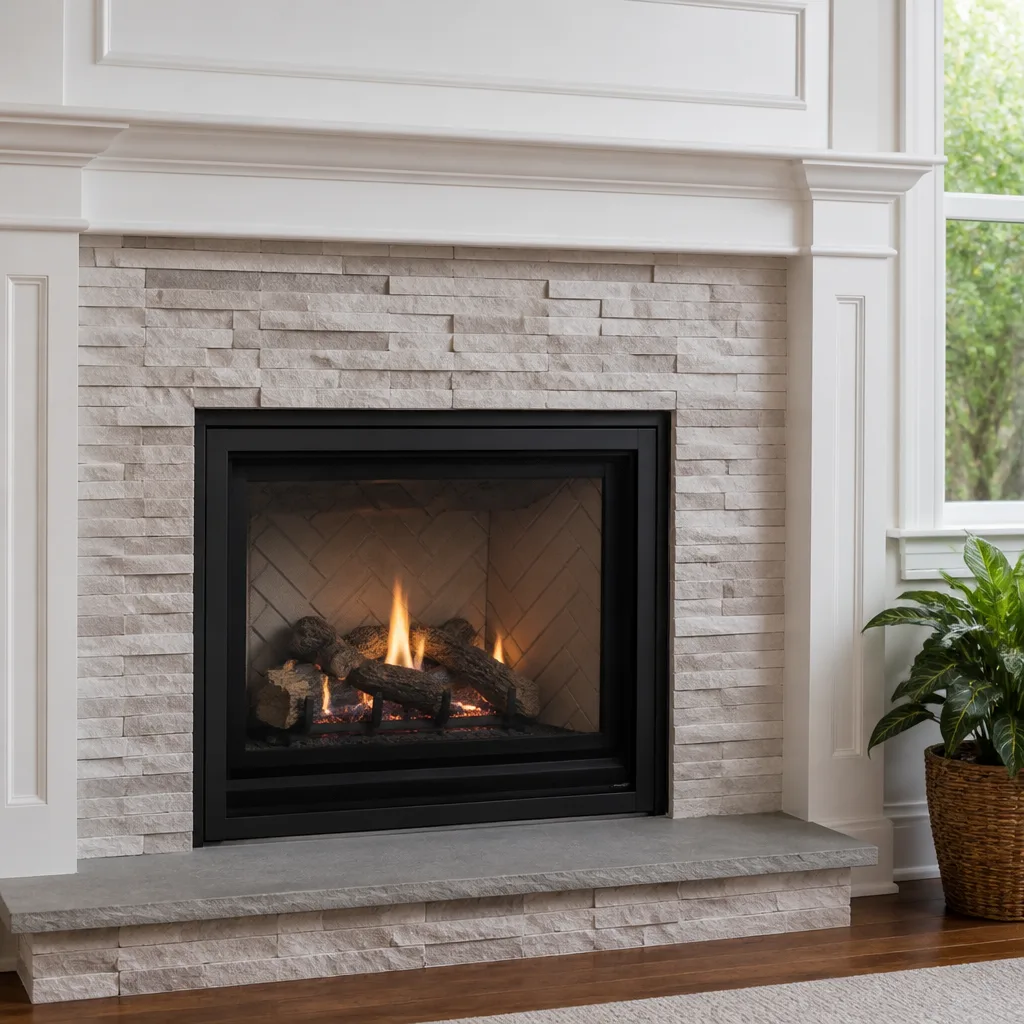 Gas fireplace service
Level 1 sweep and inspection to the NFPA 211 annual standard - flue, crown, cap, and flashing checked and photographed
Chimney sweep logs do not sweep chimneys. They loosen some creosote - which then falls where a brush and vacuum still have to collect it.
DIY vs Professional Chimney Cleaning: The San Marcos Homeowner’s Decision Guide
A chimney fire in Hays County rarely announces itself. It starts as a dull roar above the firebox, sometimes a sound like a freight train, and by the time you hear it, the glazed creosote inside your flue has already ignited at roughly 2,000 degrees. Here’s the part most San Marcos homeowners don’t realize: the fires that cause structural damage are almost never started by visible creosote. They start deeper, in the part of the flue you can’t see from your living room floor. This guide will show you exactly where the line is between what a homeowner can safely handle and what genuinely needs a trained sweep, a rotary system, and a camera. For related advice, see our How to Hire a Chimney Cleaning Contractor in San Marcos: A Step-by-Step Guide.
Styles & brands we work with
Quick Answer
DIY chimney cleaning in San Marcos is genuinely workable for light, fluffy Stage 1 creosote in a straight flue you can inspect from both ends, using a correctly sized wire brush and a proper vacuum. But if your chimney has any bend, an offset, a liner you can’t visually verify, or creosote that looks shiny and tar-like instead of dusty, a professional sweep with rotary equipment and a camera inspection is the only way to actually confirm the flue is safe to use. The honest answer: most San Marcos homes with wood-burning fireplaces built before 1990 fall into that second category.
Table of Contents
- What DIY Chimney Cleaning Actually Involves
- The San Marcos Creosote Problem: Why Our Climate Changes the Math
- Where DIY Is Genuinely Adequate
- Where Professional Equipment Is Non-Negotiable
- The Diagnostic Gap: What a Brush Can’t Tell You
- The Break-Even Math on DIY Equipment
- What You Can Safely Do Between Professional Visits
- Common Mistakes to Avoid
- When to Call a Professional
- Frequently Asked Questions
- The Bottom Line
What DIY Chimney Cleaning Actually Involves
Let’s be plain about what a DIY sweep is, because the term gets thrown around like it’s one activity. It’s actually three distinct jobs stacked on top of each other, and each one has a different failure point.
- Mechanical removal. You run a wire or poly brush up and down the flue to knock creosote off the walls. This part is straightforward, provided the brush actually matches the flue dimensions. A 6-inch round brush in a 7-inch square flue won’t touch the corners, and you’ll never know it because you can’t see up there while you’re working.
- Containment. Creosote dust is fine, black, and gets everywhere. A proper sweeper uses an industrial HEPA vacuum with enough suction to pull airborne particles at the firebox opening while the brush is working. A shop vac with a drywall filter won’t do it. The dust will drift into your living room, and it’s not dust you want to breathe.
- Verification. After the brushing, you need to confirm the flue is actually clean. This means looking at the entire length, not just the first two feet above the damper. This is where DIY almost always stops, because most homeowners don’t own a chimney camera, and a flashlight angled up from the firebox shows you maybe 15 percent of what matters.
We service chimneys across San Marcos, from older homes near Texas State to newer construction in Trace and La Cima, and we see the same pattern in every neighborhood. The homeowners who attempt their own sweep do fine on step one, get frustrated on step two, and simply skip step three. And step three is the only one that would have told them whether the job actually needed doing differently.
If you’re determined to try it yourself, the chimney sweep process in San Marcos follows the same sequence we use, just with less forgiving equipment. Understand that going in.
The San Marcos Creosote Problem: Why Our Climate Changes the Math
Creosote isn’t one substance. It forms in three distinct stages, and which stage you get depends heavily on flue temperature and burn habits. Here’s why San Marcos is different from, say, a homeowner in Michigan or Vermont.
In cold climates, people burn hot fires for long stretches. The flue gets hot enough that moisture burns off, and what’s left is mostly Stage 1: dry, dusty, flaky creosote that brushes off with minimal effort. In Central Texas, we burn differently. Our fires are shorter. We light them on a cool evening in December, let them smolder for a few hours, and close the damper. We also burn a lot of oak, which is dense and produces more creosote per cord than softer woods like pine or cedar.
The result: San Marcos fireplaces generate a disproportionate amount of Stage 2 creosote, the shiny, flaky, tar-like deposit that’s harder than Stage 1 and requires more aggressive brushing. And when a chimney is used for years without proper sweeping, especially with unseasoned wood, it progresses to Stage 3: a hard, glossy, baked-on glaze that a wire brush will not remove. Not with more effort. Not with a drill attachment from a big-box store. Not at all.
Stage 3 creosote responds to chemical treatment first. A professional applies a product designed to break down the glaze, lets it work, then returns with rotary equipment to remove the loosened material. Homeowners attempting this with off-the-shelf products and hand tools end up frustrated or, worse, they take a metal scraper to the flue and damage the liner in the process. HeatShield liner restoration is one of the repair systems we use when a liner has been damaged by repeated improper cleaning or years of neglected Stage 3 buildup. It’s a professional-grade repair that restores the flue surface without a full reline, and it’s not a product you can apply yourself with a weekend toolkit.
This is not a scare tactic. It’s the reality of how our local burning habits interact with flue chemistry. If you burn oak in a masonry fireplace in San Marcos and you haven’t swept in three or more years, you are statistically likely to have some Stage 3 present. The question is where, and how thick.
Where DIY Is Genuinely Adequate
We’re not here to tell you that every homeowner needs a professional for every job. That’s not true, and pretending otherwise erodes the trust this whole guide is built on. Here’s the honest shortlist of situations where DIY cleaning is a reasonable choice:
- You have a straight, unlined masonry flue you can see from top to bottom with a bright flashlight from the roof, and you’ve confirmed it’s a consistent dimension all the way down.
- You burn softwoods or well-seasoned hardwoods at proper temperatures, and you sweep every year, so buildup never progresses past Stage 1.
- You own a correctly sized brush for your exact flue dimensions, not an adjustable one-size-fits-most tool from the hardware aisle.
- You have a proper vacuum with a HEPA filter and you’ve sealed the firebox opening with plastic sheeting to contain the dust.
- You’re physically comfortable on your roof with a safety harness, and your roof pitch is walkable. A steep roof in a San Marcos neighborhood with older construction? That’s a different conversation.
- You take photos before and after from both the roof and the firebox, so you have some documentation of what you did.
If all six of those are true, a DIY sweep will likely do the job for a year or two. Plenty of capable homeowners in San Marcos do exactly this. The key word is “all.” Missing one doesn’t mean the job fails automatically, but it raises the odds that you’re cleaning the visible part and leaving the dangerous part intact.
Where DIY gets genuinely risky is when the flue has an offset, a liner you can’t visually verify, or a history of unknown use. A house you bought three years ago? You don’t know how the previous owner burned, what they burned, or when the chimney was last inspected. That’s not a cleaning job. That’s a diagnostic job.
Where Professional Equipment Is Non-Negotiable
Some tools simply don’t have DIY equivalents. This isn’t about gatekeeping a trade; it’s about physics and liability.
Rotary cleaning systems. A professional rotary system uses a spinning head with flexible rods that conforms to the flue’s exact shape and aggressively removes creosote that hand brushing can’t. These machines cost more than a decade of professional cleanings, which is precisely why they’re not in the homeowner arsenal. They matter most in flues with offsets or rectangular dimensions where a round brush can’t reach the corners. Older San Marcos homes, particularly those built in the 1970s and 1980s, frequently have flues with odd dimensions or slight offsets.
Closed-circuit camera inspection. This is the single biggest differentiator between DIY and professional work. A chimney camera shows what the flue actually looks like after cleaning: cracked clay tiles, gaps in mortar joints, a stainless liner that’s begun to corrode, a failed cap that’s been letting rain in for years. None of this is visible from the firebox. A homeowner can brush for an hour and feel good about the job while a hidden crack continues to allow heat transfer into the framing. When we inspect a chimney in San Marcos, the camera is part of the standard sweep, not an upgrade. It’s the only way to close the loop between cleaning and safety.
Industrial HEPA vacuums. The difference between a professional vacuum and a shop vac isn’t just suction power. It’s filtration. An industrial HEPA unit traps particles at 0.3 microns. A shop vac with a standard filter exhausts a percentage of what it picks up back into the room. Creosote dust contains polycyclic aromatic hydrocarbons, which you don’t want circulating in a closed living room.
Chemical treatments for Stage 3 glaze. Products like the professional-grade treatments we stock aren’t available at retail. They’re designed for applicators who know how to dose, where to apply, and how long to let the product work before mechanical removal. Guessing at any of those steps wastes money and might damage the flue.
Here’s the practical framework we’d suggest: if your chimney has any bend, any liner you can’t see end-to-end, or any creosote that looks shiny instead of dusty, treat it as a professional-only job. That’s not marketing language. It’s the line between cleaning and safe operation. And if we find damage during the sweep, we don’t hand you a phone number for someone else. Our chimney repair work in San Marcos happens in-house, which means the person who identified the crack is the person who fixes it, with materials sourced from trade suppliers like DuraFlex and Olympia Chimney rather than whatever’s on the shelf at the hardware store.
The Diagnostic Gap: What a Brush Can’t Tell You
Think of your flue the way you’d think of a combustion system, because that’s what it is. It’s engineered to contain and channel heat and gas. When you light a fire, three things happen simultaneously: creosote accumulates, heat stresses the liner material, and moisture from combustion attacks the mortar joints. A brush addresses only the first.
Here’s what a competent professional sweep in San Marcos is checking that no amount of DIY brushing will reveal:
- Cracked or spalled flue tiles. The clay tiles that line older masonry chimneys crack under repeated thermal cycling. A cracked tile is a direct pathway for heat to reach wood framing. You cannot see this from the firebox.
- Failed mortar joints in the smoke chamber. The smoke chamber is the transitional space above the damper, and it’s the most commonly neglected area in chimney construction. Mortar gaps there let heat and gas pressurize the chimney cavity. This is a leading cause of chimney fires in older Texas homes.
- Corroded or improperly sized liners. Gas appliances vent through the chimney too, even if you never burn wood. A water heater flue that’s been venting into an unlined or improperly sized flue creates acidic condensation that eats mortar from the inside. If you see white staining on the exterior brick near the top of your chimney, that’s the tell.
- Damper dysfunction. A damper that won’t fully open or close is a safety issue, not an annoyance. A closed damper during a fire routes carbon monoxide into the house. A damper that won’t close properly leaks conditioned air year-round.
- Failed or missing chimney cap. Without a proper cap, rain enters the flue, mixes with creosote, and accelerates deterioration. Birds and squirrels also build nests, which become chimney fire kindling. We install Gelco caps specifically because they hold up to Texas weather better than the stamped-metal caps found at retail.
This is what we mean when we say the DIY conversation isn’t really about cost. It’s about what a homeowner is equipped to diagnose versus what they’re only equipped to clean. A brush removes creosote. It doesn’t tell you whether the flue is structurally sound, whether your water heater is venting correctly, or whether the last sweep from the previous owner actually happened at all. And those are the questions that matter when something goes wrong at 2 a.m.
There’s a documentation angle here too. If you sell your San Marcos home and the buyer asks when the chimney was last inspected, “I cleaned it myself” is a different answer than a dated inspection report from a professional company. Texas doesn’t require chimney inspections at sale, but disclosure requirements mean you’re responsible for accurately representing the condition of systems in the home. Undocumented DIY work creates a disclosure problem you might not recognize until the transaction is already in motion. Sellers who can hand over a professional inspection report close faster and with fewer contingencies. That’s not the reason to hire a professional, but it’s a real consequence of not doing so.
The Break-Even Math on DIY Equipment
Let’s run the numbers honestly, because the cost argument for DIY usually falls apart once you account for everything you actually need. For detailed pricing, see our Chimney Cleaning Cost Breakdown: The San Marcos Homeowner’s Reference for 2026.
Here’s what a legitimate DIY sweep setup costs, using realistic retail prices for equipment that actually fits a typical San Marcos chimney:
- Correctly sized wire or poly brush: $35-$70. An adjustable brush that covers “most” flue sizes is cheaper but less effective. For an 8×12 rectangular flue, you’ll often need two brushes or a specialized shape.
- Fiberglass extension rods: $60-$120 for enough length to reach a two-story chimney. You can’t use PVC. It flexes too much and can bind inside the flue.
- HEPA-rated vacuum: $200-$500. A true HEPA shop vac starts around $200 and goes up from there. Your current shop vac without HEPA doesn’t count for safe containment.
- Roof safety gear: $80-$200 for a basic harness, rope, and anchor point, if you don’t already own them. If you’re not comfortable on your roof, this cost becomes irrelevant because you shouldn’t be up there at all without this gear.
- Drop cloths and sealing materials: $20-$50. Plastic sheeting, painter’s tape, and a heavy tarp for your hearth.
- Basic PPE including a proper respirator: $40-$100. A dust mask isn’t enough for creosote particles.
Total realistic investment: roughly $435 to $1,040 for a first-year DIY setup. A professional sweep in San Marcos, including camera inspection, typically runs between $200 and $350 depending on chimney height, accessibility, and whether it’s combined with a dryer vent cleaning or other services.
Now factor in the diagnostic value. Your $435 DIY setup tells you the creosote is gone from roughly the area you can see. A $250 professional visit tells you the creosote is gone from the entire flue, the flue is structurally sound, the cap is functional, the damper works, and there’s a documented record of all of it. That’s not a cleaning. That’s a combustion system check.
Over five years, a DIY cleaning at $435 upfront plus $30-$60 annually in consumable brush heads and filters comes out roughly even with professional cleanings at $250 annually, if nothing goes wrong. But the professional visits include a camera inspection every single time, and the DIY path includes zero inspection value. The math favors DIY only if you assume the only thing that matters is knocking visible creosote off the walls, and that assumption is exactly what this guide is working to dismantle.
If you’re also considering the dryer vent in this equation, the math shifts further. Dryer vent cleaning in San Marcos is a separate service with its own risk profile, and it’s one area where the professional equipment argument is even stronger. Lint accumulation inside a wall cavity vent isn’t reachable with anything you own, and lint fires don’t give warning signs.
What You Can Safely Do Between Professional Visits
Here’s the part where we give you useful things to do yourself, because the honest answer isn’t “do nothing.” There’s a range of maintenance that’s appropriate for a homeowner, and doing it well extends the life of your chimney and reduces what a professional has to address.
- Burn seasoned hardwood only. In San Marcos, that means oak or pecan that’s been split and stacked under cover for at least 12 months. Green wood produces cooler fires and more creosote. If you’re buying wood by the cord, ask when it was split. A reputable supplier will know.
- Check the chimney cap visually from the ground. You don’t need to climb the roof. If you can see the cap is missing, shifted, or rusted through, that’s a call to make sooner rather than later. A missing cap in a San Marcos rainstorm means water running straight down the flue into the smoke chamber.
- Test the damper each fall before your first fire. It should open fully and close fully with resistance. If it’s stuck, don’t force it. Note it and mention it to whoever services your chimney.
- Remove visible creosote from the firebox floor. After the fire is fully cold, you can shovel out ash and any visible creosote chunks from the firebox itself. This doesn’t clean the flue, but it reduces the fuel load in the area where you can see it. Use a metal ash bucket, never a plastic or paper container, and store it outside away from the house for 48 hours before disposal.
- Watch for warning signs. A persistent smoky smell when the fireplace isn’t in use, visible staining on the ceiling or walls near the chimney, white staining on exterior brick, or a fire that won’t draw properly. Any of these means stop using the fireplace and get an inspection.
- Keep a fire extinguisher accessible. Not in the kitchen. Within reach of the fireplace. A chimney fire won’t wait for you to run across the house.
These six things are safe, useful, and genuinely within a homeowner’s capability. They’re also not a substitute for cleaning. They’re what responsible homeowners do between professional visits to stay ahead of problems, and they’re the same habits we recommend to every customer in San Marcos, from Willow Creek to Blanco Vista.
Common Mistakes to Avoid
- Assuming a brush sweep is a full inspection. It isn’t. The brush removes buildup. It doesn’t evaluate liner condition, mortar joints, or cap function. Treating a cleaning as an inspection is the mistake that allows structural issues to compound silently for years.
- Burning unseasoned or soft wood because it’s cheaper. In San Marcos, you can find green oak for less than seasoned oak, and it’s tempting in January when the wood pile runs low. Green wood produces a cool, smoky fire that deposits creosote rapidly. The money you save on wood becomes the cost of an emergency sweep or worse.
- Using chemical cleaning logs as a primary maintenance strategy. Those products can help in specific situations, but they don’t remove creosote. They alter its chemical structure so it’s easier to remove later. If you use them as a substitute for sweeping, you’re just seasoning the problem.
- Attempting to scrape Stage 3 creosote with a metal tool. Glazed creosote is hard, and the instinct is to attack it with a scraper. That damages flue tiles and mortar joints. Stage 3 requires chemical treatment before mechanical removal, and the damage from improper scraping often costs more to repair than the professional cleaning would have cost in the first place.
- Sealing the firebox with a tarp and calling it contained. If you don’t have negative air pressure at the firebox opening, creosote dust will find its way into the living space. Proper containment requires a HEPA vacuum running during the entire cleaning. A tarp without negative pressure just delays the dust distribution.
- Not documenting anything. If you sweep your own chimney, take before and after photos from the roof and the firebox. If you’re on a schedule, write down the date. If you sell your home, this documentation is the difference between “I think I cleaned it” and a credible maintenance record.
- Waiting for a smell or a visible problem before acting. Chimney problems don’t announce themselves early. By the time you smell creosote indoors or see staining, the issue has been developing for months or years. Annual inspection is insurance against finding out at the worst possible moment.
When to Call a Professional
Call a professional if your chimney has any bend or offset you can’t see through from the roof, if you see shiny or tar-like creosote, if your home is new to you and you have no maintenance history, if you’re smelling smoke when the fireplace isn’t in use, or if you’re preparing to sell and need documented inspection for disclosure. Also call if you’ve attempted a DIY sweep and found creosote you couldn’t remove, or if you noticed crumbling mortar, cracked tiles, or a damaged cap during your own work. Oakgrove Chimney Sweep offers free estimates in San Marcos. Reach us at (866) 472-2513, and we’ll tell you honestly whether the job can safely wait or needs attention now. If it turns out to be a simple sweep, you’ll know exactly what you’re paying for. If it turns out to be more, you’ll be glad you found out before you lit another fire.
Frequently Asked Questions
A standard chimney sweep in San Marcos typically runs between $200 and $350 for a single-story masonry chimney, including a camera inspection. Two-story chimneys, chimneys with offsets, or sweeps combined with dryer vent cleaning or repair work will run higher. Oakgrove Chimney Sweep provides free estimates at (866) 472-2513, and every sweep includes full camera documentation so you can see exactly what we saw.
You can physically run a drill attachment up a straight flue with light creosote and knock some buildup loose, but drill attachments don’t conform to non-round flues, don’t reach corners, and don’t contain dust properly. They also can’t tell you whether the flue is safe to use afterward. If you use one, you still haven’t verified liner condition, and you’re potentially breathing creosote dust in your living room.
The National Fire Protection Association recommends inspection at least once a year and cleaning whenever creosote reaches 1/8-inch thickness, which for most San Marcos homeowners who burn oak means an annual sweep before the first fire of the season. If you burn softwoods or use the fireplace only occasionally, every other year might be adequate, provided you’re getting an inspection to confirm that.
Stage 1 creosote is dry, dusty, and flaky, and it brushes off easily. Stage 2 is shiny, hard, and flaky, and it requires aggressive brushing or rotary equipment. Stage 3 is a hard, glossy glaze that chemical treatment must loosen before mechanical removal. San Marcos homes burning unseasoned oak for multiple years are at higher risk for Stage 3, which is the most common cause of chimney fires.
It can. Texas sellers must disclose known defects, and if you’ve been cleaning your own chimney without a professional inspection, you may not know about a defect that a buyer’s inspector later finds. A documented professional inspection report from a company like Oakgrove Chimney Sweep gives buyers confidence and gives you a defense against post-sale claims. The absence of any documentation is more likely to become a problem during a San Marcos home sale than most sellers expect.
With Oakgrove Chimney Sweep, yes. We clean, inspect, and repair under one roof, which means if our camera finds a cracked tile, a failed mortar joint, or a deteriorated liner, the same crew that found it can fix it. We use professional trade materials including DuraFlex liners, HeatShield restoration products, and Gelco caps, not hardware-store substitutes. Our chimney repair service in San Marcos is built around that single-company accountability.
The Bottom Line
The DIY versus professional chimney cleaning question isn’t really about saving money or proving you can handle a brush. It’s about what you’re equipped to verify. A homeowner can remove light creosote from a straight flue and save a few hundred dollars in a given year. But the dangerous conditions that cause chimney fires in San Marcos homes, glazed Stage 3 creosote, cracked flue tiles, failed mortar joints, missing caps, don’t announce themselves to the person holding a brush. They show up on camera, in the hands of someone who knows what an offset looks like and what a deteriorated liner means for the fire you light next December. If you want documentation, verification, and a flue that’s actually safe, Oakgrove Chimney Sweep home provides full-service chimney care in San Marcos. Call (866) 472-2513 for a free estimate, and we’ll tell you exactly what your chimney needs and what can wait.
Written by the team at Oakgrove Chimney Sweep, serving San Marcos since 2017. Explore more guides & resources on our blog.
See the difference
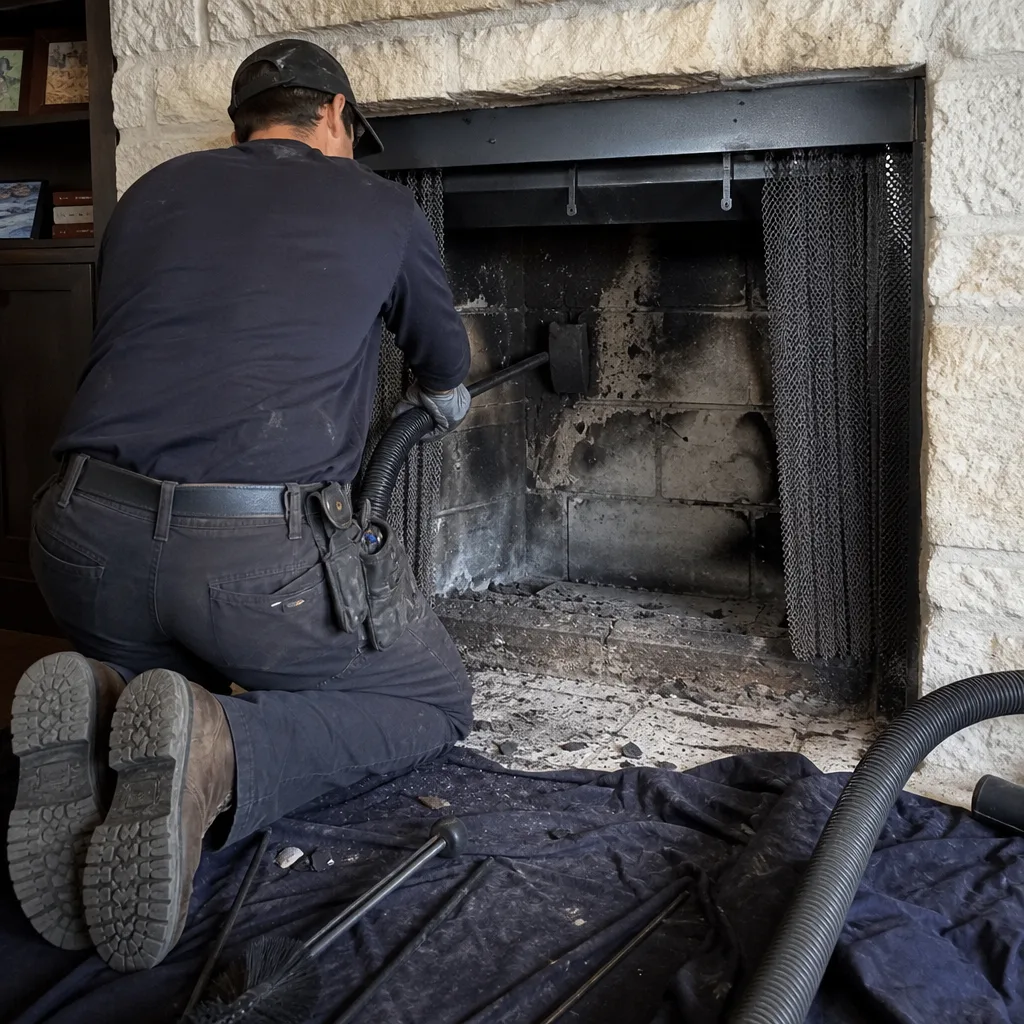 Before
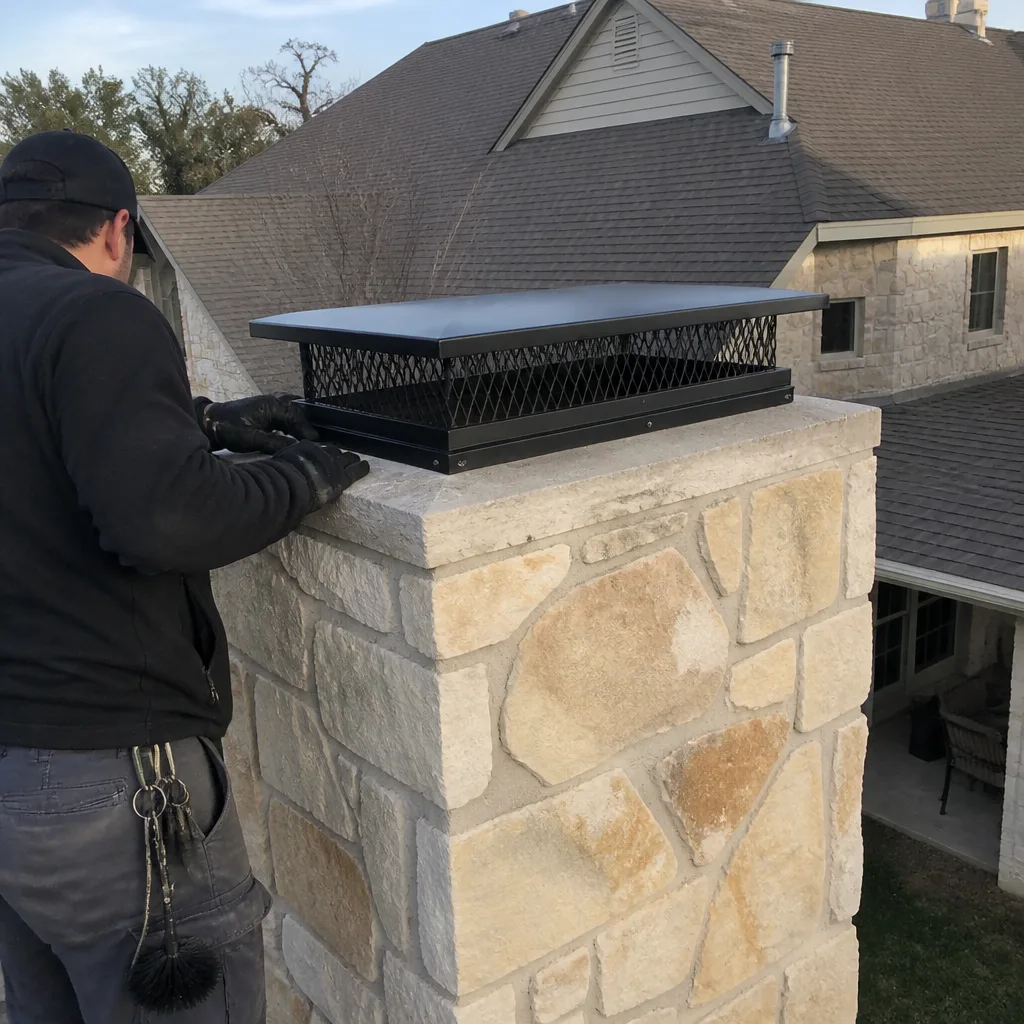 After
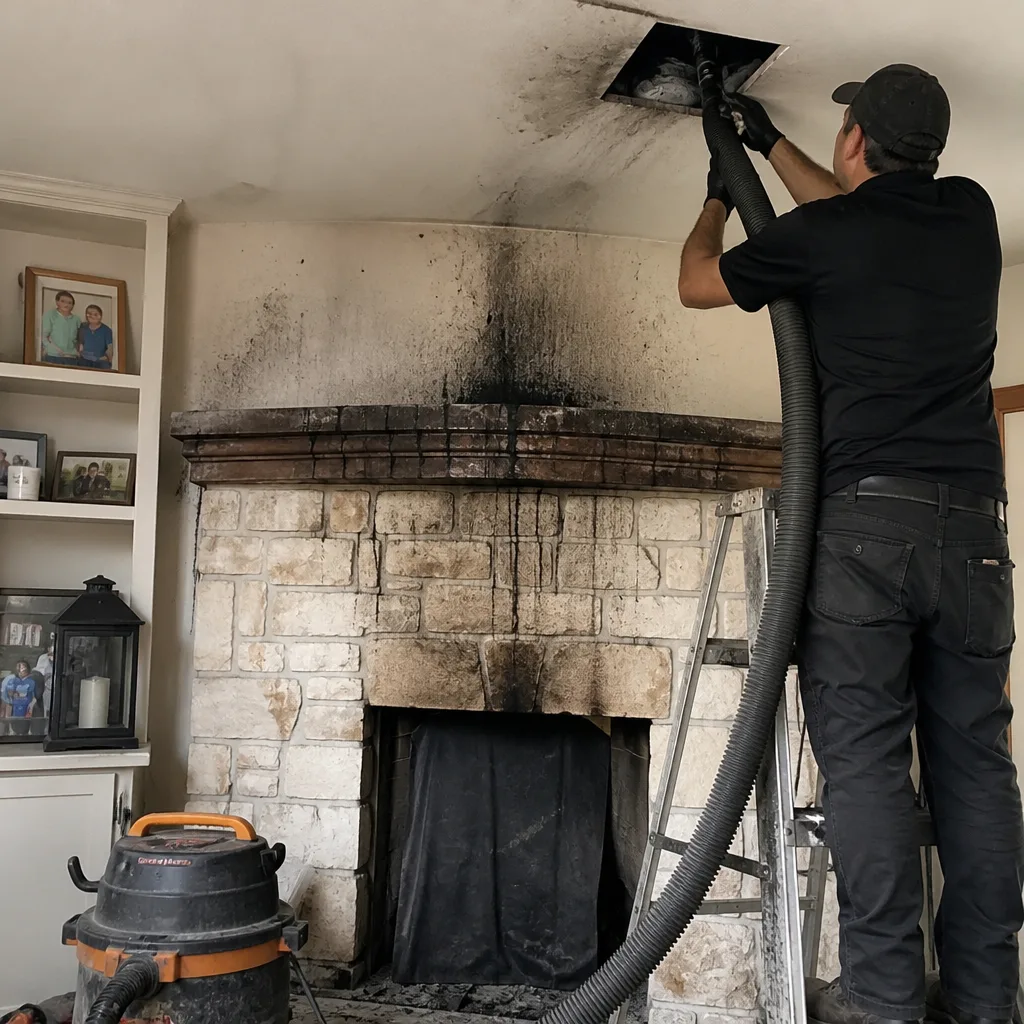 Before
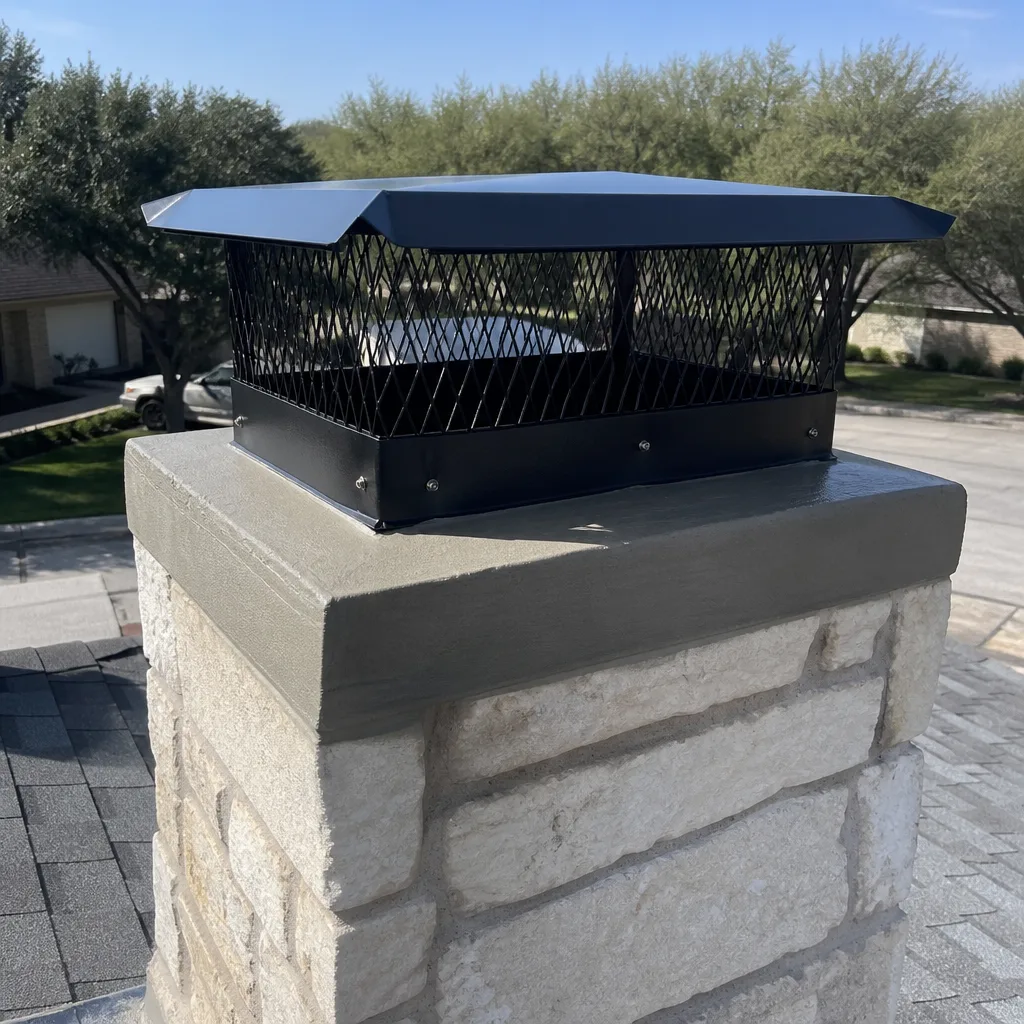 After
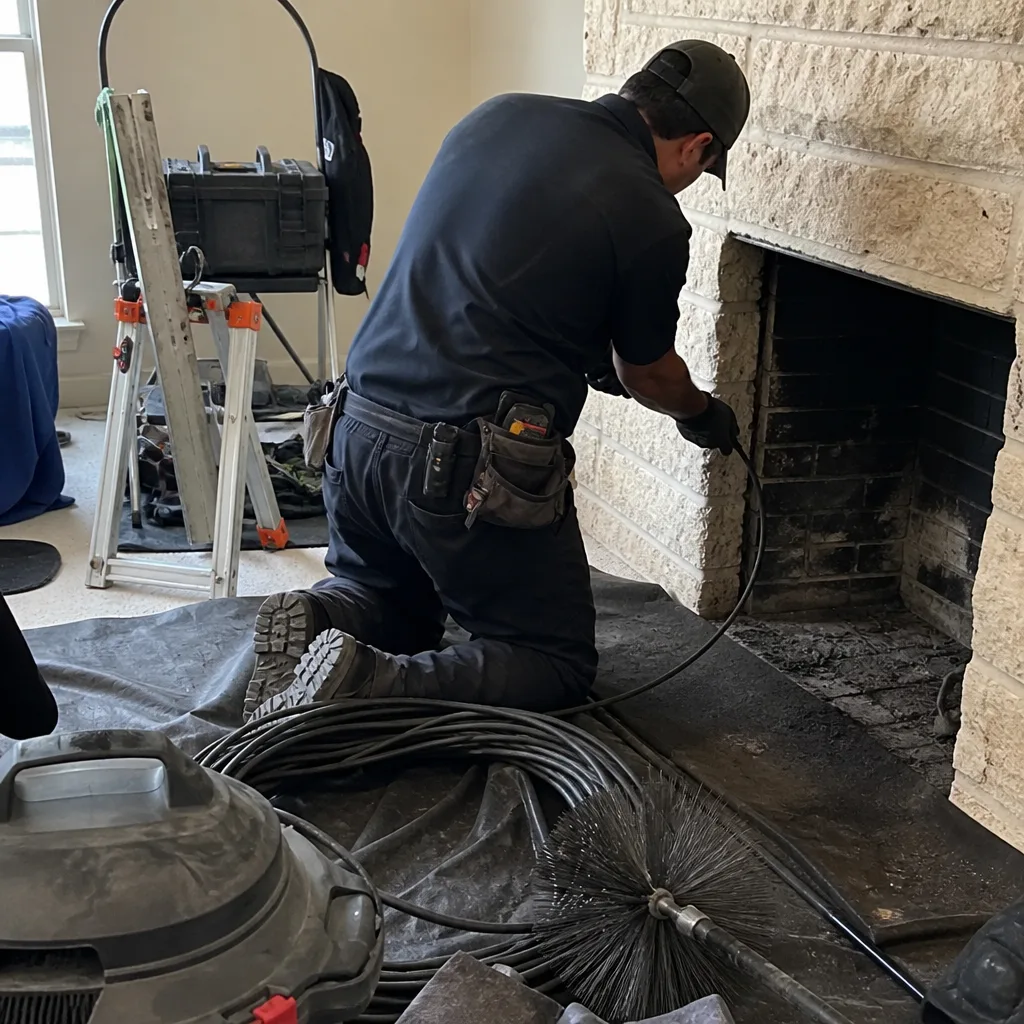 Before
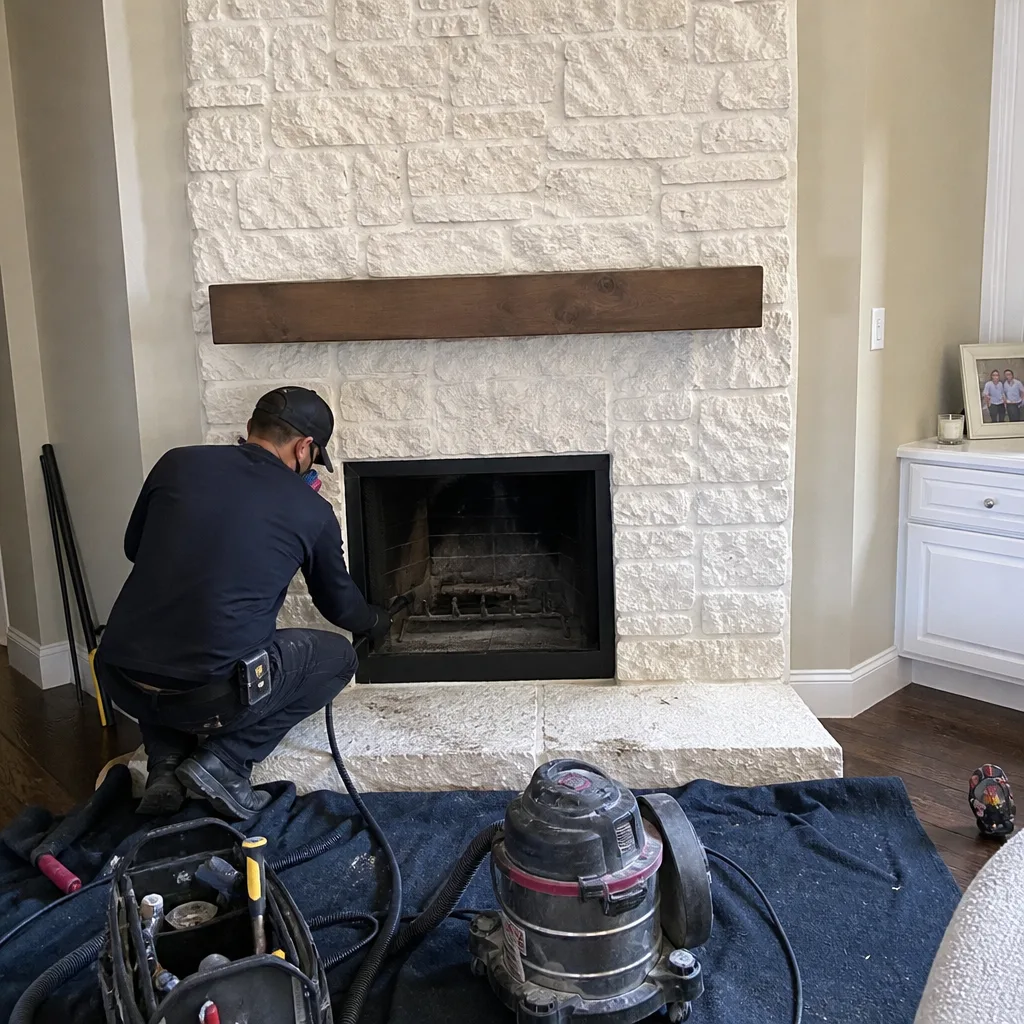 After