
Last updated October 30, 2026
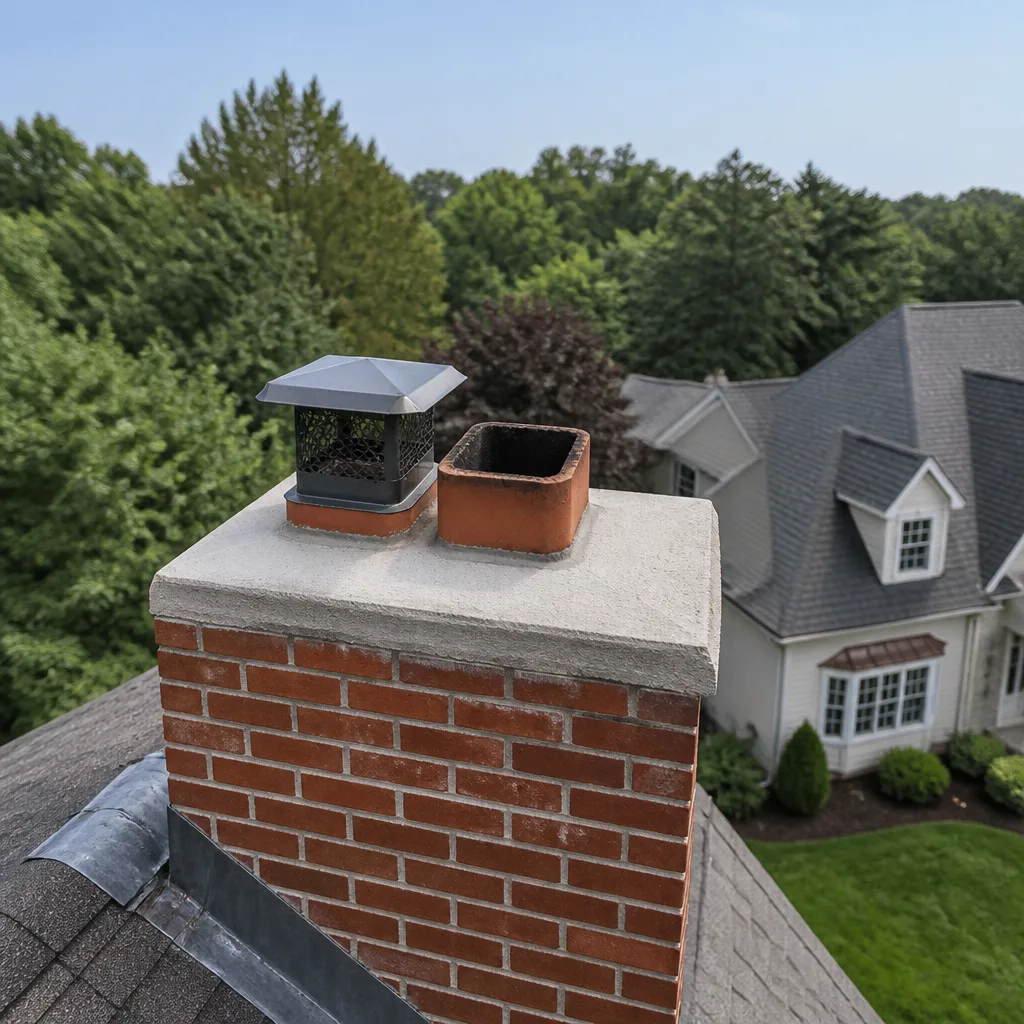 Sweep & inspection
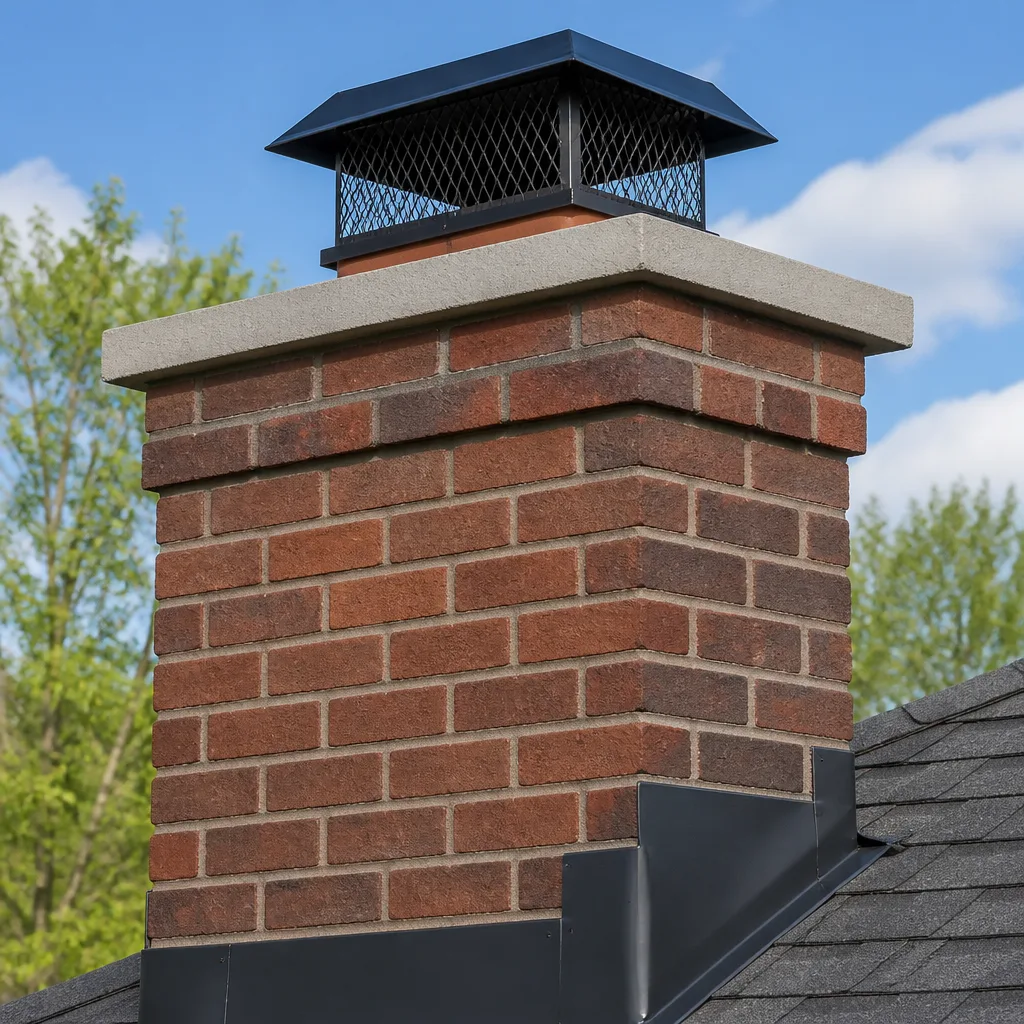 Caps & crowns
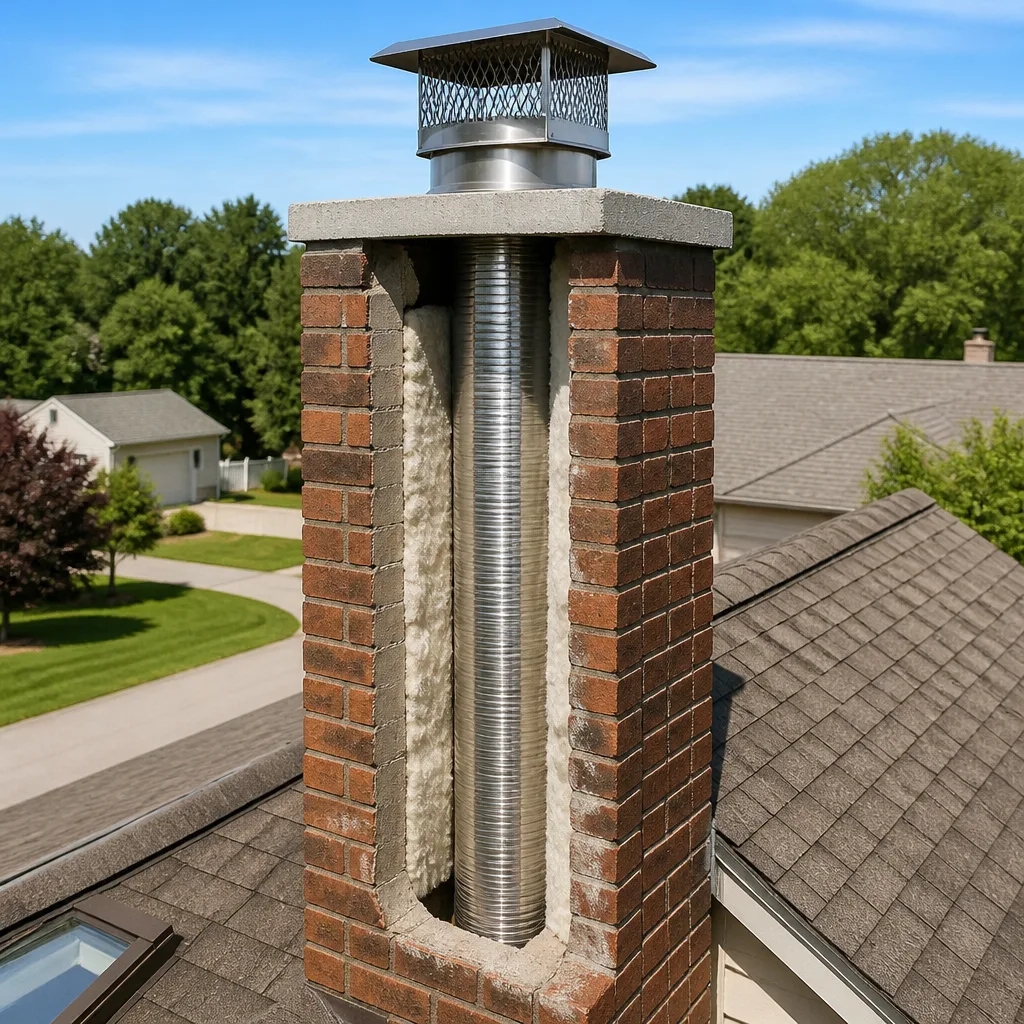 Flue relining
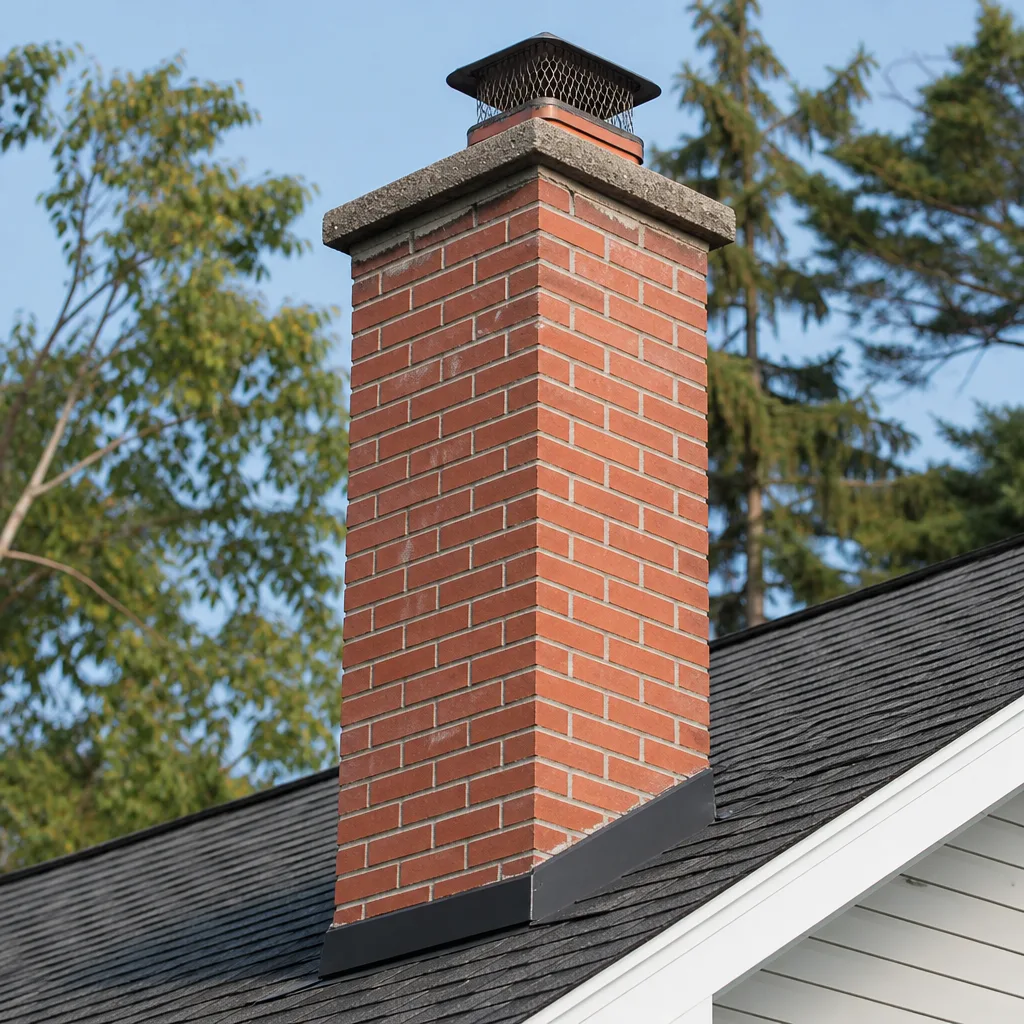 Masonry repair
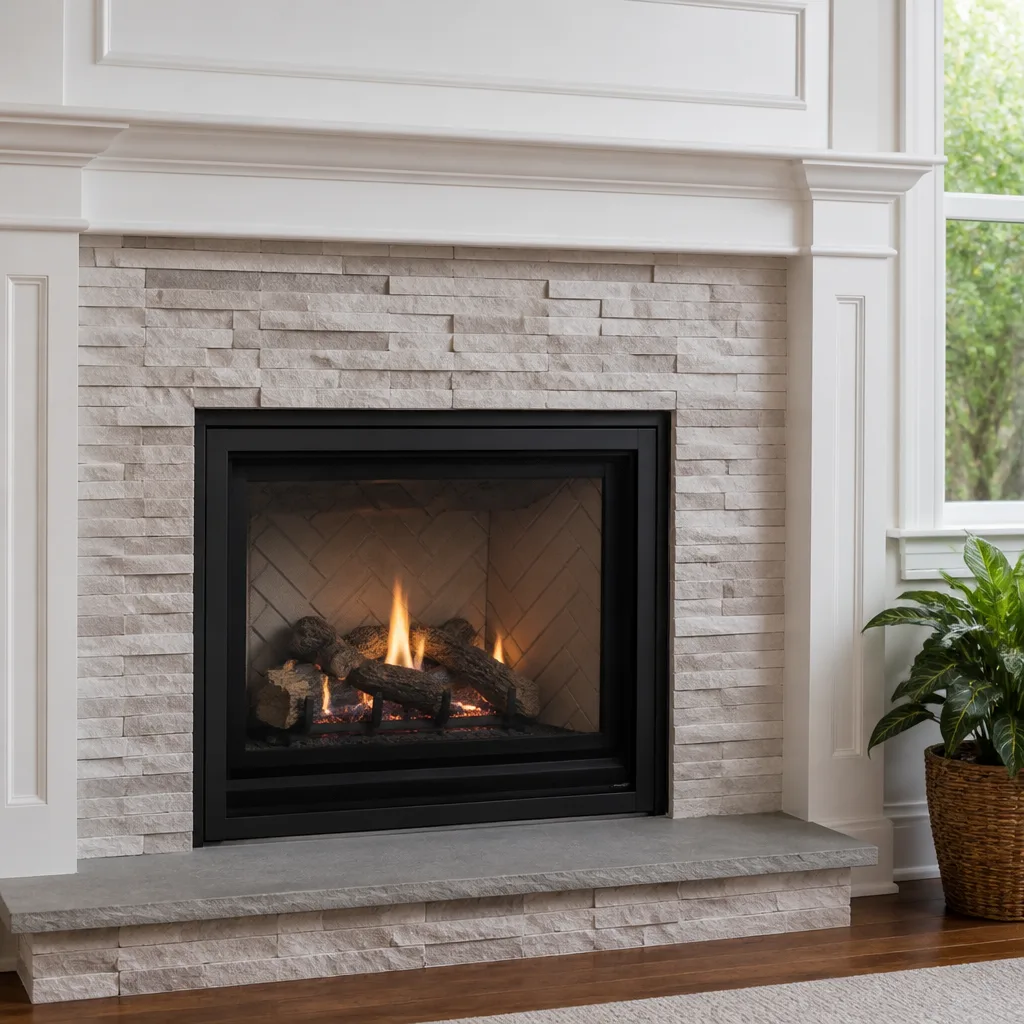 Gas fireplace service
Level 1 sweep and inspection to the NFPA 211 annual standard - flue, crown, cap, and flashing checked and photographed
Chimney sweep logs do not sweep chimneys. They loosen some creosote - which then falls where a brush and vacuum still have to collect it.
The Complete Guide to Chimney Cleaning in San Marcos
Most San Marcos homeowners who experience a chimney fire had their fireplace cleaned within the last two years. The problem wasn’t frequency. It was what got missed during the visit. A sweep that only removes loose soot from the visible firebox leaves behind the glazed creosote bonded to the flue walls, the hairline crack in the crown, the corroded damper that won’t fully close. This guide walks through what a chimney cleaning in San Marcos actually involves, why the local climate makes inspections here different from other parts of Texas, and how to read a sweep report as the diagnostic document it should be. For more guides & resources, see our blog.
Quick Answer
Chimney cleaning in San Marcos typically costs between $180 and $340 for a standard Level 1 sweep and inspection, and takes about 45 to 90 minutes for a wood-burning fireplace. Homeowners in San Marcos should have chimneys swept when creosote reaches 1/8 inch, which for most occasional-burn households means every 1 to 2 years, with a Level 2 inspection recommended after major storm seasons or any foundation movement.
Styles & brands we work with
Table of Contents
- What Actually Happens During a Chimney Cleaning
- How Often Should You Clean a Chimney in San Marcos?
- How Creosote Behaves in San Marcos’s Burn Seasons
- Why San Marcos Clay Soils Change the Stakes
- Level 1, Level 2, Level 3: Which Inspection Do You Need?
- Consumer-Grade Tools vs. Contractor-Grade Equipment
- How to Read a Sweep Report as a Diagnostic Document
- What Chimney Cleaning Costs in San Marcos
What Actually Happens During a Chimney Cleaning
A proper chimney cleaning in San Marcos is a multi-step process that begins before any brush touches the flue. The technician starts by assessing the system from the firebox up: damper function, firebrick condition, visible creosote accumulation, and any debris that may have entered through an uncapped flue. This initial look determines which tools get used and how aggressive the sweep needs to be.
We work through the following sequence on nearly every standard cleaning:
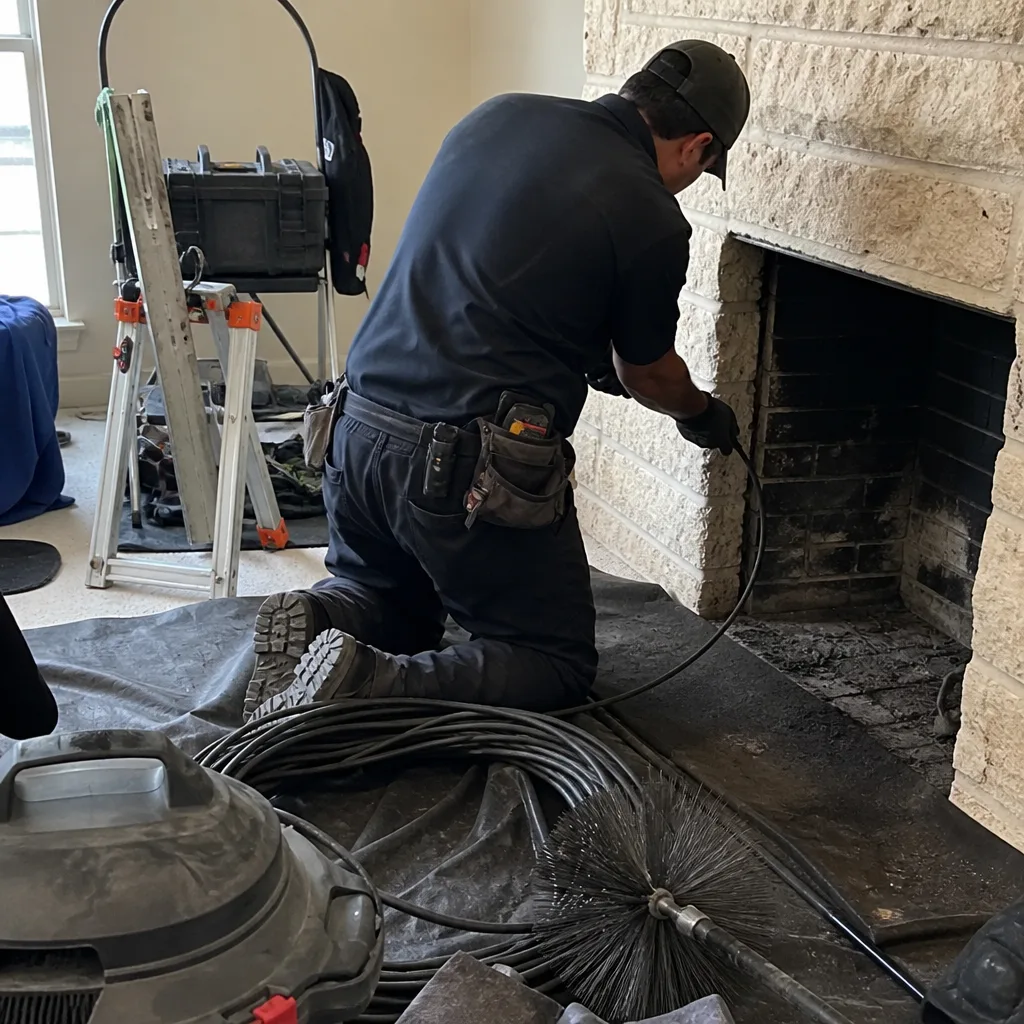
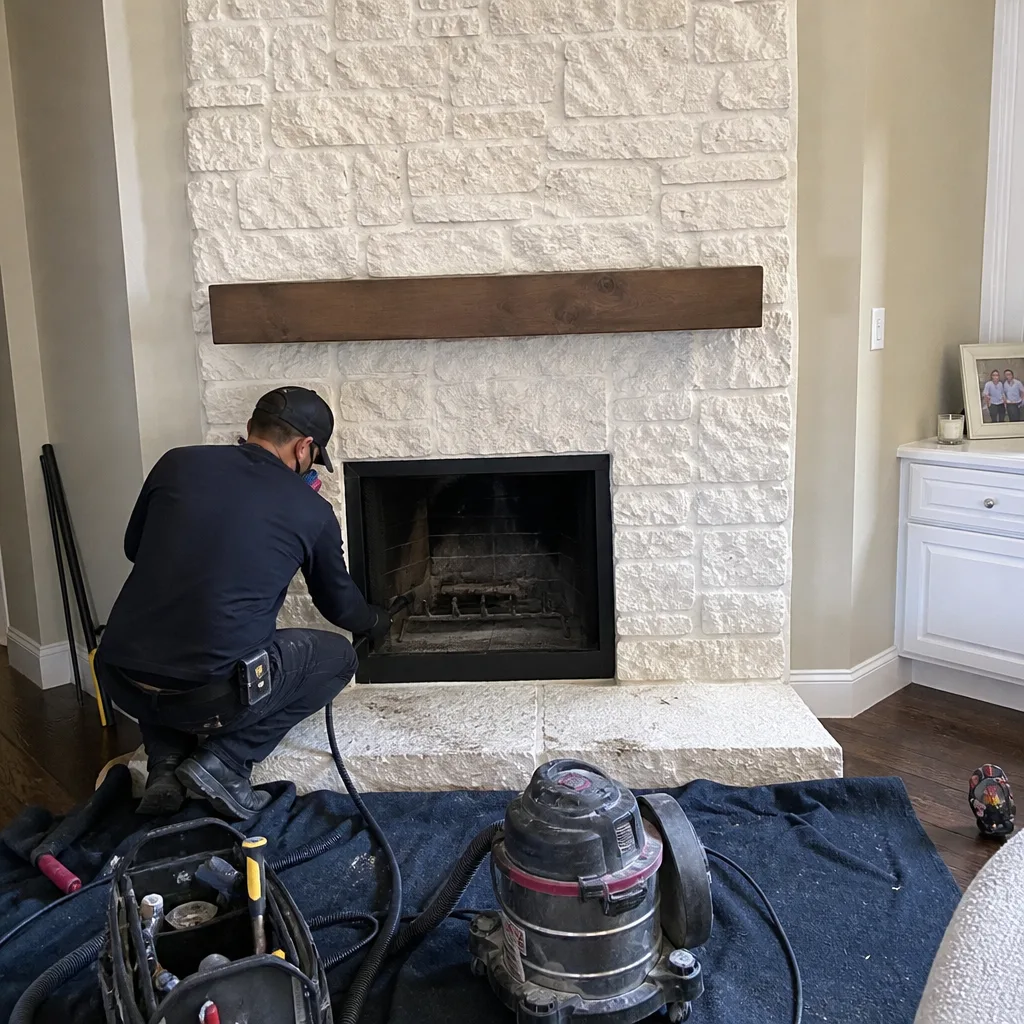
- Interior protection. Drop cloths and a high-CFM vacuum establish negative pressure in the firebox so dust and soot don’t enter the living space.
- Mechanical brushing. A properly sized wire or poly brush is run the full length of the flue using interlocking fiberglass or polypropylene rods from the top down or bottom up, depending on access and roof pitch.
- Creosote assessment. After brushing, the technician runs a light down the flue to check for remaining glazed creosote. Stage 3 glazed creosote will not come off with a standard brush; it requires chemical treatment or mechanical rotary removal.
- Debris removal. The smoke shelf, damper housing, and firebox floor are cleared of fallen creosote, soot, and any animal nesting material.
- Post-sweep inspection. The flue interior is visually examined for cracks, spalling brick, missing mortar joints, and liner deterioration. This is where cleaning becomes diagnosis.
The difference between a quick sweep and a thorough one shows up in step five. A technician who rushes through the post-sweep inspection misses the exact problems that later cause chimney fires or carbon monoxide intrusion. In San Marcos, where chimney use is concentrated in a few cool months, those problems can sit dormant for half the year before anyone notices.
How Often Should You Clean a Chimney in San Marcos?
The National Fire Protection Association (NFPA 211) standard calls for chimneys to be swept whenever creosote accumulation reaches 1/8 inch. That’s the threshold, not a calendar suggestion. For San Marcos households that burn wood once or twice a week from November through February, creosote typically reaches that level within 12 to 18 months. Households that burn daily may need cleaning every 6 months. Homes with gas inserts have no creosote concern but still need periodic inspection for vent degradation and debris blockages.
San Marcos burn seasons are short but intense. The cool spell between late November and early March concentrates a year’s worth of firing into about 15 weekends. This pattern matters because creosote forms most heavily during low-temperature, smoldering burns followed by rapid cooling. A fireplace that sits cold for months, then gets loaded with a large fire on the first cold snap, produces exactly the conditions that accelerate creosote deposition.
- Occasional burners (a few fires per year): sweep every 2 years minimum
- Regular burners (weekly fires during cool months): sweep annually
- Daily burners (primary heat source): sweep every 6 months, and more frequently if you notice any odor
- Gas insert owners: no creosote, but an inspection every 2 years is prudent
Households near the San Marcos River or in low-lying areas of the city see slightly different humidity patterns that can affect creosote behavior, but the bigger variable for most homes is what’s being burned. Unseasoned oak and cedar, both common in Central Texas woodpiles, produce more particulate than properly dried wood, which translates to faster creosote accumulation.
How Creosote Behaves in San Marcos’s Burn Seasons
Creosote is not one substance. It’s a range of combustion byproducts that condense on flue walls at different temperatures, and the form it takes depends heavily on how the fire burns. San Marcos’s short burn season creates a specific pattern: fires are lit during cold snaps, often with wood that hasn’t seasoned long enough, then the chimney sits idle for weeks at a time as temperatures swing back into the 60s and 70s.
In northern climates with continuous winter burning, creosote tends to accumulate as flaky, sooty deposit that a brush removes fairly easily. In San Marcos, the cycle of hot burn, rapid cool-down, and long idle periods produces more of what technicians call Stage 2 and Stage 3 creosote: sticky, tar-like coatings that harden into glossy, brittle deposits. Stage 3 glazed creosote is a fuel source that resists standard brushing and requires rotary looping or chemical treatment to remove.
A Houston or Dallas homeowner with the same burn frequency may see less aggressive creosote because ambient humidity levels during the burn months differ. San Marcos sits on the edge of the Hill Country, where cool nights and warm days drive condensation cycles inside uninsulated exterior chimneys. That thermal cycling drives creosote deeper into flue joints and makes routine cleaning more important than it is in regions with more stable seasonal temperatures.
Why San Marcos Clay Soils Change the Stakes
San Marcos sits on expansive clay soils, parts of the Blackland Prairie and the eastern edge of the Edwards Plateau transition zone. These soils swell when wet and shrink when dry. That movement transmits directly into masonry chimneys, which are among the heaviest and least flexible structures attached to a house.
What this means in practical terms: a chimney that passes a visual sweep one year can develop hairline cracks in the crown or mortar joints the next, not because of anything the homeowner did, but because the soil beneath the foundation shifted during a drought-to-rain cycle. San Marcos sees exactly those cycles, sometimes within a single season. A dry September gives way to a wet October, the soil swells, and cracks appear in places that were sound six months earlier.
This is why we treat every cleaning in San Marcos as a structural inspection. The sweep removes creosote. The inspection looks for what the soil did since the last visit. Crown cracks, step cracking in the brick veneer, separation between the chimney and the house, and damaged mortar joints are the four signs we look for on every job in this area. When those problems appear on an otherwise clean chimney, the homeowner has a structural issue that no amount of sweeping will solve, and the clock is ticking.
Related: our chimney repair service in San Marcos addresses crown rebuilds, tuckpointing, and liner work, including HeatShield liner restoration for aging masonry flues.
Level 1, Level 2, Level 3: Which Inspection Do You Need?
The Chimney Safety Institute of America (CSIA) defines three levels of chimney inspection. Understanding the difference saves money and prevents either overpaying for an inspection you don’t need or, far worse, getting less inspection than your situation requires.
Level 1 is the default inspection included with a standard sweep. The technician examines the readily accessible portions of the chimney interior and exterior using a flashlight and mirror. No special equipment. No removal of building materials. If nothing has changed since the last sweep, same appliance, same fuel, same use pattern, this is usually sufficient.
Level 2 goes further and is warranted in specific situations: after a chimney fire, after a seismic event or major storm, before a property changes hands, or after any change to the venting system. Level 2 includes everything in Level 1 plus access to attic, crawlspace, and roof areas, and typically uses a video scan of the flue interior. In San Marcos, we recommend Level 2 after any hailstorm with wind strong enough to shift roof decking, or any freeze-thaw cycle that followed a heavy rain on expansive soils.
Level 3 is reserved for cases where a Level 1 or Level 2 inspection raises serious structural questions that require removing building materials to answer: opening drywall, removing chimney crowns, or dismantling portions of the masonry. Level 3 is rarely needed for routine maintenance and is typically triggered by visible structural failure or a suspected hidden fire.
For most San Marcos homeowners scheduling annual maintenance, Level 1 is appropriate. But if you’re buying a home in San Marcos, the seller’s last sweep receipt won’t tell you what the clay soil did to the chimney last spring. A full chimney sweep including inspection in San Marcos with a Level 2 video scan is the smarter pre-purchase move.
Consumer-Grade Tools vs. Contractor-Grade Equipment
Before deciding between a DIY approach and hiring a pro, read our DIY vs Professional Chimney Cleaning: The San Marcos Homeowner’s Decision Guide. Hardware store chimney cleaning kits, the kind with a few fiberglass rods and a small brush, are designed to remove loose soot from a flue that’s already in decent condition. What they’re not designed to do:
- Remove Stage 2 or Stage 3 creosote. Glazed creosote requires rotary loop heads driven by a drill, or chemical softening treatments, plus the training to know which approach won’t damage the liner material.
- Contain the dust. Professional chimney work uses high-CFM negative-air vacuums with true HEPA filtration, not the shop vac a homeowner has in the garage. The fine particulate in creosote is carcinogenic and shouldn’t be distributed through living spaces.
- Diagnose anything. Consumer kits remove visible soot. They do nothing to identify a cracked flue tile, a failing mortar joint, a corroded damper, or a disconnected liner. The most dangerous chimney in San Marcos is the one that looks clean from the firebox.
- Clean the hard-to-reach areas. Smoke shelves, damper housings, and offset flue sections trap creosote that a straight brush run never touches. Accessing these requires specialized scrapers, mirrors, and the experience to know what a properly cleaned smoke shelf should look like.
We stock and use trade-brand equipment and materials for a reason. When a cleaning finds a deteriorated flue, the repair options we recommend use products like DuraFlex flexible liner systems, which are what professional chimney contractors install when a masonry flue has failed. We don’t stock hardware-store substitutes because flues are combustion systems, and the margin between a working liner and a house fire doesn’t leave room for discount materials. This is the core of our Oakgrove Chimney Sweep approach: professional judgment backed by professional-grade materials.
How to Read a Sweep Report as a Diagnostic Document
A sweep report should be more than a receipt with a date and a smiley face. It’s a snapshot of your chimney’s structural and functional condition at a specific moment, and the details matter. When you receive a report, here’s what to look for:
- Creosote stage found. Stage 1 is dusty soot. Stage 2 is flaky or granular. Stage 3 is glazed and hardened. The stage tells you whether the sweep was routine or whether your burn habits need attention.
- Flue dimensions and liner condition. A good report notes whether the flue is properly sized for the appliance, and whether the clay tile or metal liner shows cracks, gaps, or spalling.
- Damper function. Can the damper be fully opened and closed? Does it seal completely when closed? A damper that hangs open leaks conditioned air year-round.
- Crown and mortar joint condition. In San Marcos, this line is important. Crown cracks and deteriorated mortar joints are the most common structural findings on clay-soil homes.
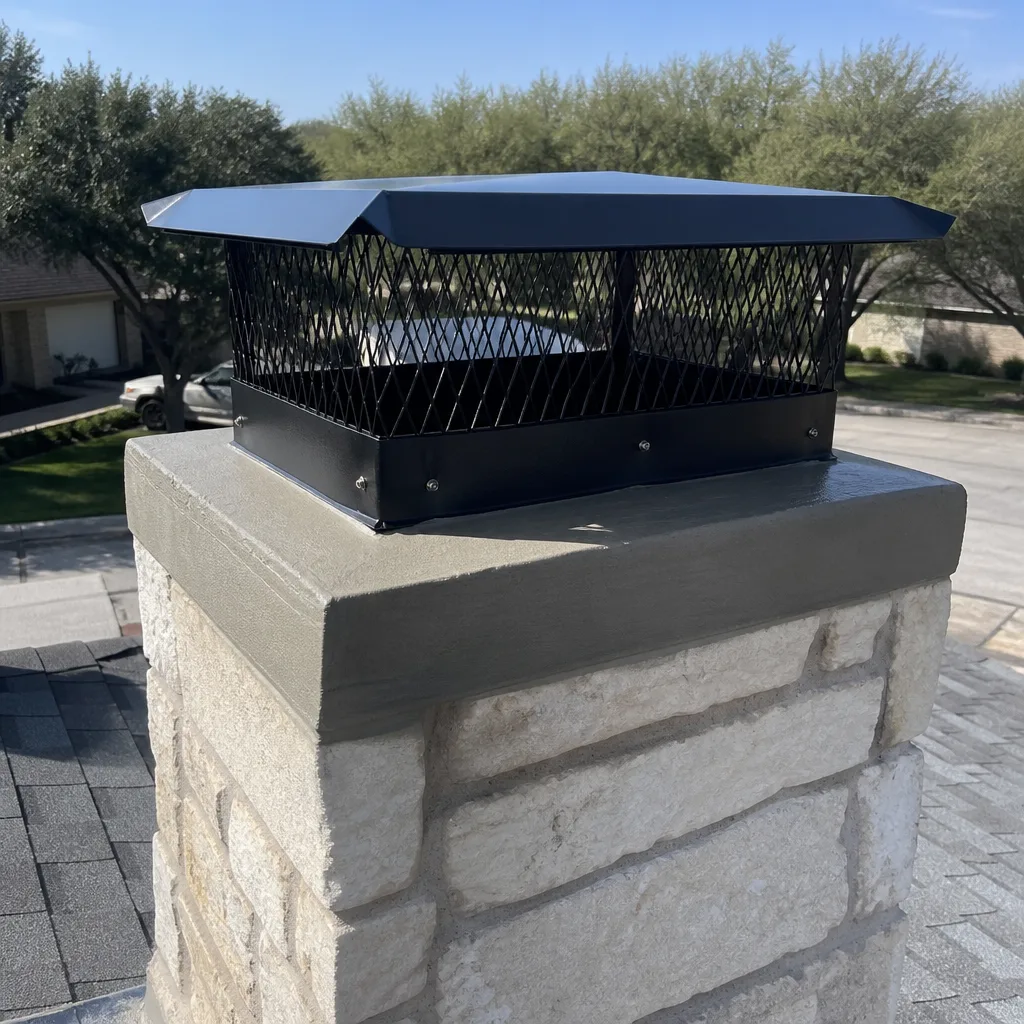
- Cap presence and condition. An uncapped flue invites rain, birds, and squirrels. A damaged cap is barely better.
- Clearance to combustibles. Any note about framing too close to the flue or inadequate firestopping is a fire-safety issue that deserves immediate attention.
If a report only says “swept and cleaned” with no structural notes, the inspection was shallow. In our experience in San Marcos, a meaningful number of chimneys we inspect have at least one finding worth noting, and the homeowners usually haven’t heard about it before. That’s not because other sweeps missed it necessarily. It’s because the report wasn’t written to be read.
What Chimney Cleaning Costs in San Marcos
Chimney sweep pricing in San Marcos is based on the type of system, the level of inspection included, and the amount of creosote that must be removed. A standard wood-burning fireplace with a straight flue and Level 1 inspection falls in the $180 to $260 range. A two-story chimney, a flue with offsets, or a fireplace that hasn’t been cleaned in several years runs higher because the labor time increases.
- Standard wood fireplace sweep, Level 1: $180-$260
- Two-story or offset flue sweep: $240-$320
- Level 2 inspection with video scan: $150-$300, additional to the sweep
- Gas insert inspection and cleaning: $150-$250
- Dryer vent cleaning (as a related safety service): $120-$200
These prices reflect the San Marcos market specifically. Hays County’s growth has brought enough chimney contractors into the area to create competitive pricing, but the trade brands and inspection thoroughness vary widely. The cheapest sweep in town is rarely the one that produces a written report with structural findings. Our dryer vent cleaning service in San Marcos is priced separately but is often consolidated into the same visit, reducing trip costs and providing a single service record.
Common Mistakes to Avoid
- Sweeping based on the calendar rather than the creosote. Every chimney accumulates creosote at a different rate. A visual check, not a date, should drive the schedule.
- Burning unseasoned wood. Fresh-cut oak and cedar, the most common firewood species in Central Texas, can contain 30% or more moisture. That moisture absorbs heat and produces the incomplete combustion that forms creosote rapidly.
- Using a consumer brush kit without inspecting anything. Removing loose soot without checking the flue for damage creates false confidence. The dirtiest chimney isn’t always the most dangerous one.
- Ignoring the crown because it’s out of sight. On San Marcos clay soils, crown cracks open and close with moisture cycles. By the time you see staining inside the house, the crack has been passing water for months or years.
- Failing to cap the flue. Uncapped flues collect rain, which mixes with creosote to form an acidic slurry that attacks mortar joints from the inside. Birds and squirrels accelerate the damage with nesting material.
- Skipping dryer vent maintenance. Dryer vents and chimneys are both combustion exhaust systems. A blocked dryer vent is a fire hazard, and we treat dryer vent cleaning in San Marcos with the same diagnostic rigor as a chimney sweep.
- Waiting until fall to book. San Marcos sweeps get booked heavily in October and November. Scheduling in late summer gets the same work done with more schedule flexibility.
See the difference
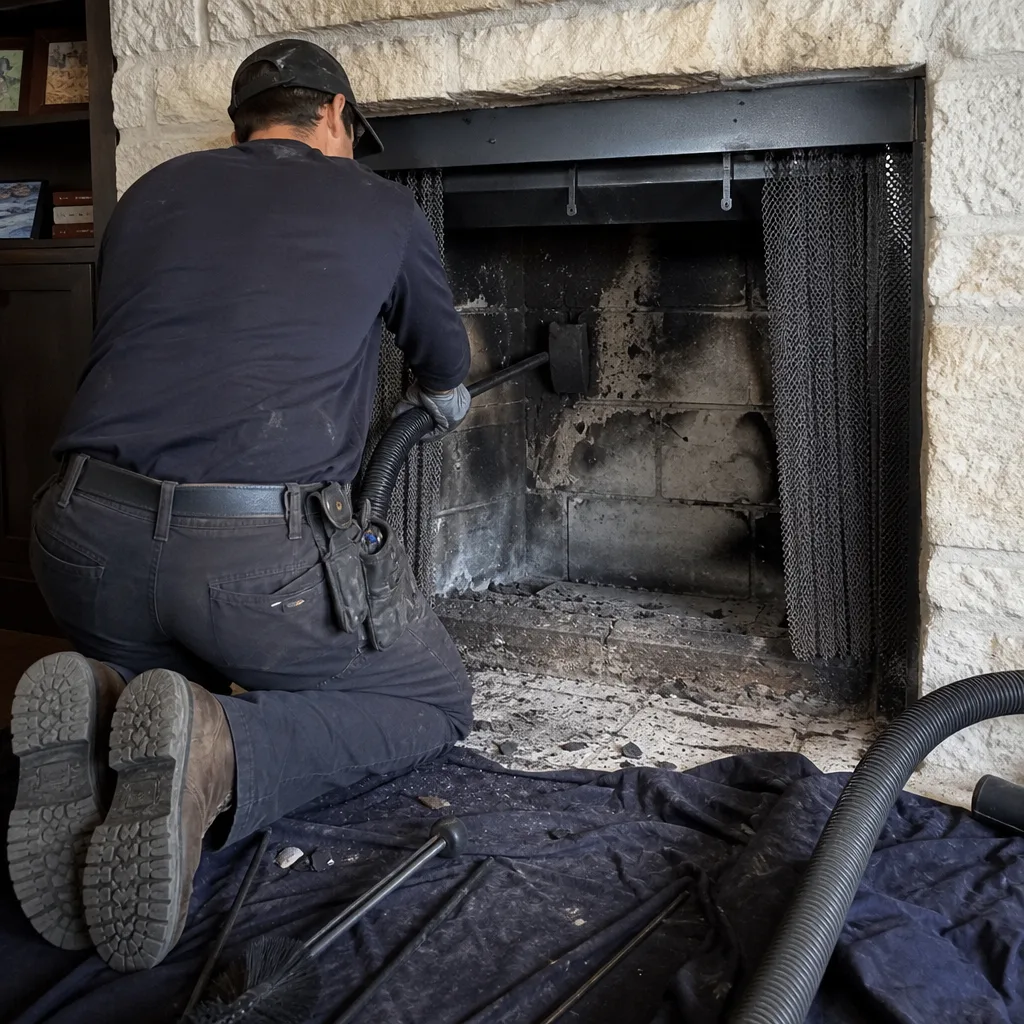 Before
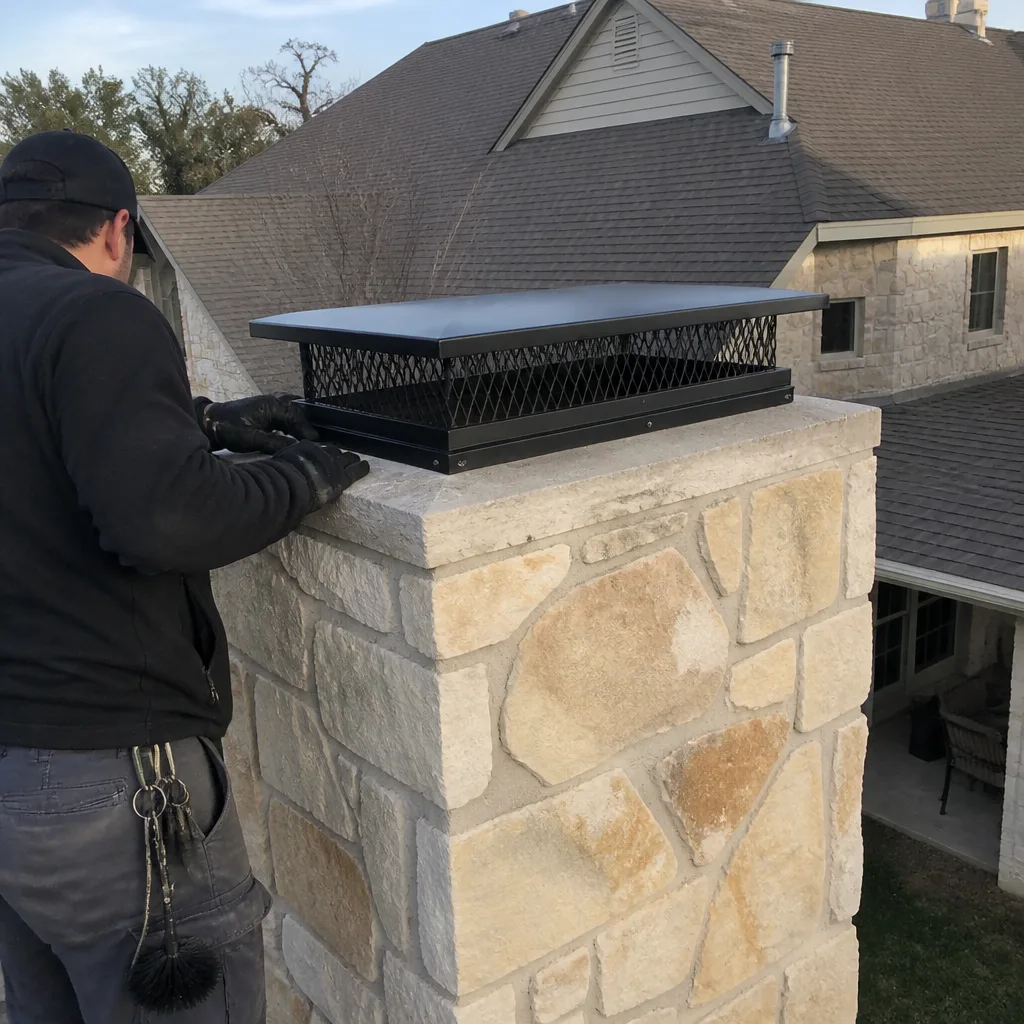 After
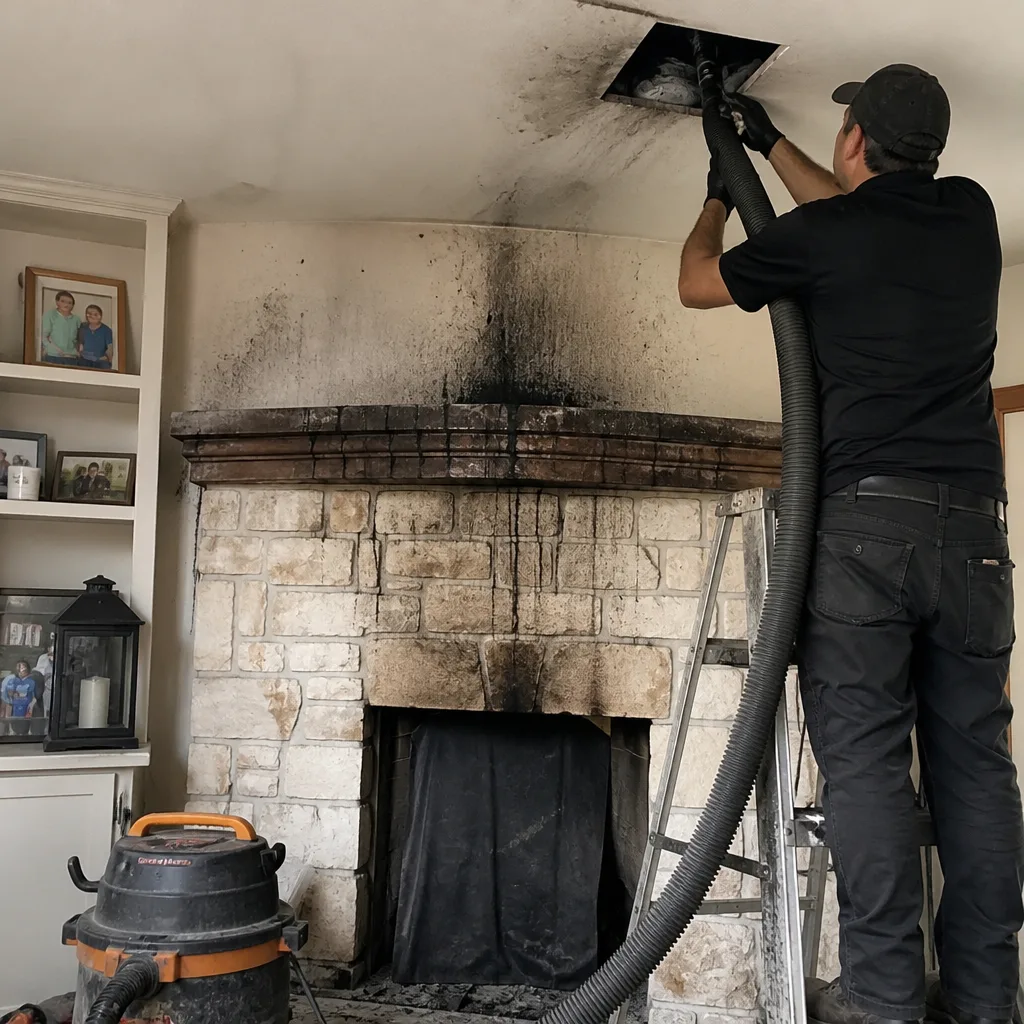 Before
 After
 Before
 After
When to Call a Professional
Call a chimney professional when you notice any of the following: visible smoke entering the room during a fire, a persistent campfire-like odor even when the fireplace is cold, efflorescence or white staining on exterior masonry, water in the firebox after rain, animals or nesting debris in the flue, or a damper that no longer moves freely. If you’ve had a chimney fire, even a small one contained to the flue, stop using the fireplace until a Level 2 inspection is completed. If you’ve recently bought a home in San Marcos and have no sweep history from the seller, schedule an inspection before the first burn. Not sure who to hire? Our How to Hire a Chimney Cleaning Contractor in San Marcos: A Step-by-Step Guide walks you through the process. Oakgrove Chimney Sweep offers free estimates in San Marcos; call (866) 472-2513 to schedule yours.
Frequently Asked Questions
Most homeowners in San Marcos pay between $180 and $340 for a standard chimney sweep with a Level 1 inspection, depending on flue height, accessibility, and creosote buildup. The best way to get an exact figure is a phone quote with a description of your fireplace and last service date. Call (866) 472-2513 for a free estimate.
A liner recommendation should always be supported by evidence you can see, typically a video scan showing cracked tiles, gaps, or spalling that compromise the flue’s ability to contain heat and combustion gases. In San Marcos, we show homeowners the camera footage before making any repair recommendation, and we tell you plainly when a liner can wait. We repair what we find, using systems like DuraFlex and HeatShield, but the decision is always yours after seeing the evidence.
Most wood-burning households in San Marcos should schedule a sweep annually, with the specific creosote threshold of 1/8 inch being the actual trigger. Homes that burn only occasionally can often go two years between cleanings. Gas insert owners need less frequent cleaning but still benefit from periodic inspection.
Creosote continues to accumulate and harden, moving from Stage 2 to Stage 3 glazed creosote, which is both harder to remove and highly flammable. The flue narrows, draft decreases, and smoke begins spilling into the home. Meanwhile, the structural issues that a sweep would have caught, crown cracks, mortar joint failure, hidden liner damage, continue to progress unchecked. The cleaning is what gives the inspector access to see those problems before they become expensive.
Gas fireplaces produce no creosote and therefore don’t face the same chimney fire risk. But gas inserts still vent through flues that can deteriorate, become blocked by debris, or develop leaks that allow carbon monoxide into the home. Vent inspection is still warranted, and the stakes are carbon monoxide poisoning rather than fire, which is arguably more serious.
A homeowner can remove loose soot from a straight, accessible flue with a brush kit, but the inspection is the part that matters, and that requires training. What most DIY cleanings miss: Stage 3 glazed creosote, cracked flue tiles visible only from the roof side, smoke shelf buildup, and structural problems invisible from the firebox. In San Marcos, where clay soils make structural movement common, the inspection is worth the cost of a professional sweep by itself.
The Bottom Line
Chimney cleaning in San Marcos is a structural diagnostic exercise as much as a cleaning service. The city’s clay soils crack masonry slowly. Its short, intense burn seasons build creosote in patterns that differ from northern climates. And the difference between a clean chimney and a safe one is the quality of the inspection conducted during the sweep. For year-round maintenance tips, see our Seasonal Chimney Cleaning Care for San Marcos: Year-Round Homeowner’s Guide. Schedule annually, read the report, address the findings in priority order, and consolidate your combustion safety work under one contractor who can sweep, inspect, and repair. Your flue is a combustion system. Treat it like one.
Written by the team at Oakgrove Chimney Sweep, serving San Marcos since 2017.